THE ADVENTURE COLLECTIVE® · Independent discovery and booking for outdoor travel

Walk among Cappadocia’s sculpted rock towers, try your hand at traditional pottery and explore cave churches with a licensed guide. This private, full-day tour combines geology, local craft and panoramic viewpoints in an accessible seven-hour route.
Walk among Cappadocia’s sculpted rock towers, try your hand at traditional pottery and explore cave churches with a licensed guide. This private, full-day tour combines geology, local craft and panoramic viewpoints in an accessible seven-hour route.
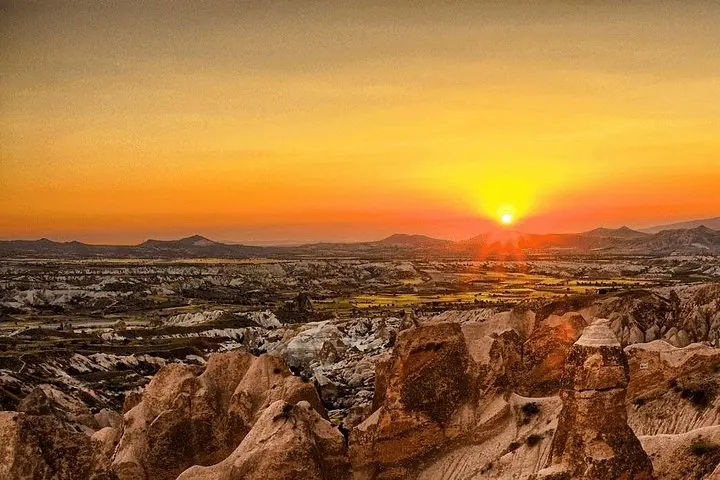
You step out of the minivan and the landscape rearranges itself — towers of pale rock rise like fossil chimneys, their caps balancing as if gravity were a suggestion. Dust lifts underfoot; a guide points to a weathered face in the tuff and jokes that erosion is Cappadocia’s long, patient sculptor. The morning light cuts the valleys into planes of shadow and honey-gold, and you begin a day that moves between geology, history and hands-on craft.
Verified experiences and guided adventures in the surrounding area.
Operated by Custom Travel Services · Göreme, Nevşehir
You step out of the minivan and the landscape rearranges itself — towers of pale rock rise like fossil chimneys, their caps balancing as if gravity were a suggestion. Dust lifts underfoot; a guide points to a weathered face in the tuff and jokes that erosion is Cappadocia’s long, patient sculptor. The morning light cuts the valleys into planes of shadow and honey-gold, and you begin a day that moves between geology, history and hands-on craft.
Cappadocia’s cliffs and cones are volcanic tuff shaped by millennia of wind and water. The Fairy Chimneys valley and Devrent (Imagination) Valley are textbook examples: soft ash compacted after eruptions became porous stone, then rain and frost gnawed channels and left pillars. Centuries ago, people leaned into that softness, carving homes, stables and churches into the rock. The Göreme Open-Air Museum preserves small cave churches — their frescoes are intimate, their proportions scaled for a monastic life lived in shadow and candlelight.
Culturally, Cappadocia has been a crossroads of Hittite, Persian, Roman and Byzantine influences; the cave churches reflect an underground Christianity that adapted to the landscape to survive. Today potters still turn local clay on wheels in towns like Avanos, where a short workshop on this tour lets you shape a bowl with the same mud that once made amphorae.
Practical matters are straightforward. The private tour runs about seven hours and includes an air-conditioned vehicle, a licensed guide and museum entrance fees. Expect several short hikes on uneven ground — loose gravel and packed tuff — with photo stops and a final panoramic pause at Uchisar Castle to watch the valleys spread to the horizon.
Tips for timing: mornings are best for crisp light and cooler temps; late afternoon softens colors for photographs. Dress in layers and wear sturdy shoes with good traction — the terrain is easy to moderate but not flat. Bring water, sunscreen and a small daypack; cameras and extra memory cards are worthwhile. If you have mobility concerns, notify the operator in advance — some sites have steps and narrow cave passages.
This itinerary works for couples, honeymoons and families; it’s private and can be tailored — longer walks, more time in pottery workshops or extra stops at scenic outlooks. Respect fragile frescoes and stay on designated paths: these rock-cut sites are vulnerable, and low-impact behavior preserves them for the next visitor.
By the time you descend from Uchisar, the region’s geology feels less like scenery and more like a living archive — weathered, annotated and quietly insisting you look closer.
Yes — pickup and drop-off from Göreme-area hotels are provided; confirm your exact pickup point during booking.
Museum entrance fees are included in the tour price, according to the itinerary details.
Expect several short walks of 20–60 minutes across uneven terrain; overall activity is moderate and suitable for most visitors.
Yes — the private format allows adjustments such as more time at the pottery workshop or additional viewpoints on request.
Yes — the operator markets the tour to families and couples; children should be able to handle short hikes and supervised pottery activities.
Guides are licensed and typically speak English; confirm language needs at booking if you require another language.
Custom Travel Services operates guided outdoor trips and adventures with an emphasis on safety, stewardship, and memorable experiences.
You step out of the minivan and the landscape rearranges itself — towers of pale rock rise like fossil chimneys, their caps balancing as if gravity were a suggestion. Dust lifts underfoot; a guide points to a weathered face in the tuff and jokes that erosion is Cappadocia’s long, patient sculptor. The morning light cuts the valleys into planes of shadow and honey-gold, and you begin a day that moves between geology, history and hands-on craft.
You step out of the minivan and the landscape rearranges itself — towers of pale rock rise like fossil chimneys, their caps balancing as if gravity were a suggestion. Dust lifts underfoot; a guide points to a weathered face in the tuff and jokes that erosion is Cappadocia’s long, patient sculptor. The morning light cuts the valleys into planes of shadow and honey-gold, and you begin a day that moves between geology, history and hands-on craft.
Cappadocia’s cliffs and cones are volcanic tuff shaped by millennia of wind and water. The Fairy Chimneys valley and Devrent (Imagination) Valley are textbook examples: soft ash compacted after eruptions became porous stone, then rain and frost gnawed channels and left pillars. Centuries ago, people leaned into that softness, carving homes, stables and churches into the rock. The Göreme Open-Air Museum preserves small cave churches — their frescoes are intimate, their proportions scaled for a monastic life lived in shadow and candlelight.
Culturally, Cappadocia has been a crossroads of Hittite, Persian, Roman and Byzantine influences; the cave churches reflect an underground Christianity that adapted to the landscape to survive. Today potters still turn local clay on wheels in towns like Avanos, where a short workshop on this tour lets you shape a bowl with the same mud that once made amphorae.
Practical matters are straightforward. The private tour runs about seven hours and includes an air-conditioned vehicle, a licensed guide and museum entrance fees. Expect several short hikes on uneven ground — loose gravel and packed tuff — with photo stops and a final panoramic pause at Uchisar Castle to watch the valleys spread to the horizon.
Tips for timing: mornings are best for crisp light and cooler temps; late afternoon softens colors for photographs. Dress in layers and wear sturdy shoes with good traction — the terrain is easy to moderate but not flat. Bring water, sunscreen and a small daypack; cameras and extra memory cards are worthwhile. If you have mobility concerns, notify the operator in advance — some sites have steps and narrow cave passages.
This itinerary works for couples, honeymoons and families; it’s private and can be tailored — longer walks, more time in pottery workshops or extra stops at scenic outlooks. Respect fragile frescoes and stay on designated paths: these rock-cut sites are vulnerable, and low-impact behavior preserves them for the next visitor.
By the time you descend from Uchisar, the region’s geology feels less like scenery and more like a living archive — weathered, annotated and quietly insisting you look closer.