THE ADVENTURE COLLECTIVE® · Independent discovery and booking for outdoor travel

Drive through Cappadocia’s otherworldly rockscape on the classic Red Tour: panoramic viewpoints, Uçhisar’s rock castle, Paşabağ’s fairy chimneys, the ghost-village of Zelve and Avanos pottery. This full-day loop pairs short walks with deep geological and cultural context for first-time visitors.
Drive through Cappadocia’s otherworldly rockscape on the classic Red Tour: panoramic viewpoints, Uçhisar’s rock castle, Paşabağ’s fairy chimneys, the ghost-village of Zelve and Avanos pottery. This full-day loop pairs short walks with deep geological and cultural context for first-time visitors.
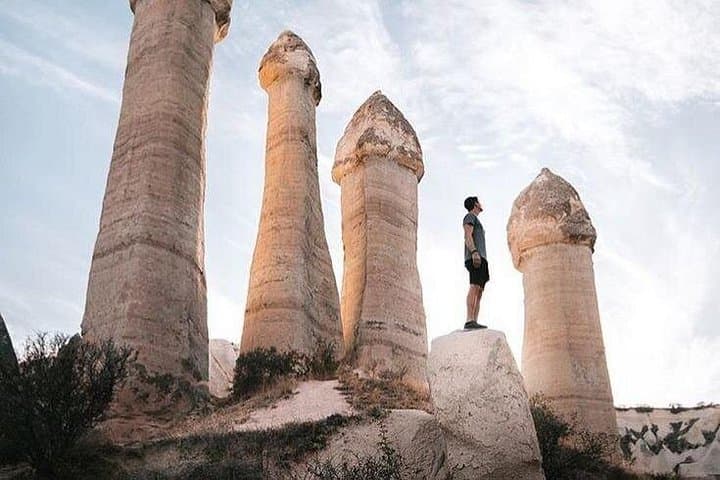
You step off the minivan at Goreme Panorama and the landscape leans in — a low plateau of sculpted tuff where wind and water have been patient engineers for millennia. Fairy chimneys rise like earthen columns, ochre and cream streaking under a high Anatolian sky. The Red Tour moves at a cinematic pace: short walks, long views, and a steady catalogue of geological oddities and human traces.
Verified experiences and guided adventures in the surrounding area.
Operated by Noish Travels · Goreme, Nevşehir Province
You step off the minivan at Goreme Panorama and the landscape leans in — a low plateau of sculpted tuff where wind and water have been patient engineers for millennia. Fairy chimneys rise like earthen columns, ochre and cream streaking under a high Anatolian sky. The Red Tour moves at a cinematic pace: short walks, long views, and a steady catalogue of geological oddities and human traces.
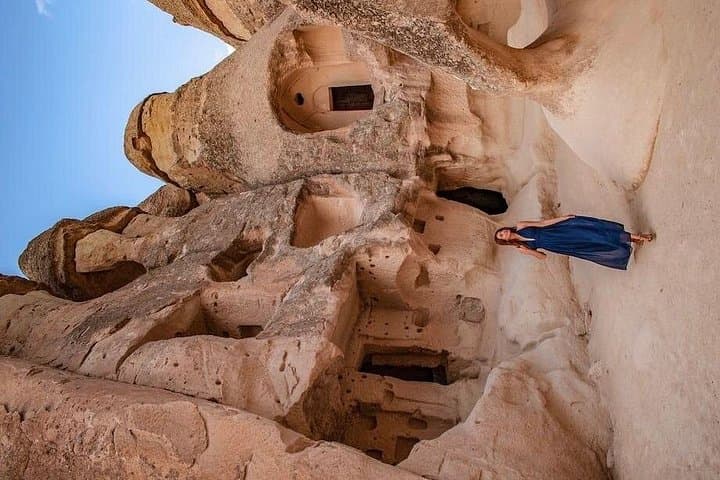
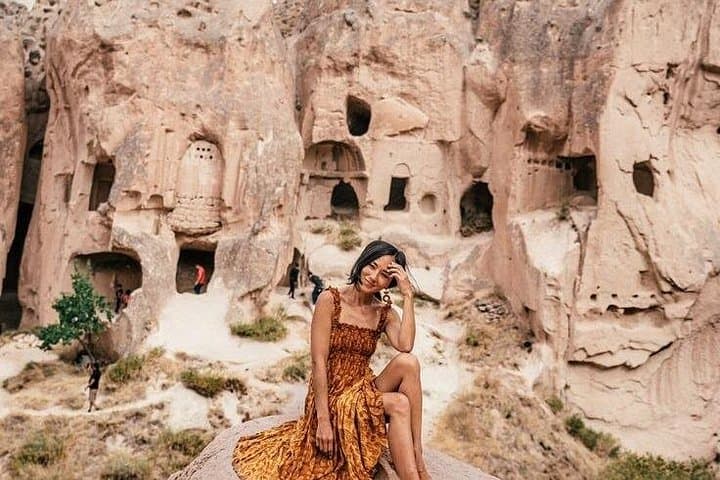
The route threads through Cappadocia’s volcanic past. Millennia ago eruptions laid down ash that compacted into soft tuff; that soft stone invited both erosion and human carving. Uçhisar Castle, hollowed into a rocky outcrop, reads like an ancient apartment block—rooms, pigeon houses and passageways layered over centuries. Zelve’s abandoned cave town preserves Byzantine churches and dwellings that show how communities adapted to the land’s softness and its vulnerabilities.
Culture here is tactile. In Avanos, the Kızılırmak River still turns the town’s pottery wheel culture: hands, clay and centuries-old techniques. In workshops you can see local artisans coaxing thin-walled bowls from red clay — souvenirs that are also living craft.
Practically, the Red Tour is a full day: expect 6–7 hours on the road with multiple stops. Most walking at each site is 0.5–2 miles over uneven rock, carved steps and loose gravel. The region sits around 1,100–1,300 meters (3,600–4,200 ft) in elevation; mornings can be cool and afternoons warm, so layers are useful.
Start early to catch slanting light across the fairy chimneys at Goreme Panorama and Paşabağ (Monks Valley). Uçhisar’s summit rewards a short climb with a 360-degree read on valleys named for shape — Love, Rose, Red. Zelve’s tunnels and passages invite exploration but follow marked paths: the tuff erodes quickly where visitors stray.
Lunch happens in Uchisar — a practical pause with local cuisine before the afternoon’s explorations in Devrent (Imagination Valley) and Avanos. Bring cash for small pottery purchases or tea in a family-run cafe.
What to expect on the ground: comfortable walking shoes, sun protection, and a refillable water bottle. Guides handle logistics and a/c transport; groups are small (max 16), which keeps transitions quick. If you want quieter photos, ask to reorder stops or request earlier pickup — light and crowd rhythms change fast here.
The Red Tour is equal parts geology lesson and cultural field trip: it invites you to read the landscape, meet craft traditions, and move through places where people have shaped shelter from stone and left a layered record of life in soft rock.
The tour runs about 6 to 7 hours (360–420 minutes) including transport, site stops and a lunch break.
Yes—lunch is provided in Uchisar and typically lasts around 90 minutes.
Yes—hotel pickup is provided across the Goreme/Ürgüp area; confirm your pickup point when booking.
Some museum admissions (listed in the itinerary) are included; confirm specifics with the operator at booking.
Sites have uneven terrain and steps; this tour is not fully wheelchair accessible—contact the operator for specific accessibility accommodations.
Photography is allowed at most sites, but flash or tripods may be restricted inside delicate churches—follow site signage and guide instructions.
Noish Travels operates guided outdoor trips and adventures with an emphasis on safety, stewardship, and memorable experiences.

You step off the minivan at Goreme Panorama and the landscape leans in — a low plateau of sculpted tuff where wind and water have been patient engineers for millennia. Fairy chimneys rise like earthen columns, ochre and cream streaking under a high Anatolian sky. The Red Tour moves at a cinematic pace: short walks, long views, and a steady catalogue of geological oddities and human traces.
You step off the minivan at Goreme Panorama and the landscape leans in — a low plateau of sculpted tuff where wind and water have been patient engineers for millennia. Fairy chimneys rise like earthen columns, ochre and cream streaking under a high Anatolian sky. The Red Tour moves at a cinematic pace: short walks, long views, and a steady catalogue of geological oddities and human traces.
The route threads through Cappadocia’s volcanic past. Millennia ago eruptions laid down ash that compacted into soft tuff; that soft stone invited both erosion and human carving. Uçhisar Castle, hollowed into a rocky outcrop, reads like an ancient apartment block—rooms, pigeon houses and passageways layered over centuries. Zelve’s abandoned cave town preserves Byzantine churches and dwellings that show how communities adapted to the land’s softness and its vulnerabilities.
Culture here is tactile. In Avanos, the Kızılırmak River still turns the town’s pottery wheel culture: hands, clay and centuries-old techniques. In workshops you can see local artisans coaxing thin-walled bowls from red clay — souvenirs that are also living craft.
Practically, the Red Tour is a full day: expect 6–7 hours on the road with multiple stops. Most walking at each site is 0.5–2 miles over uneven rock, carved steps and loose gravel. The region sits around 1,100–1,300 meters (3,600–4,200 ft) in elevation; mornings can be cool and afternoons warm, so layers are useful.
Start early to catch slanting light across the fairy chimneys at Goreme Panorama and Paşabağ (Monks Valley). Uçhisar’s summit rewards a short climb with a 360-degree read on valleys named for shape — Love, Rose, Red. Zelve’s tunnels and passages invite exploration but follow marked paths: the tuff erodes quickly where visitors stray.
Lunch happens in Uchisar — a practical pause with local cuisine before the afternoon’s explorations in Devrent (Imagination Valley) and Avanos. Bring cash for small pottery purchases or tea in a family-run cafe.
What to expect on the ground: comfortable walking shoes, sun protection, and a refillable water bottle. Guides handle logistics and a/c transport; groups are small (max 16), which keeps transitions quick. If you want quieter photos, ask to reorder stops or request earlier pickup — light and crowd rhythms change fast here.
The Red Tour is equal parts geology lesson and cultural field trip: it invites you to read the landscape, meet craft traditions, and move through places where people have shaped shelter from stone and left a layered record of life in soft rock.