THE ADVENTURE COLLECTIVE® · Independent discovery and booking for outdoor travel

Set out from Lima on a day-long drive to Caral, the 5,000-year-old urban center of the Norte Chico civilization. This full-day tour combines an archaeological guided walk with a coastal lunch in Huacho and plenty of desert-and-sea scenery.
Set out from Lima on a day-long drive to Caral, the 5,000-year-old urban center of the Norte Chico civilization. This full-day tour combines an archaeological guided walk with a coastal lunch in Huacho and plenty of desert-and-sea scenery.
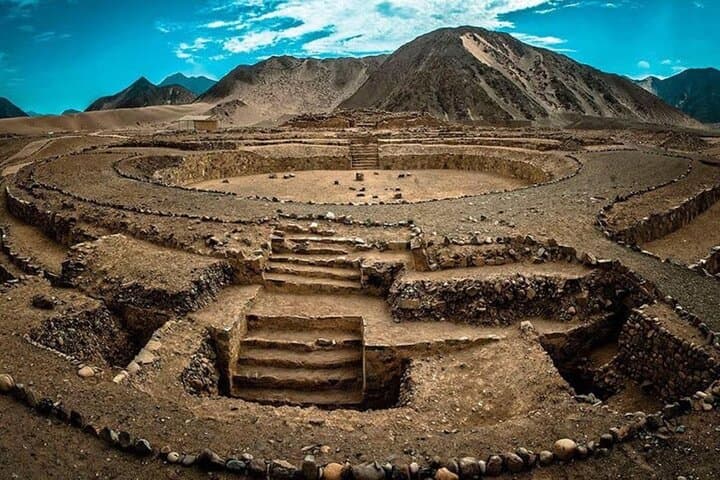
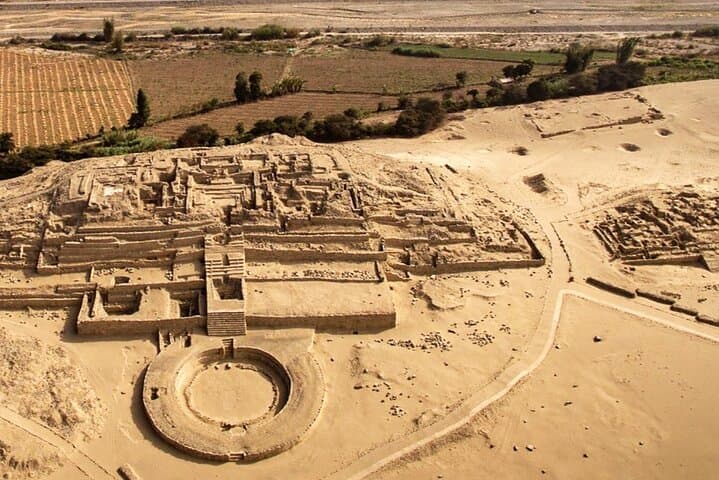
You leave Lima before first light, the highway unfurling north through a flat coastal desert where the wind seems to push you forward. After about three hours the Supe Valley opens up and low, stepped platforms rise from sand and scrub — the pyramids and plazas of Caral, one of the oldest urban centers in the Americas.
Verified experiences and guided adventures in the surrounding area.
Operated by GET2PERU.COM · Supe, Lima
You leave Lima before first light, the highway unfurling north through a flat coastal desert where the wind seems to push you forward. After about three hours the Supe Valley opens up and low, stepped platforms rise from sand and scrub — the pyramids and plazas of Caral, one of the oldest urban centers in the Americas.
Archaeologists date Caral to roughly 2600–2000 BCE, part of the Norte Chico civilization. The city’s broad plazas, baked-earth platforms and sun-facing pyramids reflect a society organized around ritual, trade and irrigation rather than ceramics. Excavations have revealed unusual artifacts — bone cornetts and intricate quipu-like cords — that hint at music and record-keeping in a culture nearly 5,000 years old.
Geologically, Caral sits on the arid Peruvian coast where rivers from the Andean foothills meet the Pacific plain. Stone and adobe were shaped to resist wind and occasional flood pulses; terraces and channels controlled seasonal water. After the guided site walk you typically continue to Huacho for a coastal lunch and a brief look at the working beach where fishermen haul nets and seabirds wheel overhead.
Practicalities: expect uneven, sandy walking and open sun; the full tour runs about 10–12 hours including round-trip transfer from Lima. Bring at least 2 liters of water, sturdy shoes, sun protection and a light wind layer for coastal mist. Respect the site: stay on marked paths, avoid touching exposed structures and follow your guide’s instructions. Timing your visit early in the day delivers cooler temperatures and cleaner light for photography, while late afternoons can be hazy with garúa.
Expect roughly a 3-hour drive each way depending on traffic and exact hotel pickup location.
The walking involves uneven terraces and steps but no technical climbing; moderate fitness is recommended for a full-day tour.
Yes — photography is allowed, but follow guide instructions and avoid touching or stepping on exposed structures.
Most full-day tours include a lunch stop in Huacho; confirm with your operator if dietary restrictions are required.
GET2PERU.COM operates guided outdoor trips and adventures with an emphasis on safety, stewardship, and memorable experiences.
You leave Lima before first light, the highway unfurling north through a flat coastal desert where the wind seems to push you forward. After about three hours the Supe Valley opens up and low, stepped platforms rise from sand and scrub — the pyramids and plazas of Caral, one of the oldest urban centers in the Americas.
You leave Lima before first light, the highway unfurling north through a flat coastal desert where the wind seems to push you forward. After about three hours the Supe Valley opens up and low, stepped platforms rise from sand and scrub — the pyramids and plazas of Caral, one of the oldest urban centers in the Americas.
Archaeologists date Caral to roughly 2600–2000 BCE, part of the Norte Chico civilization. The city’s broad plazas, baked-earth platforms and sun-facing pyramids reflect a society organized around ritual, trade and irrigation rather than ceramics. Excavations have revealed unusual artifacts — bone cornetts and intricate quipu-like cords — that hint at music and record-keeping in a culture nearly 5,000 years old.
Geologically, Caral sits on the arid Peruvian coast where rivers from the Andean foothills meet the Pacific plain. Stone and adobe were shaped to resist wind and occasional flood pulses; terraces and channels controlled seasonal water. After the guided site walk you typically continue to Huacho for a coastal lunch and a brief look at the working beach where fishermen haul nets and seabirds wheel overhead.
Practicalities: expect uneven, sandy walking and open sun; the full tour runs about 10–12 hours including round-trip transfer from Lima. Bring at least 2 liters of water, sturdy shoes, sun protection and a light wind layer for coastal mist. Respect the site: stay on marked paths, avoid touching exposed structures and follow your guide’s instructions. Timing your visit early in the day delivers cooler temperatures and cleaner light for photography, while late afternoons can be hazy with garúa.