THE ADVENTURE COLLECTIVE® · Independent discovery and booking for outdoor travel

Spend a full day diving two iconic cenotes—Chak Mool and Kukulkan—near Playa del Carmen. This guided trip for certified divers combines cavern passages, haloclines and fossil-studded formations with practical briefings and small-group attention.
Spend a full day diving two iconic cenotes—Chak Mool and Kukulkan—near Playa del Carmen. This guided trip for certified divers combines cavern passages, haloclines and fossil-studded formations with practical briefings and small-group attention.
A shaft of morning light cuts through jungle canopy as the van eases off the coastal road and the limestone shelf of the Yucatán comes into view. You step onto packed earth, and the air smells of wet stone and green growth; below, freshwater caverns wait, throwing beams into clear water like an invitation.
Verified experiences and guided adventures in the surrounding area.
Operated by Dive Guru · Playa del Carmen, Quintana Roo
A shaft of morning light cuts through jungle canopy as the van eases off the coastal road and the limestone shelf of the Yucatán comes into view. You step onto packed earth, and the air smells of wet stone and green growth; below, freshwater caverns wait, throwing beams into clear water like an invitation.
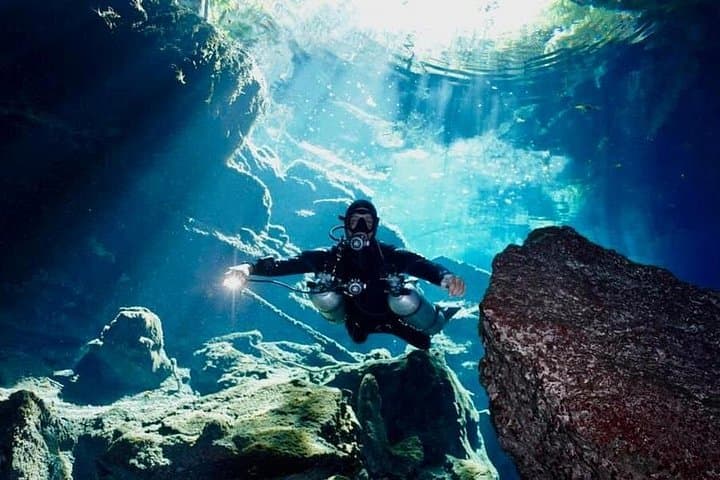
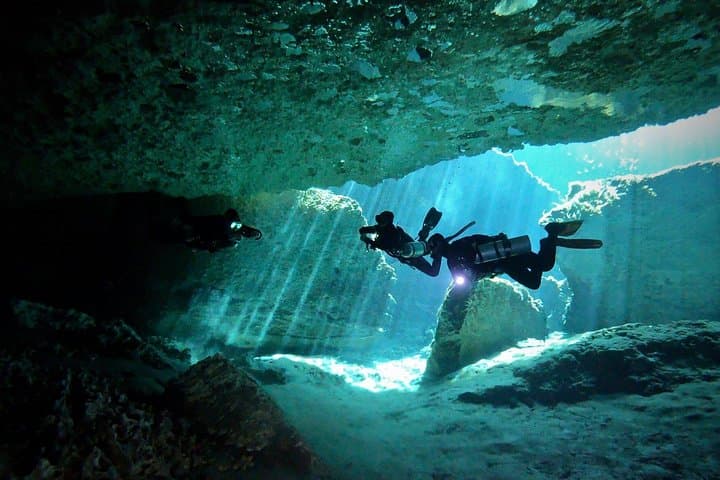
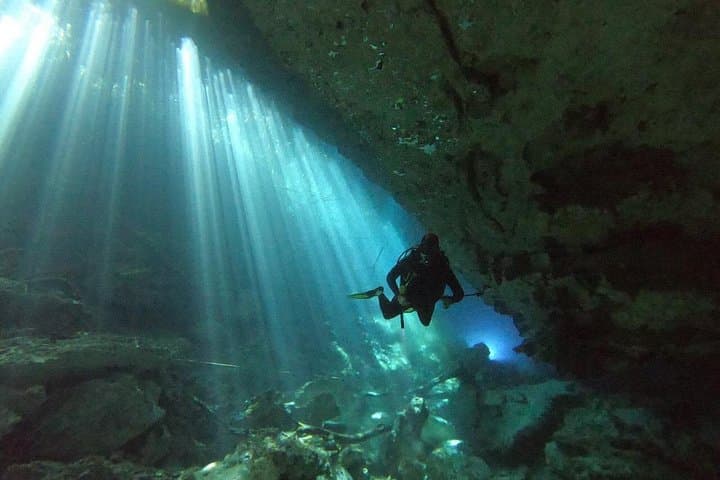
The cenotes here are geological pages: collapsed karst, ancient sea floors littered with fossil corals and shells, and slow dripstone work that has grown stalactites and stalagmites over millennia. The Maya treated cenotes as vital sources of water and portals to the underworld; modern divers float through those same corridors, where haloclines—layers where fresh and salt meet—bend light and make the water feel like two oceans. The local fishing and coastal communities still read tides and cenote outflows in their rhythms.
Expect two guided dives in Chak Mool and Kukulkan, short surface intervals for a simple lunch of fruit and sandwiches, and a small-group format that favors careful buoyancy and minimal impact. Practicalities matter: certified divers must present credentials and a recent health declaration, refrain from flying within 18 hours after diving, and follow guide briefings closely. Water temperatures are stable but bring a wetsuit for comfort, and secure a dive light to reveal delicate formations.
This is an immersive, technical day of exploration—less about thrills and more about precision, calm breathing, and watching sunlight draw patterns across an ancient submerged world.
Yes—participants must hold an Open Water certification (or equivalent); guides will verify credentials before diving.
This is a full-day experience (approximately 8–10 hours) including two cenote dives, two tanks per dive, weights/belts, lunch, bottled water and snacks.
No—flying within 18 hours of diving is not recommended; plan flights to respect decompression safety guidelines.
Cenote dives require good buoyancy skills and comfort in overhead environments; inexperienced divers should take a cavern or cave course first.
Dive Guru operates guided outdoor trips and adventures with an emphasis on safety, stewardship, and memorable experiences.
A shaft of morning light cuts through jungle canopy as the van eases off the coastal road and the limestone shelf of the Yucatán comes into view. You step onto packed earth, and the air smells of wet stone and green growth; below, freshwater caverns wait, throwing beams into clear water like an invitation.
A shaft of morning light cuts through jungle canopy as the van eases off the coastal road and the limestone shelf of the Yucatán comes into view. You step onto packed earth, and the air smells of wet stone and green growth; below, freshwater caverns wait, throwing beams into clear water like an invitation.
The cenotes here are geological pages: collapsed karst, ancient sea floors littered with fossil corals and shells, and slow dripstone work that has grown stalactites and stalagmites over millennia. The Maya treated cenotes as vital sources of water and portals to the underworld; modern divers float through those same corridors, where haloclines—layers where fresh and salt meet—bend light and make the water feel like two oceans. The local fishing and coastal communities still read tides and cenote outflows in their rhythms.
Expect two guided dives in Chak Mool and Kukulkan, short surface intervals for a simple lunch of fruit and sandwiches, and a small-group format that favors careful buoyancy and minimal impact. Practicalities matter: certified divers must present credentials and a recent health declaration, refrain from flying within 18 hours after diving, and follow guide briefings closely. Water temperatures are stable but bring a wetsuit for comfort, and secure a dive light to reveal delicate formations.
This is an immersive, technical day of exploration—less about thrills and more about precision, calm breathing, and watching sunlight draw patterns across an ancient submerged world.