THE ADVENTURE COLLECTIVE® · Independent discovery and booking for outdoor travel

Board a morning boat from Bahía Ballena and spend a day walking El Pargo and San Pedrillo in Corcovado National Park. Expect dense rainforest, frequent wildlife sightings, and variable trails—ideal for travelers with a moderate fitness level.
Board a morning boat from Bahía Ballena and spend a day walking El Pargo and San Pedrillo in Corcovado National Park. Expect dense rainforest, frequent wildlife sightings, and variable trails—ideal for travelers with a moderate fitness level.
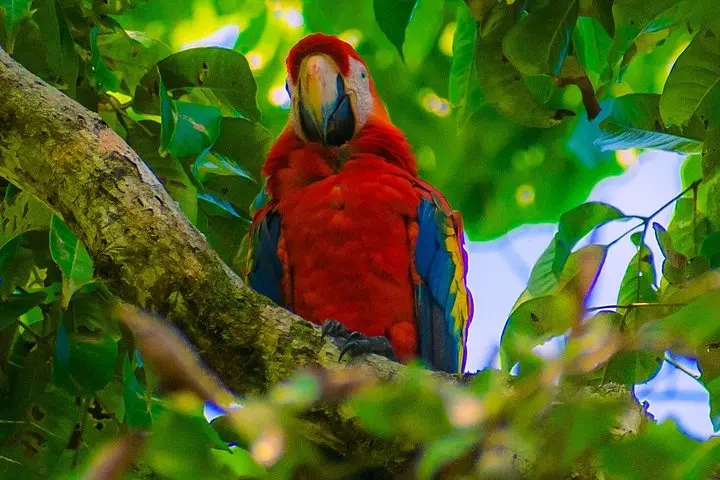
Mist hangs low over the mangroves as the boat slips away from Bahía Ballena; the sea pushes you toward the jagged green of the Osa Peninsula and Corcovado National Park. By the time the shoreline resolves into rainforest canopy, guide voices thread through the humidity, pointing out howler calls and the flash of a kingfisher.
Verified experiences and guided adventures in the surrounding area.
Operated by DOLPHIN TOURS · Uvita, Puntarenas
Mist hangs low over the mangroves as the boat slips away from Bahía Ballena; the sea pushes you toward the jagged green of the Osa Peninsula and Corcovado National Park. By the time the shoreline resolves into rainforest canopy, guide voices thread through the humidity, pointing out howler calls and the flash of a kingfisher.
Corcovado is one of Costa Rica’s most biodiverse reserves — wet lowland rainforest cutting into the Pacific, shaped by tectonic uplift and heavy equatorial rains. Indigenous and colonial histories meet here in place names and old paths; the park’s ranger stations (San Pedrillo and Sirena among them) became conservation outposts as scientific interest and tourism grew in the late 20th century.
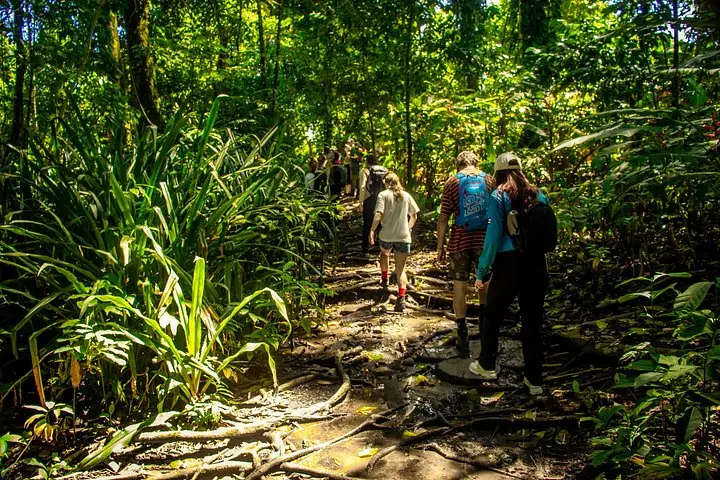
On this full-day route you hike the El Pargo trail for roughly two hours over root-strewn soil and occasional muddy breaks, then lunch at San Pedrillo. If weather and time permit, a second walk to a waterfall or along a secondary trail adds shoreline views and freshwater pools. Expect dense canopy, sudden light gaps, and the near-constant hum of insects and birds; the forest here actively reshapes your pace — sometimes demanding slow, careful steps, sometimes allowing steady strides.
Practical edge: come with waterproof footwear or rubber boots, bring a refillable bottle, and plan for heavy sun and sudden rain. Guides manage logistics and park permits; groups can be sizeable, so keep to trail etiquette and follow your guide for wildlife viewing opportunities and safety.
The boat leg is roughly 1.5 hours each way depending on sea conditions and the exact landing point.
Yes, entrance to Corcovado National Park and applicable fees are included in the tour price per the operator’s listing.
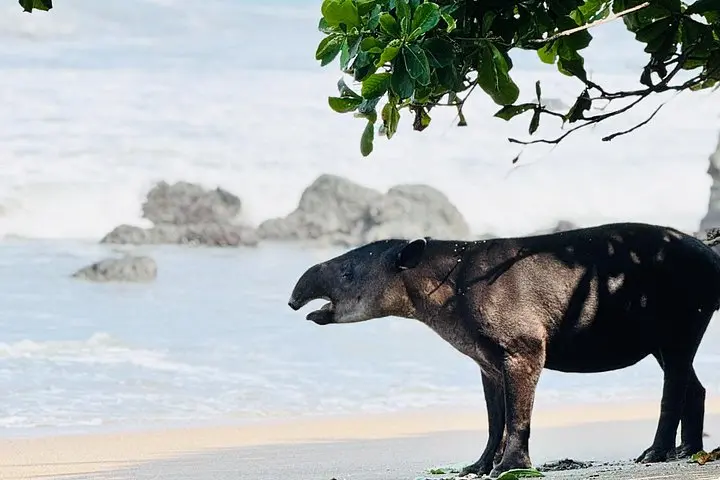
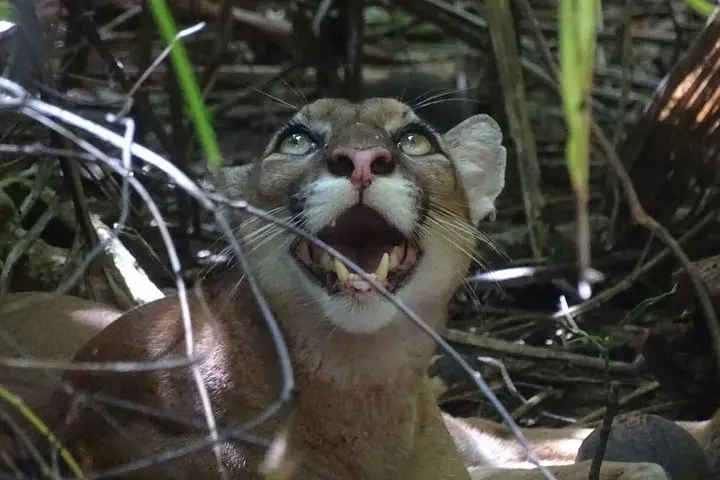
Corcovado hosts tapirs, jaguars, and other large fauna, but sightings are not guaranteed; guides increase chances by using local knowledge and quiet observation.
Children can join if they have moderate stamina and can handle uneven terrain; the operator has a minimum group size and age policies—ask at booking.
DOLPHIN TOURS operates guided outdoor trips and adventures with an emphasis on safety, stewardship, and memorable experiences.
Mist hangs low over the mangroves as the boat slips away from Bahía Ballena; the sea pushes you toward the jagged green of the Osa Peninsula and Corcovado National Park. By the time the shoreline resolves into rainforest canopy, guide voices thread through the humidity, pointing out howler calls and the flash of a kingfisher.
Mist hangs low over the mangroves as the boat slips away from Bahía Ballena; the sea pushes you toward the jagged green of the Osa Peninsula and Corcovado National Park. By the time the shoreline resolves into rainforest canopy, guide voices thread through the humidity, pointing out howler calls and the flash of a kingfisher.
Corcovado is one of Costa Rica’s most biodiverse reserves — wet lowland rainforest cutting into the Pacific, shaped by tectonic uplift and heavy equatorial rains. Indigenous and colonial histories meet here in place names and old paths; the park’s ranger stations (San Pedrillo and Sirena among them) became conservation outposts as scientific interest and tourism grew in the late 20th century.
On this full-day route you hike the El Pargo trail for roughly two hours over root-strewn soil and occasional muddy breaks, then lunch at San Pedrillo. If weather and time permit, a second walk to a waterfall or along a secondary trail adds shoreline views and freshwater pools. Expect dense canopy, sudden light gaps, and the near-constant hum of insects and birds; the forest here actively reshapes your pace — sometimes demanding slow, careful steps, sometimes allowing steady strides.
Practical edge: come with waterproof footwear or rubber boots, bring a refillable bottle, and plan for heavy sun and sudden rain. Guides manage logistics and park permits; groups can be sizeable, so keep to trail etiquette and follow your guide for wildlife viewing opportunities and safety.