THE ADVENTURE COLLECTIVE® · Independent discovery and booking for outdoor travel

Spend a day weaving through limestone towers, swimming in Kayangan Lake’s clear bowl, slipping into the Twin Lagoon, and snorkeling a WWII skeleton wreck. This full-day Coron island-hopping tour packs the archipelago’s geological drama and marine life into one accessible, unforgettable circuit.
Spend a day weaving through limestone towers, swimming in Kayangan Lake’s clear bowl, slipping into the Twin Lagoon, and snorkeling a WWII skeleton wreck. This full-day Coron island-hopping tour packs the archipelago’s geological drama and marine life into one accessible, unforgettable circuit.
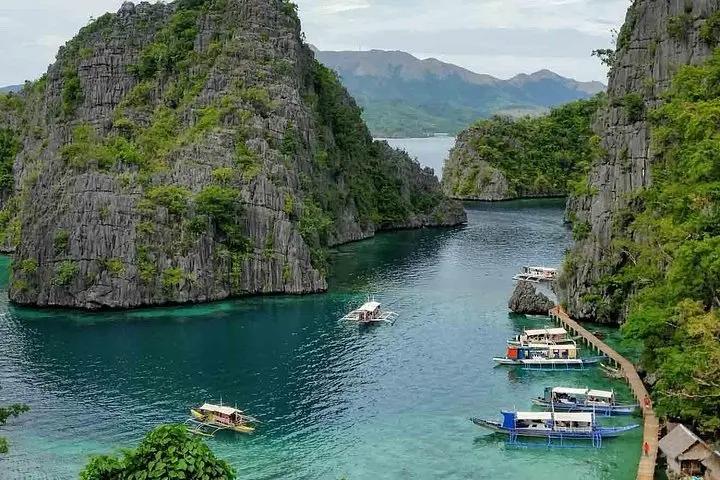
You push off from Coron’s small harbor at 9:00 a.m., the boat’s bow cleaving a mirror of turquoise set against raw limestone towers. The engine hums, gulls ride thermals, and the sea seems to decide the day for you—glassy near the lagoons, lively where coral gardens dare you to dive in.
Verified experiences and guided adventures in the surrounding area.
Operated by Sia Travels · Coron, Palawan
You push off from Coron’s small harbor at 9:00 a.m., the boat’s bow cleaving a mirror of turquoise set against raw limestone towers. The engine hums, gulls ride thermals, and the sea seems to decide the day for you—glassy near the lagoons, lively where coral gardens dare you to dive in.
The itinerary reads like a primer on Palawan’s coastal geology and wartime history: a quick climb to Kayangan Lake’s viewpoint, the tight blue channel into Twin Lagoon, snorkeling over coral gardens and the evocative skeleton of a WWII supply ship. Kayangan’s water is brackish and calm, funneled by white rock that has been carved by wind and rain for millennia. The Twin Lagoon feels private and theatrical—towers of limestone pinhole the sky and light slips through like a stage cue.
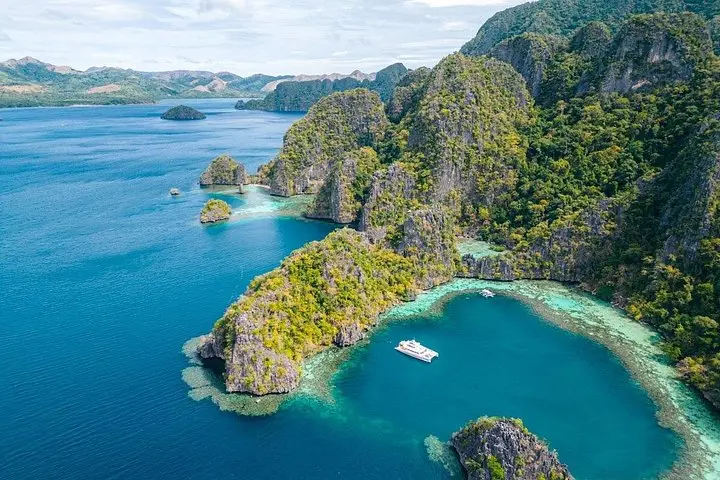
Coron’s islands are part of an ancient reef-limestone landscape; the cliffs are weathered relics of uplifted seabeds. Human history threads through the same water—Japanese ships sunk in 1944 now sit as artificial reefs, white lining of coral and schooling fish turning metal into habitat.
Local culture is quietly present. Lunch is usually served under coconut palms on Atwayan Beach, where fisher families still mend nets and fishermen sell grilled fish at dusk in nearby Coron town. The Coron Youth Club beach offers a softer contrast: sand to stretch out on, mangroves framing shallow water that warms quickly in midday sun.
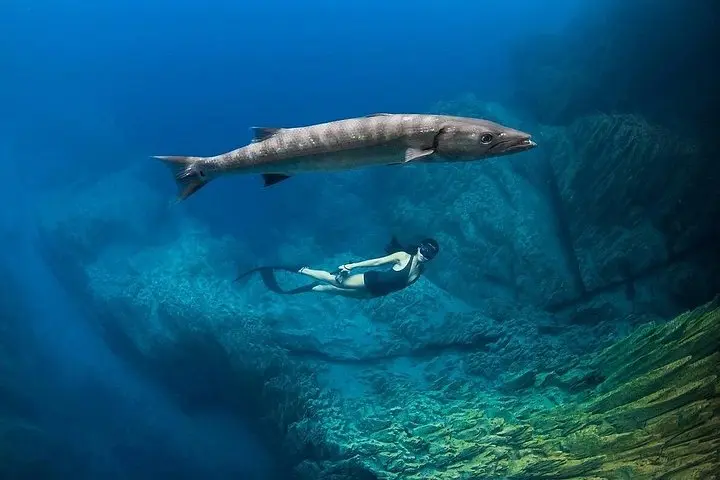
Practicalities are straightforward: pick-up begins 8:00–9:00 a.m., and the tour runs roughly 9:00–17:00. Kayangan requires a short 10–15 minute uphill climb to reach its classic viewpoint—expect stairs and uneven rock, so bring shoes with grip. Snorkel sites have visibility that can exceed 15–20 meters on calm days; the skeleton wreck rests in 5–22 meters, making it accessible for snorkelers and free divers. Entrance fees are included, but carry small bills for tips, extra snacks, or local vendors.
Stay reef-conscious: use biodegradable sunscreen, don’t touch coral, and keep a respectful distance from turtles. Sea conditions are best in the dry months (roughly November to May), while typhoon season (June–October) can bring cancellations. If you’re not a confident swimmer, request a life vest at the assembly—guides provide them, but you can rent gear if you prefer your own mask.
This is an all-in-one day that balances photo stops, gentle hikes, and sustained snorkeling. It’s accessible for most travelers who can manage short climbs and brief swims, and it delivers a concentrated introduction to Coron’s geological drama, marine life, and wartime echoes—ideal for first-time visitors who want the archipelago’s highlights in a single, memorable day.
Yes—entrance fees for major sites listed on the itinerary are included in this tour’s price.
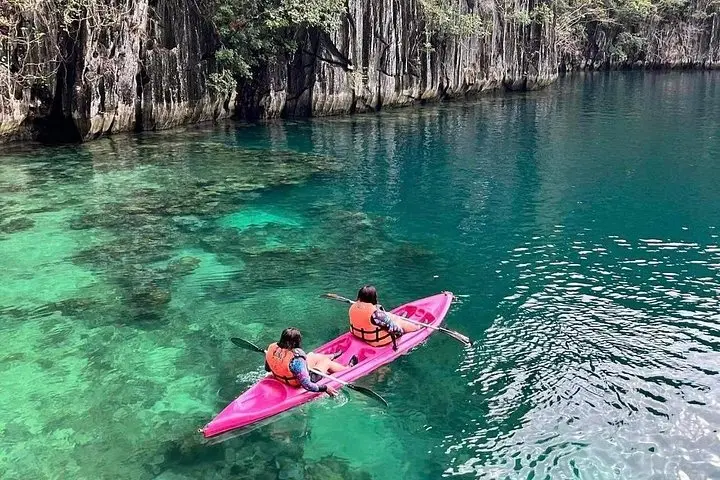
Yes—mask, snorkel, fins and kayaks are available to rent at assembly; bringing your own can be more comfortable.
Non-swimmers can still enjoy viewpoints and beaches; life vests are provided for beginners and required at snorkeling sites.
The operator cancels for unsafe sea conditions; you can get a full refund if canceled at least 24 hours before departure or be offered rescheduling per the supplier policy.
Shared tours typically accommodate up to about 25 travelers; boats vary by group size and destination stops.
Yes—lunch is included, usually served picnic-style on Atwayan Beach or a similar stop with shaded seating.
Sia Travels operates guided outdoor trips and adventures with an emphasis on safety, stewardship, and memorable experiences.
You push off from Coron’s small harbor at 9:00 a.m., the boat’s bow cleaving a mirror of turquoise set against raw limestone towers. The engine hums, gulls ride thermals, and the sea seems to decide the day for you—glassy near the lagoons, lively where coral gardens dare you to dive in.
You push off from Coron’s small harbor at 9:00 a.m., the boat’s bow cleaving a mirror of turquoise set against raw limestone towers. The engine hums, gulls ride thermals, and the sea seems to decide the day for you—glassy near the lagoons, lively where coral gardens dare you to dive in.
The itinerary reads like a primer on Palawan’s coastal geology and wartime history: a quick climb to Kayangan Lake’s viewpoint, the tight blue channel into Twin Lagoon, snorkeling over coral gardens and the evocative skeleton of a WWII supply ship. Kayangan’s water is brackish and calm, funneled by white rock that has been carved by wind and rain for millennia. The Twin Lagoon feels private and theatrical—towers of limestone pinhole the sky and light slips through like a stage cue.
Coron’s islands are part of an ancient reef-limestone landscape; the cliffs are weathered relics of uplifted seabeds. Human history threads through the same water—Japanese ships sunk in 1944 now sit as artificial reefs, white lining of coral and schooling fish turning metal into habitat.
Local culture is quietly present. Lunch is usually served under coconut palms on Atwayan Beach, where fisher families still mend nets and fishermen sell grilled fish at dusk in nearby Coron town. The Coron Youth Club beach offers a softer contrast: sand to stretch out on, mangroves framing shallow water that warms quickly in midday sun.
Practicalities are straightforward: pick-up begins 8:00–9:00 a.m., and the tour runs roughly 9:00–17:00. Kayangan requires a short 10–15 minute uphill climb to reach its classic viewpoint—expect stairs and uneven rock, so bring shoes with grip. Snorkel sites have visibility that can exceed 15–20 meters on calm days; the skeleton wreck rests in 5–22 meters, making it accessible for snorkelers and free divers. Entrance fees are included, but carry small bills for tips, extra snacks, or local vendors.
Stay reef-conscious: use biodegradable sunscreen, don’t touch coral, and keep a respectful distance from turtles. Sea conditions are best in the dry months (roughly November to May), while typhoon season (June–October) can bring cancellations. If you’re not a confident swimmer, request a life vest at the assembly—guides provide them, but you can rent gear if you prefer your own mask.
This is an all-in-one day that balances photo stops, gentle hikes, and sustained snorkeling. It’s accessible for most travelers who can manage short climbs and brief swims, and it delivers a concentrated introduction to Coron’s geological drama, marine life, and wartime echoes—ideal for first-time visitors who want the archipelago’s highlights in a single, memorable day.