THE ADVENTURE COLLECTIVE® · Independent discovery and booking for outdoor travel

A full-day excursion from Quito that blends high-altitude hiking with sweeping Andean panoramas. Hike to the José Rivas Refuge, walk around Limpiopungo Lagoon, and learn the geology and culture that define Cotopaxi National Park.
A full-day excursion from Quito that blends high-altitude hiking with sweeping Andean panoramas. Hike to the José Rivas Refuge, walk around Limpiopungo Lagoon, and learn the geology and culture that define Cotopaxi National Park.
The bus eases up through the Andean highlands and suddenly Cotopaxi fills the windshield: a near-perfect cone with a white cap that seems to hover above the páramo. Travelers step onto creaking boots, the air thin and cold, and move across a landscape of tussock grasses, volcanic scree, and shallow lagoons that mirror the sky.
Verified experiences and guided adventures in the surrounding area.
Operated by EcuadorianTourGuide · Quito, Pichincha
The bus eases up through the Andean highlands and suddenly Cotopaxi fills the windshield: a near-perfect cone with a white cap that seems to hover above the páramo. Travelers step onto creaking boots, the air thin and cold, and move across a landscape of tussock grasses, volcanic scree, and shallow lagoons that mirror the sky.
Cotopaxi is one of the world’s highest active volcanoes; its eruptions have shaped local valleys and influenced indigenous agricultural calendars for centuries. The ground underfoot is volcanic and young—ash and pumice that hold water in sharp, peaty soils—while the páramo hosts grasses and frailejón adapted to intense UV and nightly freezes. Local Quechua-speaking communities revere the mountain in ritual and story, and Spanish colonial history left an imprint on access routes and park management.
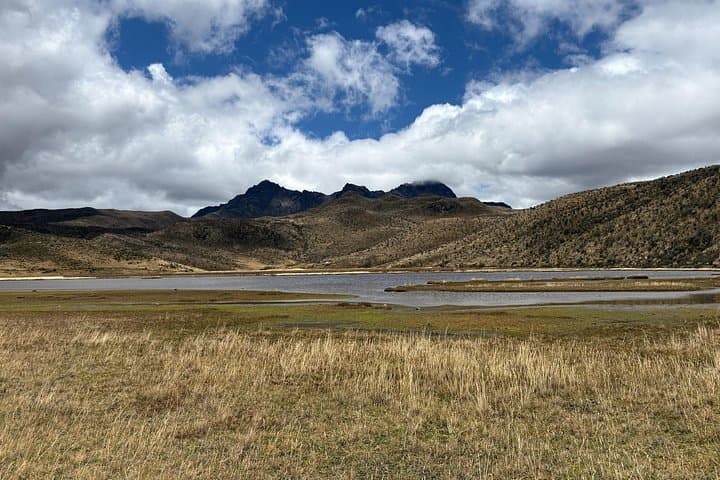
Expect a day that combines scenic drives through grazing fields, a lakeside walk at Limpiopungo, and a steep, altitude-testing hike toward the José Rivas Refuge at roughly 4,864 meters. Guides will interpret geology and birdlife, point out wild horses, and manage pace for altitude. Weather can flip quickly: sun, wind, and sleet are all possible in a single afternoon.
Practical notes: pace yourself, drink water before and during the hike, and layer for wind and cold. Boots with firm soles and trekking poles make the ascent easier on loose volcanic rock. Most departures are full-day (6–8 hours) from Quito with private transport and a guide included, and the trail rewards steady effort with wide views of the high Andes and Cotopaxi’s dramatic silhouette.
The refuge is at about 4,864 meters (18,000 ft). The tour includes a guide who paces the group and provides safety briefings for high-altitude hiking.
No technical climbing skills are required for the refuge hike, but participants should be comfortable on steep, loose terrain and prepared for altitude.
Many day tours include transport and guide but may not include national park entrance fees—confirm with the operator when booking.
Stop exertion, notify your guide immediately, descend to lower elevation if symptoms persist, and seek medical attention; small symptoms often improve with hydration and rest.
EcuadorianTourGuide operates guided outdoor trips and adventures with an emphasis on safety, stewardship, and memorable experiences.
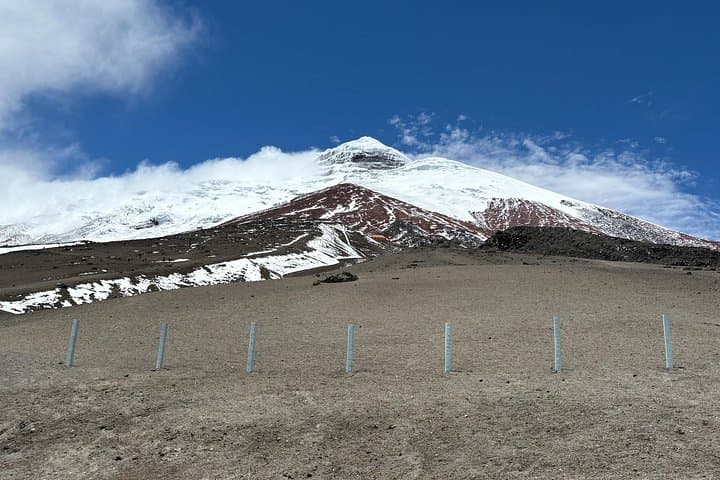
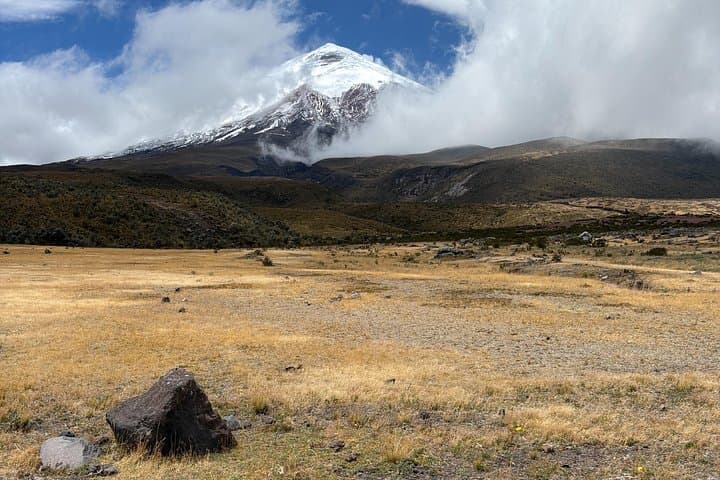
The bus eases up through the Andean highlands and suddenly Cotopaxi fills the windshield: a near-perfect cone with a white cap that seems to hover above the páramo. Travelers step onto creaking boots, the air thin and cold, and move across a landscape of tussock grasses, volcanic scree, and shallow lagoons that mirror the sky.
The bus eases up through the Andean highlands and suddenly Cotopaxi fills the windshield: a near-perfect cone with a white cap that seems to hover above the páramo. Travelers step onto creaking boots, the air thin and cold, and move across a landscape of tussock grasses, volcanic scree, and shallow lagoons that mirror the sky.
Cotopaxi is one of the world’s highest active volcanoes; its eruptions have shaped local valleys and influenced indigenous agricultural calendars for centuries. The ground underfoot is volcanic and young—ash and pumice that hold water in sharp, peaty soils—while the páramo hosts grasses and frailejón adapted to intense UV and nightly freezes. Local Quechua-speaking communities revere the mountain in ritual and story, and Spanish colonial history left an imprint on access routes and park management.
Expect a day that combines scenic drives through grazing fields, a lakeside walk at Limpiopungo, and a steep, altitude-testing hike toward the José Rivas Refuge at roughly 4,864 meters. Guides will interpret geology and birdlife, point out wild horses, and manage pace for altitude. Weather can flip quickly: sun, wind, and sleet are all possible in a single afternoon.
Practical notes: pace yourself, drink water before and during the hike, and layer for wind and cold. Boots with firm soles and trekking poles make the ascent easier on loose volcanic rock. Most departures are full-day (6–8 hours) from Quito with private transport and a guide included, and the trail rewards steady effort with wide views of the high Andes and Cotopaxi’s dramatic silhouette.