THE ADVENTURE COLLECTIVE® · Independent discovery and booking for outdoor travel

Board a traditional dhow in Khasab for a 5–6 hour cruise through Musandam’s dramatic fjords. Expect dolphin encounters, snorkel stops over colorful reefs, and a close-up look at Telegraph Island’s historic ruins.
Board a traditional dhow in Khasab for a 5–6 hour cruise through Musandam’s dramatic fjords. Expect dolphin encounters, snorkel stops over colorful reefs, and a close-up look at Telegraph Island’s historic ruins.
You step aboard a traditional wooden dhow at Khasab’s small harbor and the engine hums as the bow parts the blue. The Musandam coastline tightens into a 16 km khor: steep, ochre cliffs that drop straight into water so clear you can watch fish scatter beneath the hull. Dolphins commonly greet the boat near the fjord mouth, skipping ahead like a live compass.
Verified experiences and guided adventures in the surrounding area.
Operated by Oman Day Tours · Khasab, Musandam Governorate
You step aboard a traditional wooden dhow at Khasab’s small harbor and the engine hums as the bow parts the blue. The Musandam coastline tightens into a 16 km khor: steep, ochre cliffs that drop straight into water so clear you can watch fish scatter beneath the hull. Dolphins commonly greet the boat near the fjord mouth, skipping ahead like a live compass.
The geography here is raw — northwestern Oman’s Musandam Governorate is the seaward edge of the Hajar range, uplifted limestone carved by tectonic stress and sea-level change into narrow fjords and hidden coves. Telegraph Island, a tiny speck with the ruins of a 19th-century British telegraph station, is a reminder that these channels were once strategic waypoints. Local communities still fish and welcome visitors with straightforward Omani hospitality; the dhow experience blends that maritime culture with modern snorkeling and wildlife viewing.
Practicalities are simple: expect a 5–6 hour outing with lunch and bottled water included, and round-trip transfers typically handled from Khasab hotels. Plan for sun and spray — broad-brim hat, reef-safe sunscreen, and a light windproof layer are useful. Bring a camera with a fast shutter for dolphins and a dry bag for phones. Snorkel stops are at shallow reefs teeming with colorful reef fish; be careful not to stand on coral, and follow guides’ directions. Seas can be choppy near the open Gulf of Oman, so motion-sickness meds are a prudent choice. With minimal effort you get a day of dramatic geology, playful dolphins, and warm, clear water that invites a second dip.
Dolphins are frequently sighted, especially near the fjord entrance, but sightings can’t be guaranteed—morning departures improve chances.
Basic snorkel gear is usually provided but many travelers bring their own mask and fins for comfort and fit.
Yes — tours accept children and offer infant seats on transfers; children must be supervised and some operators limit child fares when sharing with two adults.
A current valid passport is required for boarding and for any border formalities; cruise ship passengers should provide ship details at booking.
Oman Day Tours operates guided outdoor trips and adventures with an emphasis on safety, stewardship, and memorable experiences.
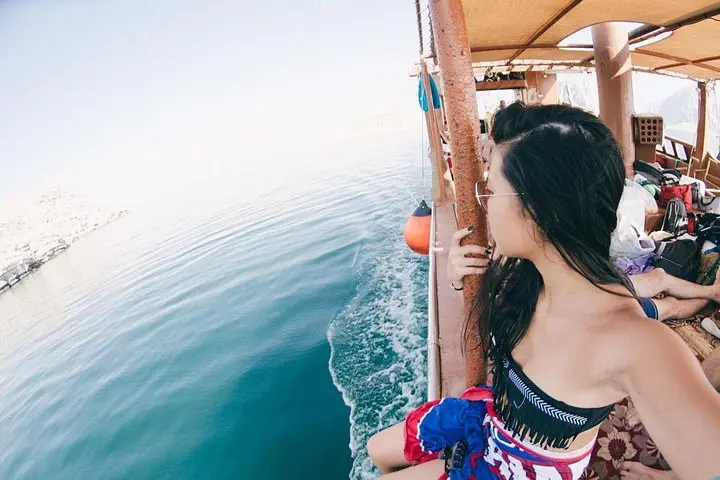
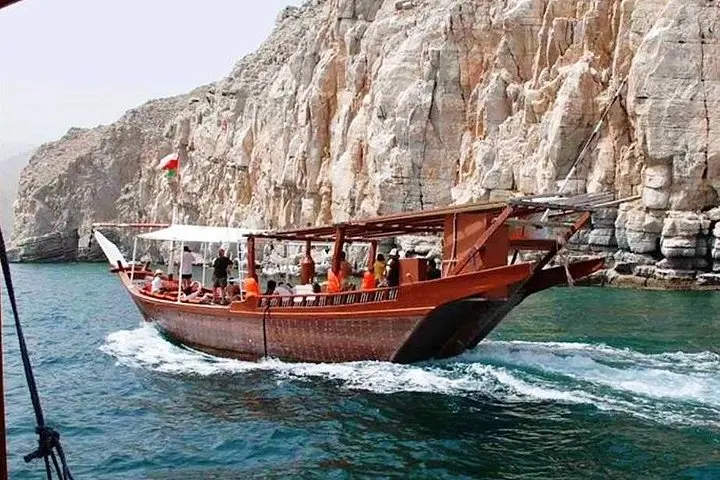
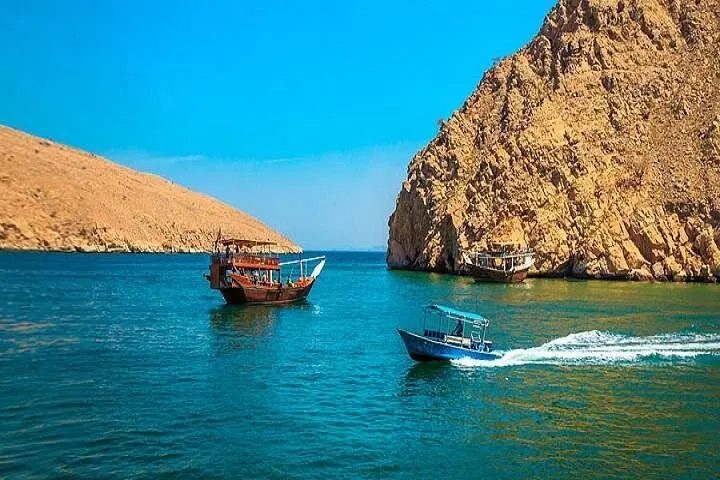
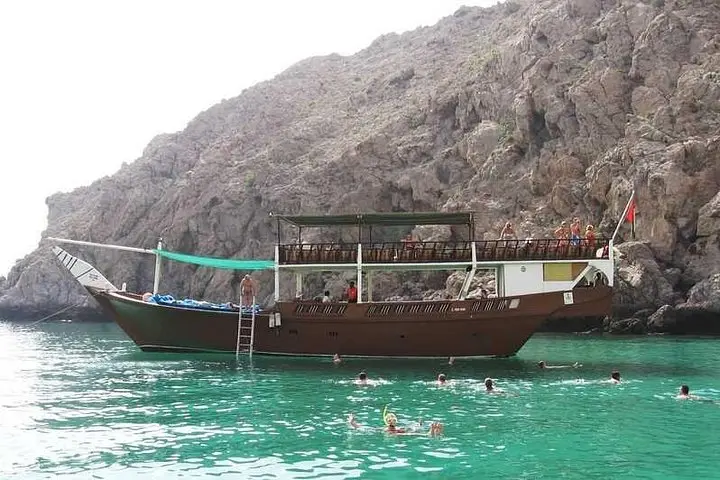
You step aboard a traditional wooden dhow at Khasab’s small harbor and the engine hums as the bow parts the blue. The Musandam coastline tightens into a 16 km khor: steep, ochre cliffs that drop straight into water so clear you can watch fish scatter beneath the hull. Dolphins commonly greet the boat near the fjord mouth, skipping ahead like a live compass.
You step aboard a traditional wooden dhow at Khasab’s small harbor and the engine hums as the bow parts the blue. The Musandam coastline tightens into a 16 km khor: steep, ochre cliffs that drop straight into water so clear you can watch fish scatter beneath the hull. Dolphins commonly greet the boat near the fjord mouth, skipping ahead like a live compass.
The geography here is raw — northwestern Oman’s Musandam Governorate is the seaward edge of the Hajar range, uplifted limestone carved by tectonic stress and sea-level change into narrow fjords and hidden coves. Telegraph Island, a tiny speck with the ruins of a 19th-century British telegraph station, is a reminder that these channels were once strategic waypoints. Local communities still fish and welcome visitors with straightforward Omani hospitality; the dhow experience blends that maritime culture with modern snorkeling and wildlife viewing.
Practicalities are simple: expect a 5–6 hour outing with lunch and bottled water included, and round-trip transfers typically handled from Khasab hotels. Plan for sun and spray — broad-brim hat, reef-safe sunscreen, and a light windproof layer are useful. Bring a camera with a fast shutter for dolphins and a dry bag for phones. Snorkel stops are at shallow reefs teeming with colorful reef fish; be careful not to stand on coral, and follow guides’ directions. Seas can be choppy near the open Gulf of Oman, so motion-sickness meds are a prudent choice. With minimal effort you get a day of dramatic geology, playful dolphins, and warm, clear water that invites a second dip.