THE ADVENTURE COLLECTIVE® · Independent discovery and booking for outdoor travel

Drive from Chiang Mai into cool montane air on a full-day tour that climbs Thailand’s highest peak, visits royal pagodas, walks cloud-forest trails and ends at a thundering waterfall. Expect a mix of short hikes, cultural stops in hill-tribe villages, and panoramic viewpoints—perfect for photographers and nature lovers.
Drive from Chiang Mai into cool montane air on a full-day tour that climbs Thailand’s highest peak, visits royal pagodas, walks cloud-forest trails and ends at a thundering waterfall. Expect a mix of short hikes, cultural stops in hill-tribe villages, and panoramic viewpoints—perfect for photographers and nature lovers.
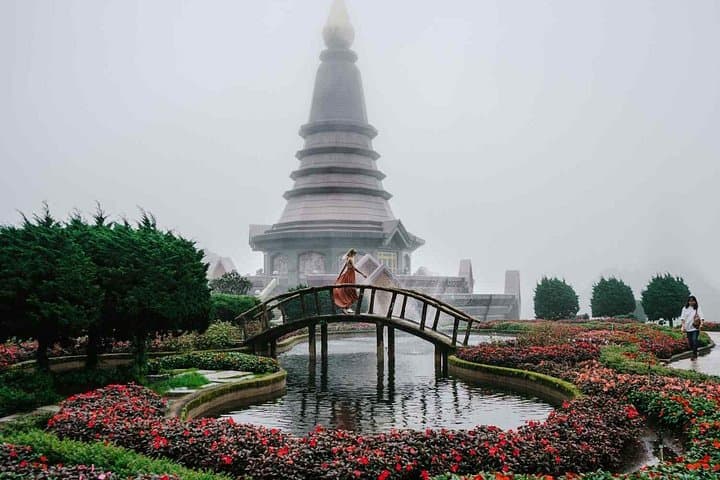
The bus eases out of Chiang Mai before dawn and the air cools as you climb. Pine-scented clouds press against the windows while the road snakes toward Thailand’s highest summit—Doi Inthanon. By mid-morning the twin white chedis appear on the skyline, their tiled roofs catching a highland light that feels almost sharp enough to slice through the mist.
Verified experiences and guided adventures in the surrounding area.
Operated by Asia Advisor Thailand · Chiang Mai, Chiang Mai Province
The bus eases out of Chiang Mai before dawn and the air cools as you climb. Pine-scented clouds press against the windows while the road snakes toward Thailand’s highest summit—Doi Inthanon. By mid-morning the twin white chedis appear on the skyline, their tiled roofs catching a highland light that feels almost sharp enough to slice through the mist.
This park sits on the western spine of the Thai highlands; its geology is a mix of older metamorphic rock and later uplift that created steep ridgelines and deep drainage gullies where waterfalls collect their force. The royal stupas, built in the late 1980s, reflect modern reverence layered on centuries of Lanna culture. Scattered villages—Hmong and Karen—offer a glimpse of upland agriculture: terrace rice, coffee orchards, and flower plots tended at altitude.
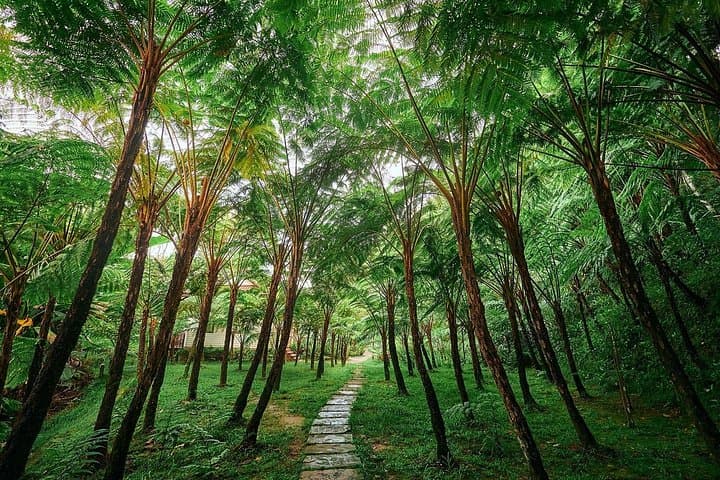
On the Kew Mae Pan and Angka Luang trails the forest feels older than the road: moss-cathedral trees, clumps of orchids, and clouds that move like slow weather. Wachirathan Falls announces itself with spray and a steady roar, a reminder that water shapes this landscape.
Practical edge: expect a full day (roughly 9–10 hours including transfers). Trails are short but can be steep and muddy; layers, sturdy footwear, and a waterproof are essential. Bring small change for markets and modest clothing for temple visits. Start early to avoid the busiest midday crowds and to catch the clearest views; if you’re birding, dawn and late afternoon are best. Stay on marked paths—fragile montane flora recovers slowly, and wildlife here is easily disturbed.
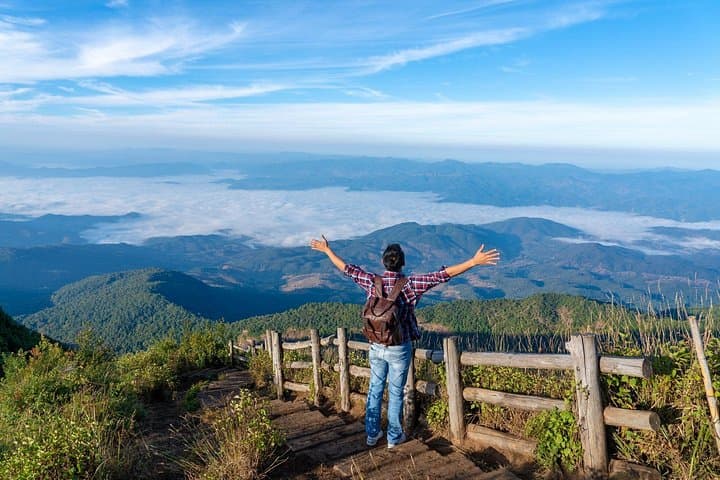
The summit reaches 2,565 meters (8,415 feet), making it the highest point in Thailand; expect cooler temperatures and thinner air compared with Chiang Mai city.
Yes—this full-day tour is marketed as suitable for all fitness levels; most walks are short but can include steps and uneven ground, so mobility considerations apply.
Dry season months (November–February) usually offer the clearest skies and coolest temperatures; early morning visits also improve visibility and birding opportunities.
Asia Advisor Thailand operates guided outdoor trips and adventures with an emphasis on safety, stewardship, and memorable experiences.

The bus eases out of Chiang Mai before dawn and the air cools as you climb. Pine-scented clouds press against the windows while the road snakes toward Thailand’s highest summit—Doi Inthanon. By mid-morning the twin white chedis appear on the skyline, their tiled roofs catching a highland light that feels almost sharp enough to slice through the mist.
The bus eases out of Chiang Mai before dawn and the air cools as you climb. Pine-scented clouds press against the windows while the road snakes toward Thailand’s highest summit—Doi Inthanon. By mid-morning the twin white chedis appear on the skyline, their tiled roofs catching a highland light that feels almost sharp enough to slice through the mist.
This park sits on the western spine of the Thai highlands; its geology is a mix of older metamorphic rock and later uplift that created steep ridgelines and deep drainage gullies where waterfalls collect their force. The royal stupas, built in the late 1980s, reflect modern reverence layered on centuries of Lanna culture. Scattered villages—Hmong and Karen—offer a glimpse of upland agriculture: terrace rice, coffee orchards, and flower plots tended at altitude.
On the Kew Mae Pan and Angka Luang trails the forest feels older than the road: moss-cathedral trees, clumps of orchids, and clouds that move like slow weather. Wachirathan Falls announces itself with spray and a steady roar, a reminder that water shapes this landscape.
Practical edge: expect a full day (roughly 9–10 hours including transfers). Trails are short but can be steep and muddy; layers, sturdy footwear, and a waterproof are essential. Bring small change for markets and modest clothing for temple visits. Start early to avoid the busiest midday crowds and to catch the clearest views; if you’re birding, dawn and late afternoon are best. Stay on marked paths—fragile montane flora recovers slowly, and wildlife here is easily disturbed.