THE ADVENTURE COLLECTIVE® · Independent discovery and booking for outdoor travel

Ride from Marseille across forest tracks into the white limestone teeth of Calanques National Park, finishing with a swim and lunch in Cassis. Expect a long, scenic day on an electric mountain bike with steep views, hidden coves and practical choices about water, timing and footwear.
Ride from Marseille across forest tracks into the white limestone teeth of Calanques National Park, finishing with a swim and lunch in Cassis. Expect a long, scenic day on an electric mountain bike with steep views, hidden coves and practical choices about water, timing and footwear.
You push away from the Avia gas station in northern Marseille and the city’s flat sprawl gives way to a hard, fragrant wind of pine and resin. The track climbs quickly—DFCI forest roads wide enough for a truck but wild enough to feel like a secret—as the electric motor hums under your hands and the Mediterranean stretches into a blue line on the horizon. By midmorning the limestone ridges of the Calanques have stepped into view: white cliffs, serrated and raw, daring you to get closer.
Verified experiences and guided adventures in the surrounding area.
Operated by EVTT PROVENCE · Marseille, Provence-Alpes-Côte d'Azur
You push away from the Avia gas station in northern Marseille and the city’s flat sprawl gives way to a hard, fragrant wind of pine and resin. The track climbs quickly—DFCI forest roads wide enough for a truck but wild enough to feel like a secret—as the electric motor hums under your hands and the Mediterranean stretches into a blue line on the horizon. By midmorning the limestone ridges of the Calanques have stepped into view: white cliffs, serrated and raw, daring you to get closer.
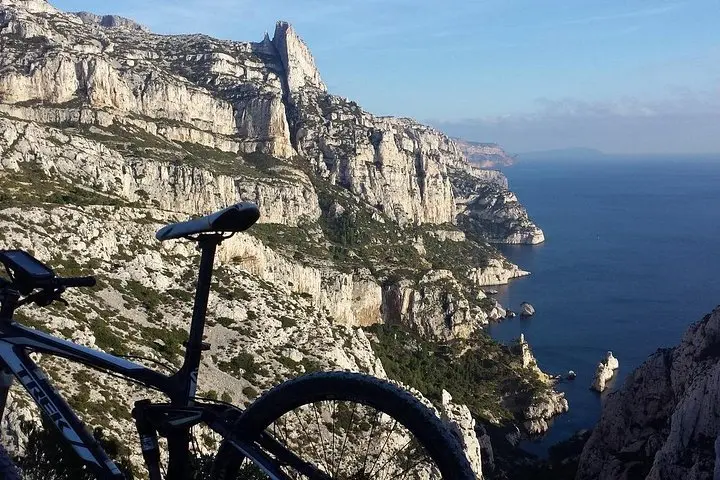
The Calanques are young mountains of limestone carved by ancient sea levels and now protected as France’s national park since 2012. The geology explains the drama—karst channels, steep marine cliffs and narrow coves—while human history is quieter: shepherd routes and lime kilns once scarred these slopes, and small ports like Port-Miou and Cassis grew where shelter was possible. Today the landscape is a patchwork of maquis scrub, stone pines and old forest roads built for fire control (the DFCI tracks you’ll ride), a network that makes an extended bike traverse possible.
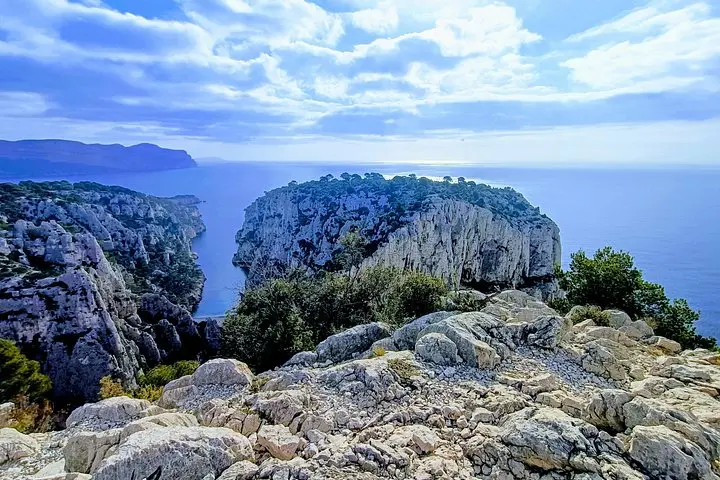
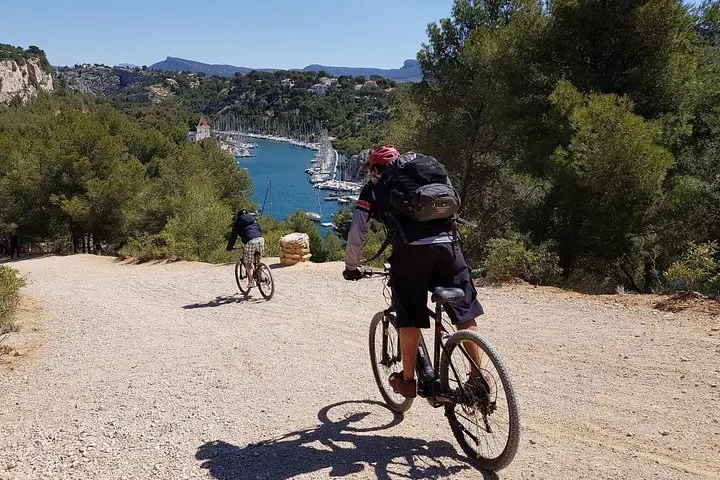
This integral route threads classic viewpoints—Sormiou belvedere, Luminy ridgeline, the Oule de la Gardiole pass—and slides past Chalabran valley before offering a glimpse, from above, of the vertiginous inlet of En Vau. The descent into Cassis is a change of mood: yachts in the harbor, bakery scents drifting from the old town, and a turquoise sea that insists you stop for a dip and a picnic.
Practical edge: this is a long day—expect roughly 6–7 hours on an electric mountain bike, about 35–45 km of mixed forest track and singletrack with cumulative climbs that can reach 800–1,000 m depending on variations. The e‑motor levels out effort but off‑road handling, confident descending and basic mechanical sense are required. Small groups keep the pace human; guides will give GPS tracks and helmets are provided, but bring layers, a hydration pack (minimum 2 L), and closed‑toe shoes with grippy soles.
Timing and etiquette matter here—summer afternoons are busy and the park is fire‑prone, so early starts and following marked tracks protect both your ride and the ecosystem. Plan for a long break in Cassis to eat and swim, and leave time for the Port‑Miou viewpoint before returning to Marseille or catching the seasonal boat service. For anyone fit enough to pedal off‑road and hungry for raw coastal geology and blue water, this ride is big, scenic, and thoroughly memorable.
Yes—this route requires comfort on off‑road surfaces and technical descents; e‑assist helps but doesn’t remove the need for bike handling skills.
Children tall enough for the e‑bikes (minimum height 140 cm) may join; otherwise there’s a child price only if not using an e‑bike.
E‑mountain bike, certified helmet, professional guide, bottle of water, and provision of GPS track or guided navigation.
Yes—there’s a long break in Cassis for swimming; bring a towel and pack wet items separately.
Tours are subject to weather and may be postponed or refunded; organizers offer alternatives or full refunds if canceled due to conditions.
Electric bikes pedal like regular bikes but provide additional torque—most riders adapt quickly, though knowing how the motor responds on climbs helps control speed and battery use.
EVTT PROVENCE operates guided outdoor trips and adventures with an emphasis on safety, stewardship, and memorable experiences.
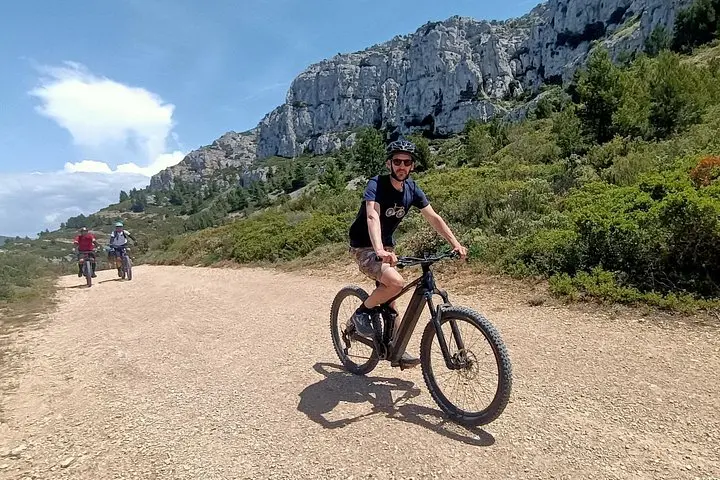
You push away from the Avia gas station in northern Marseille and the city’s flat sprawl gives way to a hard, fragrant wind of pine and resin. The track climbs quickly—DFCI forest roads wide enough for a truck but wild enough to feel like a secret—as the electric motor hums under your hands and the Mediterranean stretches into a blue line on the horizon. By midmorning the limestone ridges of the Calanques have stepped into view: white cliffs, serrated and raw, daring you to get closer.
You push away from the Avia gas station in northern Marseille and the city’s flat sprawl gives way to a hard, fragrant wind of pine and resin. The track climbs quickly—DFCI forest roads wide enough for a truck but wild enough to feel like a secret—as the electric motor hums under your hands and the Mediterranean stretches into a blue line on the horizon. By midmorning the limestone ridges of the Calanques have stepped into view: white cliffs, serrated and raw, daring you to get closer.
The Calanques are young mountains of limestone carved by ancient sea levels and now protected as France’s national park since 2012. The geology explains the drama—karst channels, steep marine cliffs and narrow coves—while human history is quieter: shepherd routes and lime kilns once scarred these slopes, and small ports like Port-Miou and Cassis grew where shelter was possible. Today the landscape is a patchwork of maquis scrub, stone pines and old forest roads built for fire control (the DFCI tracks you’ll ride), a network that makes an extended bike traverse possible.
This integral route threads classic viewpoints—Sormiou belvedere, Luminy ridgeline, the Oule de la Gardiole pass—and slides past Chalabran valley before offering a glimpse, from above, of the vertiginous inlet of En Vau. The descent into Cassis is a change of mood: yachts in the harbor, bakery scents drifting from the old town, and a turquoise sea that insists you stop for a dip and a picnic.
Practical edge: this is a long day—expect roughly 6–7 hours on an electric mountain bike, about 35–45 km of mixed forest track and singletrack with cumulative climbs that can reach 800–1,000 m depending on variations. The e‑motor levels out effort but off‑road handling, confident descending and basic mechanical sense are required. Small groups keep the pace human; guides will give GPS tracks and helmets are provided, but bring layers, a hydration pack (minimum 2 L), and closed‑toe shoes with grippy soles.
Timing and etiquette matter here—summer afternoons are busy and the park is fire‑prone, so early starts and following marked tracks protect both your ride and the ecosystem. Plan for a long break in Cassis to eat and swim, and leave time for the Port‑Miou viewpoint before returning to Marseille or catching the seasonal boat service. For anyone fit enough to pedal off‑road and hungry for raw coastal geology and blue water, this ride is big, scenic, and thoroughly memorable.