THE ADVENTURE COLLECTIVE® · Independent discovery and booking for outdoor travel

Spend a full day on Mount Etna’s slopes and in the Alcantara Gorges: trek across lava fields, explore basalt caves and taste local mountain fare. This guided excursion combines geology, easy technical caves and a riverside canyon formed where fire met water.
Spend a full day on Mount Etna’s slopes and in the Alcantara Gorges: trek across lava fields, explore basalt caves and taste local mountain fare. This guided excursion combines geology, easy technical caves and a riverside canyon formed where fire met water.
A wind that smells faintly of sulfur and pine meets the road as the vehicle climbs away from Catania toward Mount Etna. The guide opens a window on the volcanic flank: black crusted flows, abrupt gullies, and groves of stone pines where the trail begins. Walkers find themselves switching between moonlike fields of pahoehoe and a softer understory of chestnut and holm oak as the slope rises.
Verified experiences and guided adventures in the surrounding area.
Operated by Etna Sicily Tours · Catania, Sicily
A wind that smells faintly of sulfur and pine meets the road as the vehicle climbs away from Catania toward Mount Etna. The guide opens a window on the volcanic flank: black crusted flows, abrupt gullies, and groves of stone pines where the trail begins. Walkers find themselves switching between moonlike fields of pahoehoe and a softer understory of chestnut and holm oak as the slope rises.
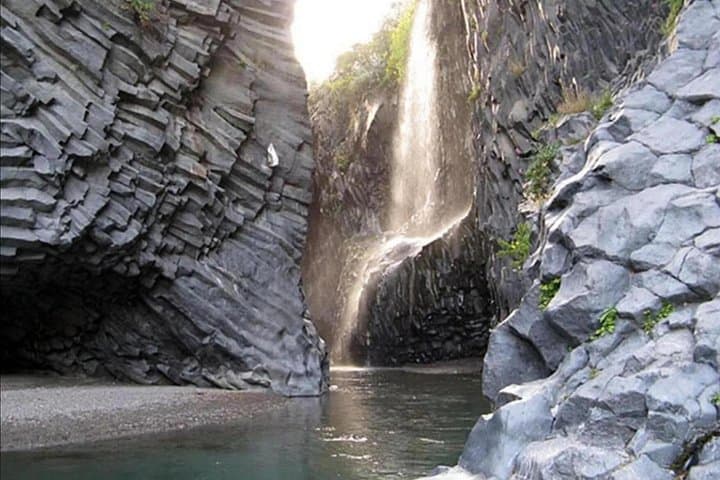
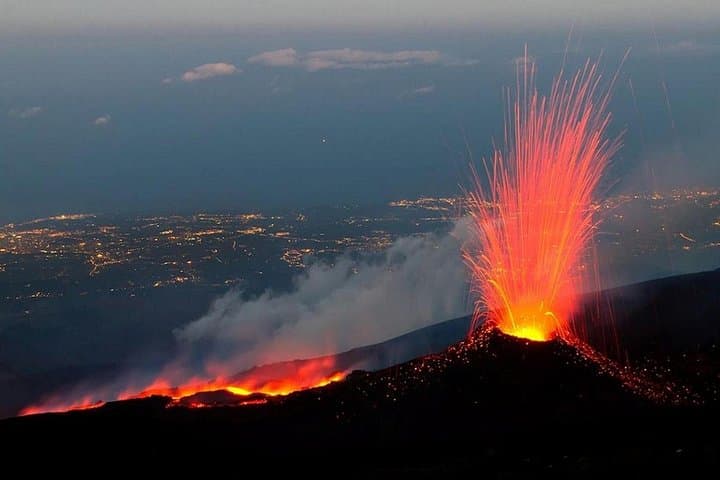
This route threads together Etna’s living geology and the Alcantara Gorges’ basalt-banded canyon. Etna is Europe’s most active volcano; eruptions and repeated lava flows have built and reshaped trails for millennia. Where lava met river at Alcantara, rapid cooling produced the hexagonal basalt columns that river water carved into a narrow, sculpted chasm — a clear record of fire meeting ice-cold water.
Local culture appears in small ways: farmhouse cheeses, honey, and Etnean wine grown on volcanic soils, and mountain huts that serve straightforward, hearty lunches. Guides often point out farming terraces and the townships that learned to read the land and its eruptions.
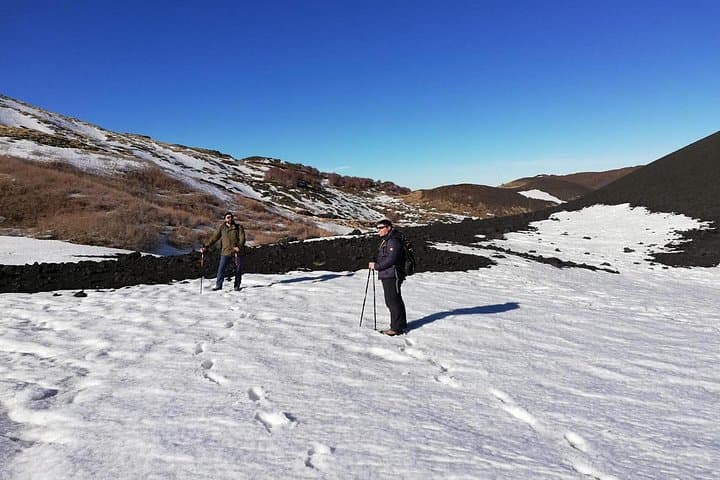
Practical guidance: expect an 8‑hour day with alternating terrain—rocky lava fields, compact dirt tracks and short scramble sections. Helmets and torches are supplied for cave sections; bring sturdy hiking boots, layered clothing (it’s often cooler higher up), sun protection, and 2+ liters of water. In winter the operator may keep the route at lower altitudes; check footwear and vehicle notes in advance. Take photos at ridge viewpoints but stay on marked trails — both for safety and to protect fragile volcanic soils.
The tour is rated moderate: several hours of walking on mixed terrain with short steep sections; guides tailor pace to the group and helmets/torches are provided for cave stops.
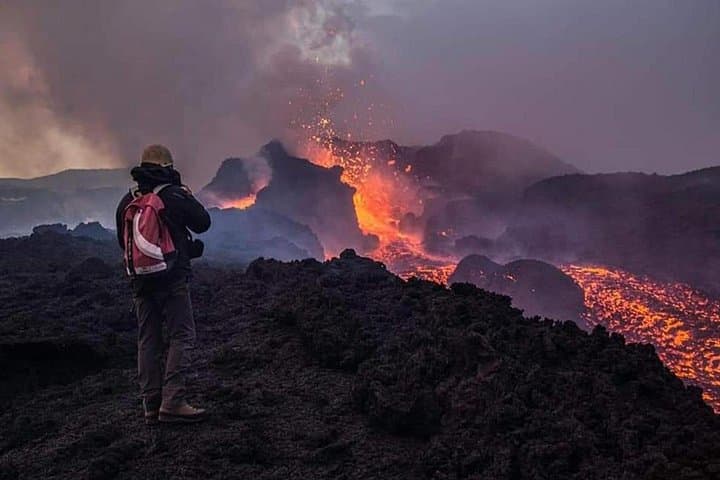
Active lava is intermittent and typically restricted for safety; most visits focus on cooled flows, craters and accessible caves rather than fresh lava.
Children can join but operators advise caution; infants may be accommodated in vehicles, and participants should check age and stroller accessibility with the provider.
In winter or poor conditions the itinerary may move to lower altitudes or be adjusted for safety; confirm cancellation and refund policies before booking.
Etna Sicily Tours operates guided outdoor trips and adventures with an emphasis on safety, stewardship, and memorable experiences.
A wind that smells faintly of sulfur and pine meets the road as the vehicle climbs away from Catania toward Mount Etna. The guide opens a window on the volcanic flank: black crusted flows, abrupt gullies, and groves of stone pines where the trail begins. Walkers find themselves switching between moonlike fields of pahoehoe and a softer understory of chestnut and holm oak as the slope rises.
A wind that smells faintly of sulfur and pine meets the road as the vehicle climbs away from Catania toward Mount Etna. The guide opens a window on the volcanic flank: black crusted flows, abrupt gullies, and groves of stone pines where the trail begins. Walkers find themselves switching between moonlike fields of pahoehoe and a softer understory of chestnut and holm oak as the slope rises.
This route threads together Etna’s living geology and the Alcantara Gorges’ basalt-banded canyon. Etna is Europe’s most active volcano; eruptions and repeated lava flows have built and reshaped trails for millennia. Where lava met river at Alcantara, rapid cooling produced the hexagonal basalt columns that river water carved into a narrow, sculpted chasm — a clear record of fire meeting ice-cold water.
Local culture appears in small ways: farmhouse cheeses, honey, and Etnean wine grown on volcanic soils, and mountain huts that serve straightforward, hearty lunches. Guides often point out farming terraces and the townships that learned to read the land and its eruptions.
Practical guidance: expect an 8‑hour day with alternating terrain—rocky lava fields, compact dirt tracks and short scramble sections. Helmets and torches are supplied for cave sections; bring sturdy hiking boots, layered clothing (it’s often cooler higher up), sun protection, and 2+ liters of water. In winter the operator may keep the route at lower altitudes; check footwear and vehicle notes in advance. Take photos at ridge viewpoints but stay on marked trails — both for safety and to protect fragile volcanic soils.