THE ADVENTURE COLLECTIVE® · Independent discovery and booking for outdoor travel

A full-day escape from Cairo to Fayoum’s Wadi El-Rayan blends ancient whale fossils, Egypt’s only waterfalls, and desert action—sandboarding and dune-bashing included. This tour pairs geology and hands-on adventure with a late lunch in Fayoum.
A full-day escape from Cairo to Fayoum’s Wadi El-Rayan blends ancient whale fossils, Egypt’s only waterfalls, and desert action—sandboarding and dune-bashing included. This tour pairs geology and hands-on adventure with a late lunch in Fayoum.
You roll out of Cairo’s bustle before dawn and the road unfurls across beige plains toward the Fayoum depression—pockets of green in a dry spine of desert. By mid-morning the convoy drops you at Wadi El-Rayan, where two freshwater lakes sit lower than the surrounding desert and Egypt’s only waterfalls trace a thin, surprising ribbon between them.
Verified experiences and guided adventures in the surrounding area.
Operated by Roxana Travel · Faiyum, Faiyum Governorate
You roll out of Cairo’s bustle before dawn and the road unfurls across beige plains toward the Fayoum depression—pockets of green in a dry spine of desert. By mid-morning the convoy drops you at Wadi El-Rayan, where two freshwater lakes sit lower than the surrounding desert and Egypt’s only waterfalls trace a thin, surprising ribbon between them.
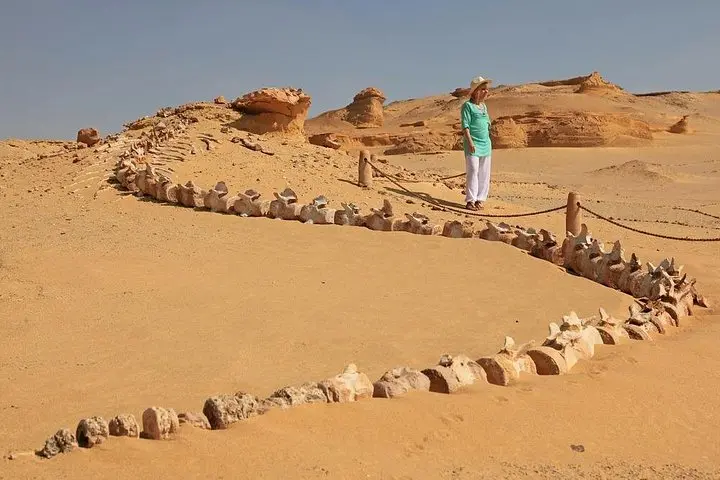
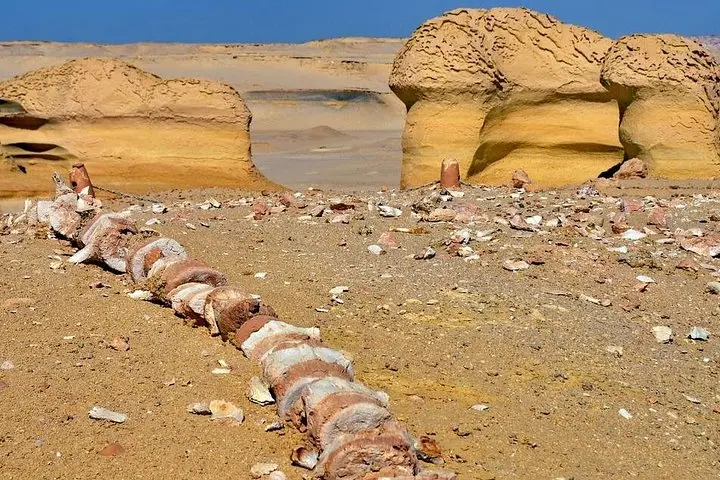
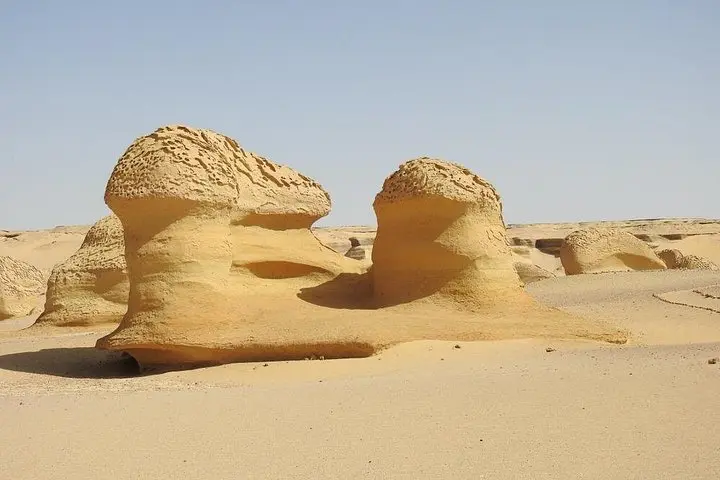
This route stitches together human and deep-time stories: Wadi al-Hitan (Valley of the Whales) preserves 40-million-year-old cetacean skeletons and earned UNESCO status for its fossil record. The lakes themselves are recent, formed by agricultural runoff in the 20th century and reshaped into a protected area in 1989. Geology here is plain and blunt—flat salt plains give way to cliffs and the rounded forms of the Mudawara Mountains.
Expect a mixed day: short interpretive walks among fossil beds, an overlook at the tiered waterfalls, time on sandy slopes for sandboarding, and a bumpy 4x4 run that makes dune-bashing part of the rhythm. Local culture is visible in small roadside markets and the late lunch served in Fayoum—simple, hearty meals that reflect the oasis’s farming traditions.
Practical notes: wear closed shoes for sand and uneven rock, bring at least 2 liters of water, and plan for strong sun and wind. Mobile reception is patchy; download maps and take cash for small purchases. The protected areas enforce stay-on-trail rules—respect signage to protect fossils and nesting birds.
Fayoum is roughly 90–100 km southwest of Cairo; travel time is about 1.5–2 hours depending on traffic.
Yes—this tour includes entrance to the mentioned protected areas such as Wadi al-Hitan and Wadi El-Rayan.
The tour notes say it’s accessible for most fitness levels; some sites require short walks on uneven terrain—ask about private transport options if mobility is limited.
Yes—sandboarding is offered as part of the itinerary; bring clothing you don’t mind getting sandy and wear closed-toe shoes.
Roxana Travel operates guided outdoor trips and adventures with an emphasis on safety, stewardship, and memorable experiences.
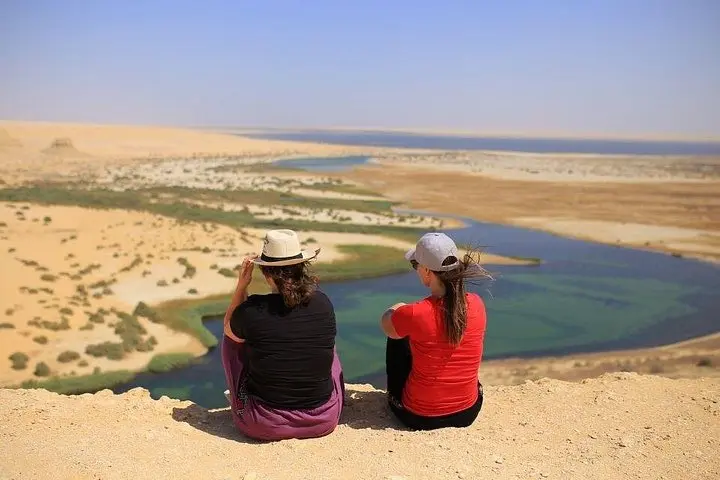
You roll out of Cairo’s bustle before dawn and the road unfurls across beige plains toward the Fayoum depression—pockets of green in a dry spine of desert. By mid-morning the convoy drops you at Wadi El-Rayan, where two freshwater lakes sit lower than the surrounding desert and Egypt’s only waterfalls trace a thin, surprising ribbon between them.
You roll out of Cairo’s bustle before dawn and the road unfurls across beige plains toward the Fayoum depression—pockets of green in a dry spine of desert. By mid-morning the convoy drops you at Wadi El-Rayan, where two freshwater lakes sit lower than the surrounding desert and Egypt’s only waterfalls trace a thin, surprising ribbon between them.
This route stitches together human and deep-time stories: Wadi al-Hitan (Valley of the Whales) preserves 40-million-year-old cetacean skeletons and earned UNESCO status for its fossil record. The lakes themselves are recent, formed by agricultural runoff in the 20th century and reshaped into a protected area in 1989. Geology here is plain and blunt—flat salt plains give way to cliffs and the rounded forms of the Mudawara Mountains.
Expect a mixed day: short interpretive walks among fossil beds, an overlook at the tiered waterfalls, time on sandy slopes for sandboarding, and a bumpy 4x4 run that makes dune-bashing part of the rhythm. Local culture is visible in small roadside markets and the late lunch served in Fayoum—simple, hearty meals that reflect the oasis’s farming traditions.
Practical notes: wear closed shoes for sand and uneven rock, bring at least 2 liters of water, and plan for strong sun and wind. Mobile reception is patchy; download maps and take cash for small purchases. The protected areas enforce stay-on-trail rules—respect signage to protect fossils and nesting birds.