THE ADVENTURE COLLECTIVE® · Independent discovery and booking for outdoor travel

Spend a day tracing Egypt’s funerary landscape from the Great Pyramid and Sphinx to Saqqara’s Step Pyramid, Memphis ruins and Dahshur’s experimental pyramids. This guided loop combines shoreline plains, limestone quarries and vivid archaeological context.
Spend a day tracing Egypt’s funerary landscape from the Great Pyramid and Sphinx to Saqqara’s Step Pyramid, Memphis ruins and Dahshur’s experimental pyramids. This guided loop combines shoreline plains, limestone quarries and vivid archaeological context.
The sun rises flat over the Giza Plateau and light slides down the faces of ancient stone, outlining blocks cut millennia ago. On a full-day circuit through Giza, Saqqara, Memphis and Dahshur, visitors move from the broad sweep of the Nile’s floodplain to compact necropolises where mortuary architecture pushes the visitor forward with silent intent.
Verified experiences and guided adventures in the surrounding area.
Operated by Egipto Excursiones · Giza, Giza Governorate
The sun rises flat over the Giza Plateau and light slides down the faces of ancient stone, outlining blocks cut millennia ago. On a full-day circuit through Giza, Saqqara, Memphis and Dahshur, visitors move from the broad sweep of the Nile’s floodplain to compact necropolises where mortuary architecture pushes the visitor forward with silent intent.
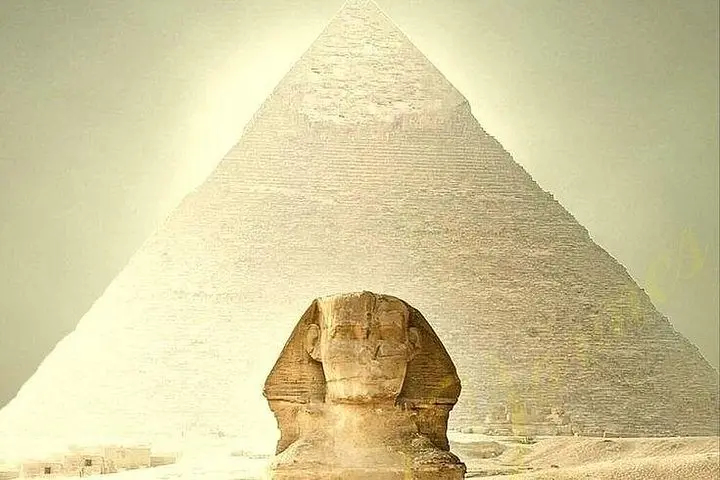
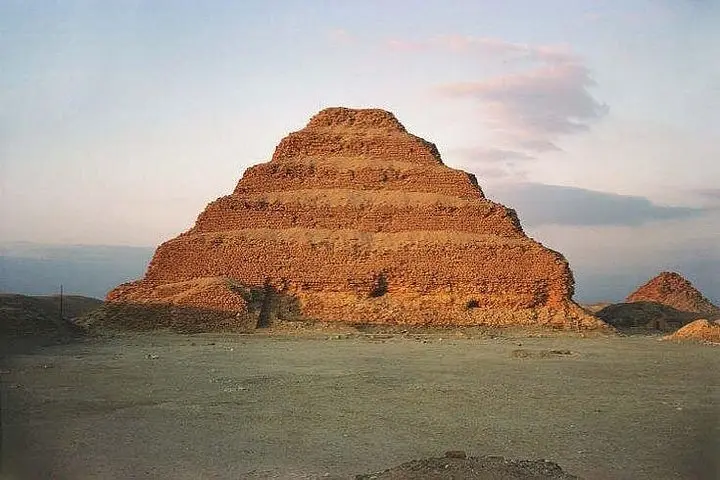
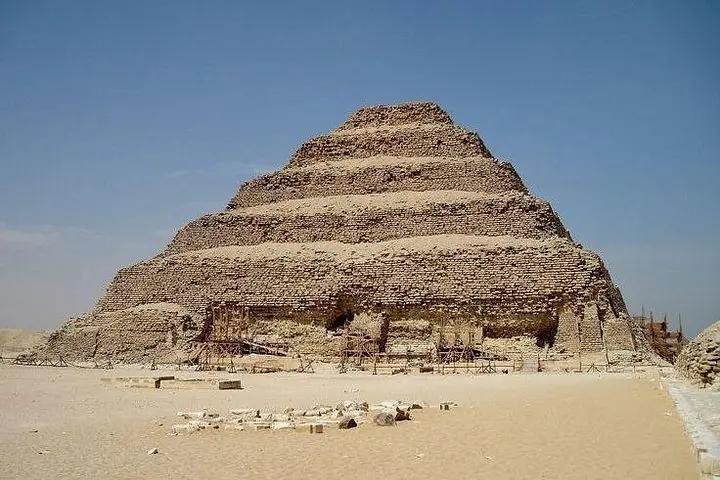
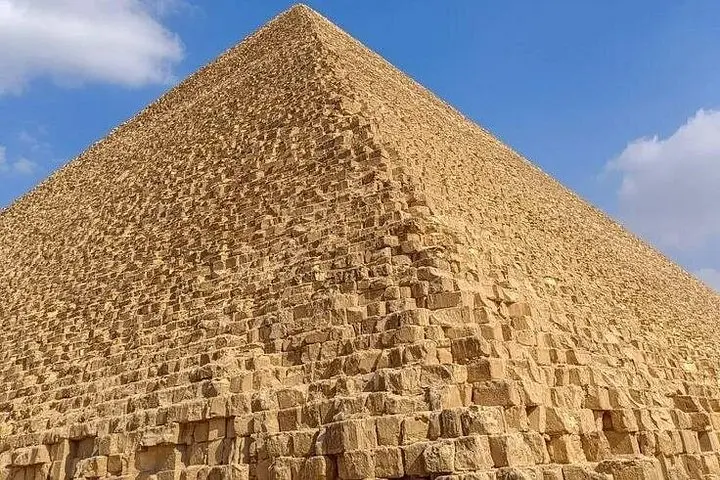
These sites trace the arc of Old Kingdom funerary practice: the Great Pyramid of Khufu built c. 2600 BCE, the human-headed, lion-bodied Sphinx cut from limestone bedrock, the Step Pyramid of Djoser at Saqqara — an early experiment in monumental stone stacking — and Dahshur’s Bent and Red Pyramids, where builders adjusted angles mid-construction. Memphis preserves fragments of colossi and pharaonic statuary that speak to the city’s role as an administrative center.
Expect short, guided stops (roughly 20–60 minutes at main points) with archaeological context and local craft demonstrations at government-supervised shops. Sun, sand and limestone dominate the terrain; wind can paint dust across exposed paths and make light tricky for photos.
Practical guidance: start early to avoid heat and crowds, carry at least 2 liters of water, wear closed shoes for rubble and uneven paving, and bring layered sun protection. Respect signage—climbing monuments is prohibited and conservation rules are enforced. Ask your guide about entry fees and interior access (some tombs close seasonally). With planning, this nine-hour loop delivers a concentrated lesson in Egypt’s architectural evolution and the human labor that shaped it.
The tour listing indicates entry fees are included, but confirm with your booking confirmation or guide before departure for any site-specific surcharges.
The itinerary involves uneven ground and some standing; the provider notes it is not recommended for travelers with serious spinal, cardiovascular or pregnancy-related restrictions—check accessibility details when booking.
Photography for personal use is generally allowed at open sites; drones are typically prohibited without special permits—verify with your operator to avoid fines.
Tipping is customary; a modest tip for the driver and a larger tip for the guide at day’s end is appreciated (amounts vary by group size and service level).
Egipto Excursiones operates guided outdoor trips and adventures with an emphasis on safety, stewardship, and memorable experiences.
The sun rises flat over the Giza Plateau and light slides down the faces of ancient stone, outlining blocks cut millennia ago. On a full-day circuit through Giza, Saqqara, Memphis and Dahshur, visitors move from the broad sweep of the Nile’s floodplain to compact necropolises where mortuary architecture pushes the visitor forward with silent intent.
The sun rises flat over the Giza Plateau and light slides down the faces of ancient stone, outlining blocks cut millennia ago. On a full-day circuit through Giza, Saqqara, Memphis and Dahshur, visitors move from the broad sweep of the Nile’s floodplain to compact necropolises where mortuary architecture pushes the visitor forward with silent intent.
These sites trace the arc of Old Kingdom funerary practice: the Great Pyramid of Khufu built c. 2600 BCE, the human-headed, lion-bodied Sphinx cut from limestone bedrock, the Step Pyramid of Djoser at Saqqara — an early experiment in monumental stone stacking — and Dahshur’s Bent and Red Pyramids, where builders adjusted angles mid-construction. Memphis preserves fragments of colossi and pharaonic statuary that speak to the city’s role as an administrative center.
Expect short, guided stops (roughly 20–60 minutes at main points) with archaeological context and local craft demonstrations at government-supervised shops. Sun, sand and limestone dominate the terrain; wind can paint dust across exposed paths and make light tricky for photos.
Practical guidance: start early to avoid heat and crowds, carry at least 2 liters of water, wear closed shoes for rubble and uneven paving, and bring layered sun protection. Respect signage—climbing monuments is prohibited and conservation rules are enforced. Ask your guide about entry fees and interior access (some tombs close seasonally). With planning, this nine-hour loop delivers a concentrated lesson in Egypt’s architectural evolution and the human labor that shaped it.