THE ADVENTURE COLLECTIVE® · Independent discovery and booking for outdoor travel

Spend a day moving through 4,500 years of Egyptian history: stand at the Great Pyramid, inspect Imhotep’s Step Pyramid at Saqqara, and see the ruins of ancient Memphis. This guide covers what to expect, practical tips, and essential preparation.
Spend a day moving through 4,500 years of Egyptian history: stand at the Great Pyramid, inspect Imhotep’s Step Pyramid at Saqqara, and see the ruins of ancient Memphis. This guide covers what to expect, practical tips, and essential preparation.
You arrive at the Giza plateau with the sun low and the desert wind nudging sand across the stone—three great pyramids sit like patient machines of time, the Great Pyramid towering above like an unfinished horizon. The Sphinx watches the approach, its weathered face daring you to ask how a civilization moved mountains of limestone by hand.
Verified experiences and guided adventures in the surrounding area.
Operated by Blue Sky Holidays · Giza, Cairo Governorate
You arrive at the Giza plateau with the sun low and the desert wind nudging sand across the stone—three great pyramids sit like patient machines of time, the Great Pyramid towering above like an unfinished horizon. The Sphinx watches the approach, its weathered face daring you to ask how a civilization moved mountains of limestone by hand.
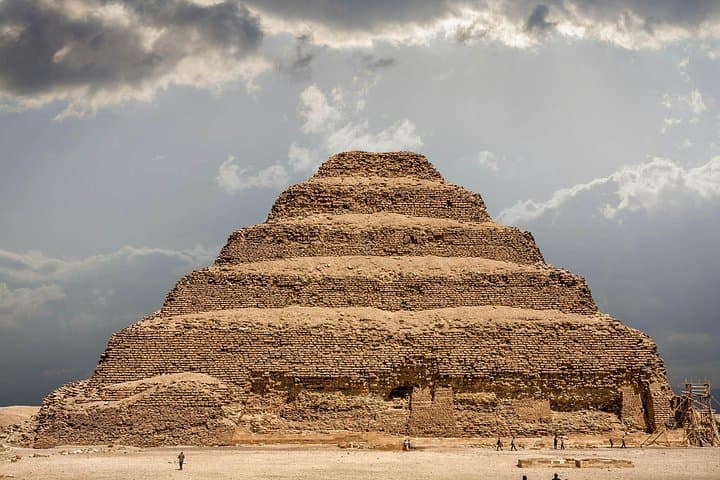
This single-day route threads three phases of Egypt’s longue durée: the Giza necropolis (c. 2500 BCE) where royal tombs reveal Old Kingdom engineering; Saqqara, home of Imhotep’s Step Pyramid (c. 2630 BCE) that rewired funerary architecture; and Mit Rahina, the open-air museum at ancient Memphis with the colossal Ramses II statue. Geologically, the tour rides the Limestone Plateau and the alluvial plains of the Nile—stone quarried nearby became the raw material of empire.
Expect a rhythm of short walks across uneven, sandy ground, guided historical interpretation from a certified Egyptologist, and a pause for a local Egyptian lunch. Practicalities matter: plan for 7–8 hours, bring sun protection and sturdy shoes, and budget for site entrance fees (often not included). Mornings are cooler and less crowded; afternoons bring heat and shifting light that sharpens the monuments’ relief.
Culturally, vendors, camel handlers, and museum stewards create a lively perimeter—polite firmness and clear pricing keep encounters smooth. Mobility can be limited at some ruins; travelers with back or heart issues should consult the tour provider. Leave no trace: these monuments endure only if visitors respect paths and discard no waste.
Most packaged tours include transport, guide and lunch but do not include government site entrance fees—confirm at booking and carry cash or card.
Walkways around the pyramids and Saqqara are sandy and uneven; some areas have steps and limited ramp access—contact the operator for specific pickup/drop and assistance options.
Tipping is customary in Egypt; plan modest tips for your Egyptologist guide and driver—small bills in Egyptian pounds work best.
Early morning immediately after opening is the quietest time at Giza and Saqqara; late afternoon can be busy but offers warm light for photography.
Blue Sky Holidays operates guided outdoor trips and adventures with an emphasis on safety, stewardship, and memorable experiences.


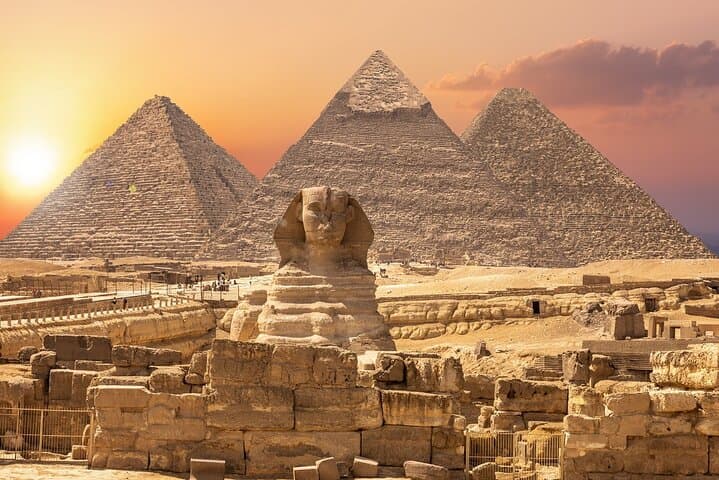
You arrive at the Giza plateau with the sun low and the desert wind nudging sand across the stone—three great pyramids sit like patient machines of time, the Great Pyramid towering above like an unfinished horizon. The Sphinx watches the approach, its weathered face daring you to ask how a civilization moved mountains of limestone by hand.
You arrive at the Giza plateau with the sun low and the desert wind nudging sand across the stone—three great pyramids sit like patient machines of time, the Great Pyramid towering above like an unfinished horizon. The Sphinx watches the approach, its weathered face daring you to ask how a civilization moved mountains of limestone by hand.
This single-day route threads three phases of Egypt’s longue durée: the Giza necropolis (c. 2500 BCE) where royal tombs reveal Old Kingdom engineering; Saqqara, home of Imhotep’s Step Pyramid (c. 2630 BCE) that rewired funerary architecture; and Mit Rahina, the open-air museum at ancient Memphis with the colossal Ramses II statue. Geologically, the tour rides the Limestone Plateau and the alluvial plains of the Nile—stone quarried nearby became the raw material of empire.
Expect a rhythm of short walks across uneven, sandy ground, guided historical interpretation from a certified Egyptologist, and a pause for a local Egyptian lunch. Practicalities matter: plan for 7–8 hours, bring sun protection and sturdy shoes, and budget for site entrance fees (often not included). Mornings are cooler and less crowded; afternoons bring heat and shifting light that sharpens the monuments’ relief.
Culturally, vendors, camel handlers, and museum stewards create a lively perimeter—polite firmness and clear pricing keep encounters smooth. Mobility can be limited at some ruins; travelers with back or heart issues should consult the tour provider. Leave no trace: these monuments endure only if visitors respect paths and discard no waste.