THE ADVENTURE COLLECTIVE® · Independent discovery and booking for outdoor travel

Spend a private day across Egypt’s great necropolises — Giza, Saqqara and Dahshur — then unwind on a traditional felucca along the Nile. This 6–8 hour circuit combines ancient stonework, quiet river sailing and accessible short walks.
Spend a private day across Egypt’s great necropolises — Giza, Saqqara and Dahshur — then unwind on a traditional felucca along the Nile. This 6–8 hour circuit combines ancient stonework, quiet river sailing and accessible short walks.
The day opens on the Giza Plateau with wind and sand moving like a slow clock across the limestone faces of the pyramids. Visitors step from air-conditioned transport into a landscape where stone blocks keep the heat of centuries and the horizon holds Cairo’s concrete sprawl.
Verified experiences and guided adventures in the surrounding area.
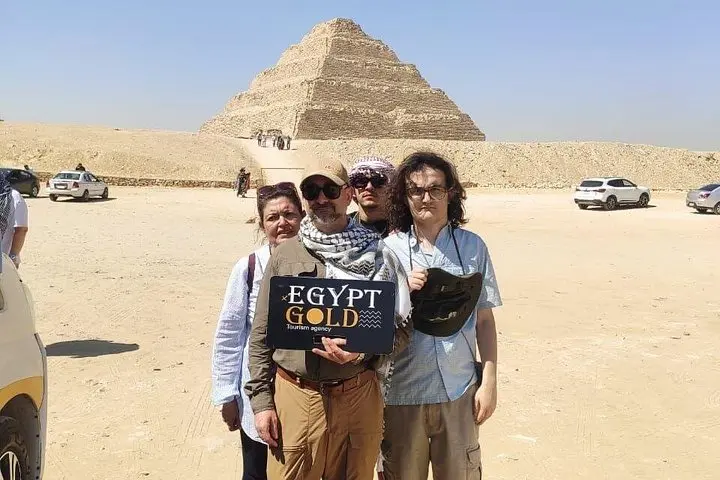
Operated by Egypt Gold · Giza, Giza Governorate
The day opens on the Giza Plateau with wind and sand moving like a slow clock across the limestone faces of the pyramids. Visitors step from air-conditioned transport into a landscape where stone blocks keep the heat of centuries and the horizon holds Cairo’s concrete sprawl.
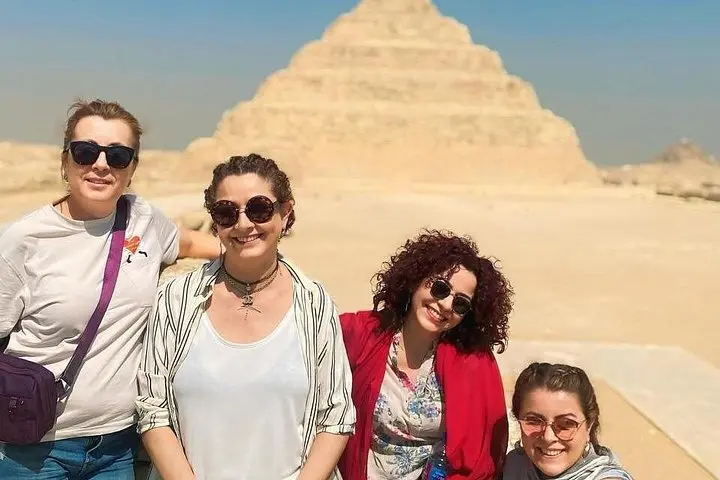
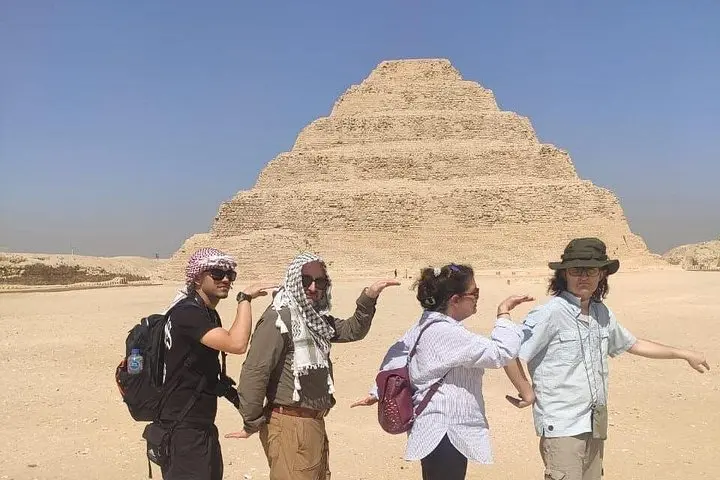
From Giza the route threads south to Saqqara, where the Step Pyramid of Djoser — one of the earliest large-scale cut-stone structures (c. 27th century BCE) — rises in a broad desert bowl. Further on, the bent and red pyramids at Dahshur show the evolutionary experiments of Old Kingdom architects, their angles and masonry telling a geological story of quarry sources and construction technique.
Between monuments the Nile appears as a green artery; a one-hour felucca ride offers calm water, light breeze, and a slower view of daily life along the riverbanks. Memphis, the ancient capital, adds context: a city of basalt and colossus fragments that map political power onto the landscape.
Practical guidance: the full itinerary runs about 6–8 hours with several short walks on flat, sandy terrain and occasional steps into tomb entries. Bring 2–3 liters of water, sun protection, and low-profile walking shoes; expect uneven surfaces and dusty wind. Timings favor early mornings or late afternoons to avoid the desert’s peak heat. Confirm whether entry fees and internal tomb access are included when booking, and respect site rules — climbing or touching monuments is prohibited for safety and preservation.
Expect roughly 6–8 hours including travel between sites; the itinerary usually schedules 1 hour for a felucca ride and 1–2 hours at Giza.
Inclusions vary by booking option — some packages include specific entrance fees, while others require you to pay on arrival; confirm details when you book.
Yes, the felucca is family-friendly, but look for infant seat availability and consider limited shade and movement on deck.
Transport and many surfaces claim wheelchair accessibility, but uneven terrain at archeological areas and tomb entryways can limit access; check with the operator about specific needs.
Egypt Gold operates guided outdoor trips and adventures with an emphasis on safety, stewardship, and memorable experiences.
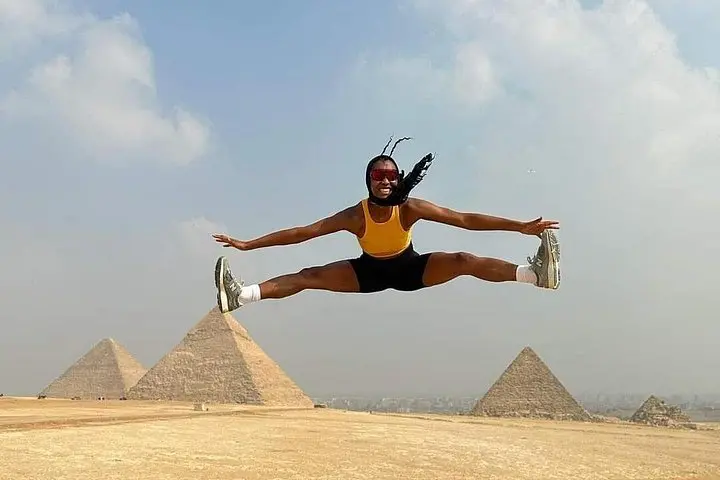
The day opens on the Giza Plateau with wind and sand moving like a slow clock across the limestone faces of the pyramids. Visitors step from air-conditioned transport into a landscape where stone blocks keep the heat of centuries and the horizon holds Cairo’s concrete sprawl.
The day opens on the Giza Plateau with wind and sand moving like a slow clock across the limestone faces of the pyramids. Visitors step from air-conditioned transport into a landscape where stone blocks keep the heat of centuries and the horizon holds Cairo’s concrete sprawl.
From Giza the route threads south to Saqqara, where the Step Pyramid of Djoser — one of the earliest large-scale cut-stone structures (c. 27th century BCE) — rises in a broad desert bowl. Further on, the bent and red pyramids at Dahshur show the evolutionary experiments of Old Kingdom architects, their angles and masonry telling a geological story of quarry sources and construction technique.
Between monuments the Nile appears as a green artery; a one-hour felucca ride offers calm water, light breeze, and a slower view of daily life along the riverbanks. Memphis, the ancient capital, adds context: a city of basalt and colossus fragments that map political power onto the landscape.
Practical guidance: the full itinerary runs about 6–8 hours with several short walks on flat, sandy terrain and occasional steps into tomb entries. Bring 2–3 liters of water, sun protection, and low-profile walking shoes; expect uneven surfaces and dusty wind. Timings favor early mornings or late afternoons to avoid the desert’s peak heat. Confirm whether entry fees and internal tomb access are included when booking, and respect site rules — climbing or touching monuments is prohibited for safety and preservation.