THE ADVENTURE COLLECTIVE® · Independent discovery and booking for outdoor travel

See three millennia of Egyptian history in one day: the Great Pyramids of Giza, the Step Pyramid at Saqqara, and the open-air museum at Memphis. This private tour with an Egyptologist and included lunch is built for efficient, informed exploration.
See three millennia of Egyptian history in one day: the Great Pyramids of Giza, the Step Pyramid at Saqqara, and the open-air museum at Memphis. This private tour with an Egyptologist and included lunch is built for efficient, informed exploration.
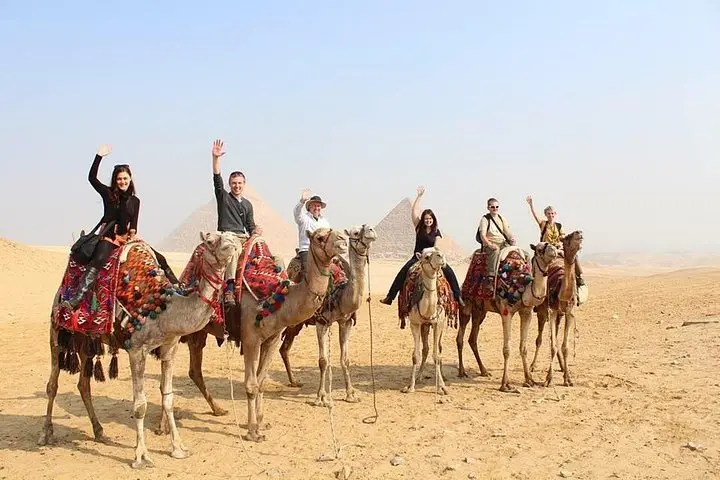
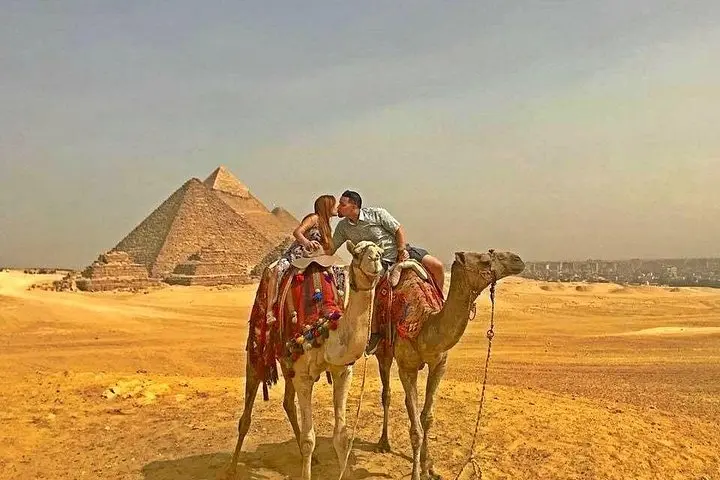
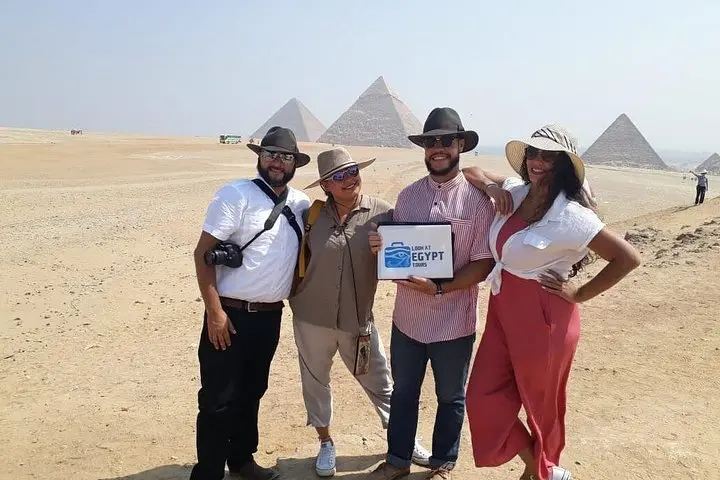
You arrive on the Giza Plateau with the sun low and the wind pushing warm grains of sand across an ancient stone stage. The Great Pyramid rises ahead — a geometric force that rearranges scale and expectation — while a caravan of camels shifts like punctuation at the edge of the scene.
Verified experiences and guided adventures in the surrounding area.
Operated by Look at Egypt Tours · Giza, Cairo Governorate
You arrive on the Giza Plateau with the sun low and the wind pushing warm grains of sand across an ancient stone stage. The Great Pyramid rises ahead — a geometric force that rearranges scale and expectation — while a caravan of camels shifts like punctuation at the edge of the scene.
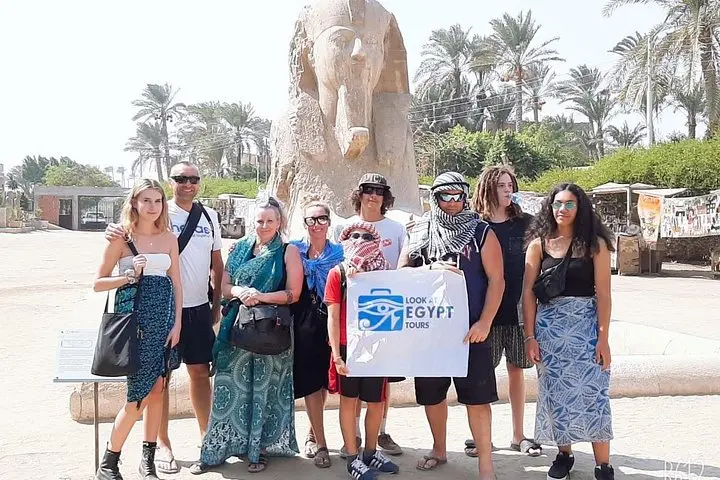
This private day tour stitches three eras of Egyptian antiquity into one route. Start at Giza to study the engineering precision of the Khufu complex and the Sphinx’s carved face. Move to Saqqara to see the Step Pyramid of Djoser, the first large-scale cut-stone monument conceived by Imhotep, and note how early mastaba tombs evolved into vertical architecture. Finish at Memphis, the Old Kingdom’s administrative heart, where the colossal limestone statue of Ramses II and the alabaster sphinx recall a city that once organized the Nile’s riches.
Geologically, the plateau sits on stabilized limestone and desert gravels — expect loose stones and uneven pathways rather than dense vegetation. Culturally, a licensed Egyptologist frames the sites: hieroglyphs, funerary customs, and the political logic of monumentality. Lunch at a local restaurant offers modern Egyptian dishes and a moment to cool off.
Practical guidance: this is a long, on-your-feet day (about 7–8 hours). Bring sun protection, at least 1–2 liters of water, sturdy shoes for uneven ground, and a camera with a wide lens. Expect short walks between highlights, options for a supervised camel photo, and moderate crowds at the Giza plateau. Plan for early starts to avoid peak heat and maximize light for photography.
Yes, entrance fees to Giza, Saqqara and Memphis are included as stated in the tour inclusions.
The provider notes wheelchair-accessible options, but some uneven surfaces and steps at certain sites may limit access—confirm specific needs when booking.
The itinerary includes a camel experience/photo opportunity; longer rides beyond a photo are typically optional and may incur an extra local fee.
A private English-speaking Egyptologist guide is provided; request other language options in advance when booking.
Look at Egypt Tours operates guided outdoor trips and adventures with an emphasis on safety, stewardship, and memorable experiences.
You arrive on the Giza Plateau with the sun low and the wind pushing warm grains of sand across an ancient stone stage. The Great Pyramid rises ahead — a geometric force that rearranges scale and expectation — while a caravan of camels shifts like punctuation at the edge of the scene.
You arrive on the Giza Plateau with the sun low and the wind pushing warm grains of sand across an ancient stone stage. The Great Pyramid rises ahead — a geometric force that rearranges scale and expectation — while a caravan of camels shifts like punctuation at the edge of the scene.
This private day tour stitches three eras of Egyptian antiquity into one route. Start at Giza to study the engineering precision of the Khufu complex and the Sphinx’s carved face. Move to Saqqara to see the Step Pyramid of Djoser, the first large-scale cut-stone monument conceived by Imhotep, and note how early mastaba tombs evolved into vertical architecture. Finish at Memphis, the Old Kingdom’s administrative heart, where the colossal limestone statue of Ramses II and the alabaster sphinx recall a city that once organized the Nile’s riches.
Geologically, the plateau sits on stabilized limestone and desert gravels — expect loose stones and uneven pathways rather than dense vegetation. Culturally, a licensed Egyptologist frames the sites: hieroglyphs, funerary customs, and the political logic of monumentality. Lunch at a local restaurant offers modern Egyptian dishes and a moment to cool off.
Practical guidance: this is a long, on-your-feet day (about 7–8 hours). Bring sun protection, at least 1–2 liters of water, sturdy shoes for uneven ground, and a camera with a wide lens. Expect short walks between highlights, options for a supervised camel photo, and moderate crowds at the Giza plateau. Plan for early starts to avoid peak heat and maximize light for photography.