THE ADVENTURE COLLECTIVE® · Independent discovery and booking for outdoor travel
See Giza’s great pyramids, step into the ancient Step Pyramid at Saqqara, and walk the open-air museum of Memphis in one full day. This practical guide outlines what to expect—history, terrain, and tips to make the most of an eight-hour archaeological circuit.
See Giza’s great pyramids, step into the ancient Step Pyramid at Saqqara, and walk the open-air museum of Memphis in one full day. This practical guide outlines what to expect—history, terrain, and tips to make the most of an eight-hour archaeological circuit.
At first light the Giza plateau opens like a stone stage: the three great pyramids cut clean silhouettes against a pale sky while the desert wind presses sand into the pathways. A guide leads the group across compacted paths where tourists and camels pass in quiet choreography; the Sphinx watches as it has for millennia.
Verified experiences and guided adventures in the surrounding area.
Operated by Egyptravel Tours · Giza, Cairo Governorate
At first light the Giza plateau opens like a stone stage: the three great pyramids cut clean silhouettes against a pale sky while the desert wind presses sand into the pathways. A guide leads the group across compacted paths where tourists and camels pass in quiet choreography; the Sphinx watches as it has for millennia.
This single-day loop stitches together three chapters of ancient Egypt: Giza’s Fourth Dynasty monuments built in the 26th century BC, Saqqara’s innovation in the Step Pyramid of Djoser from the 27th century BC, and the open-air ruins of Memphis—the Old Kingdom’s administrative heart. Geologically the plateau is limestone bedrock capped by casing stones and weathered calcarenite; Saqqara’s burial complexes reveal mudbrick and stone evolution that predate royal pyramids.
Culturally, expect talk of pharaonic funerary rites, hieroglyphic inscriptions, and the role of Imhotep as architect. Local guides often point out lesser-seen reliefs and the reddish pigments still clinging to tomb walls.
Practical guidance: this is an eight-hour, low-technical but full-day outing with a fair amount of walking on uneven ground and exposure to sun and dust. Wear supportive shoes, sun protection, and bring at least 2 liters of water. Start early to avoid midday heat, carry cash for extra entrance tickets or camel photos, and confirm whether interior pyramid access is included—tickets are commonly extra. With solid planning this tour delivers a compact, immersive primer on ancient Egypt’s scale, craft, and urban beginnings.
The tour lists entrance fees for the mentioned sites, but access inside specific pyramids (e.g., Khufu interior) often requires separate tickets—confirm with the operator.
Interior access is limited and subject to additional tickets and quota; your guide can advise availability the day of the tour.
The operator notes wheelchair accessibility for transportation and many surfaces, but some tomb interiors and step access remain challenging for wheelchair users.
Bottled water and a traditional Egyptian lunch are included; bring extra water for very hot days.
Egyptravel Tours operates guided outdoor trips and adventures with an emphasis on safety, stewardship, and memorable experiences.
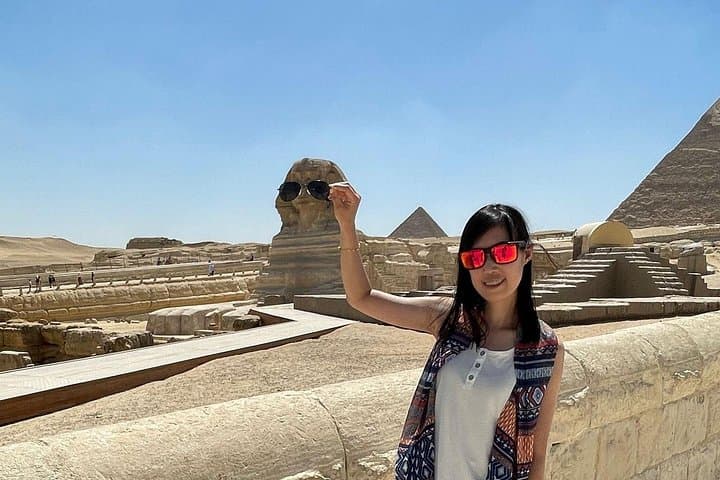
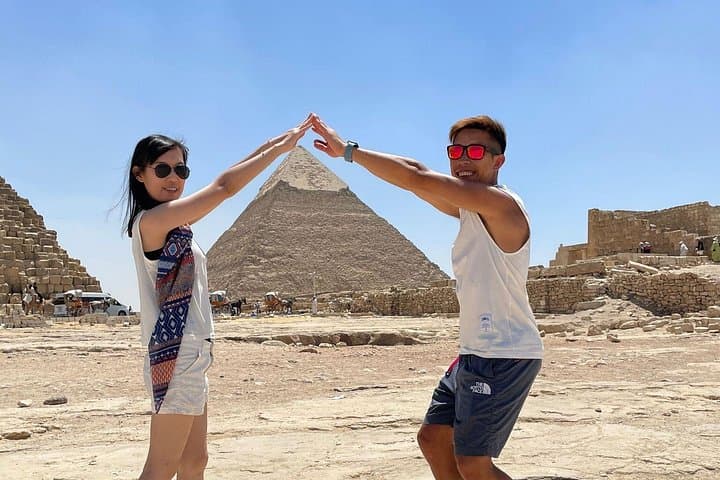
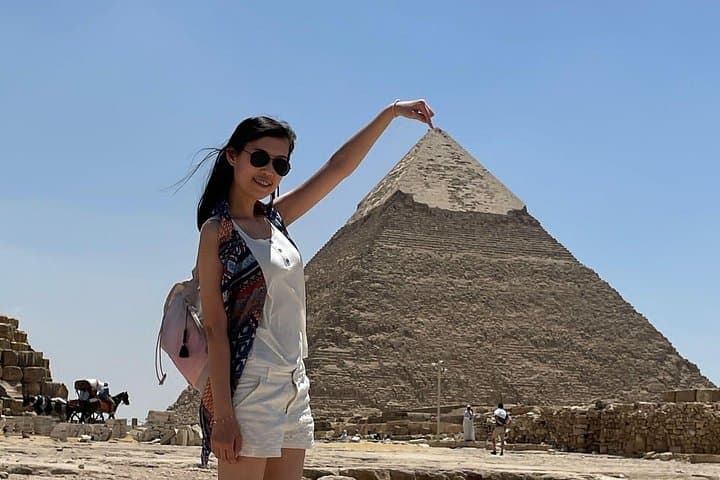
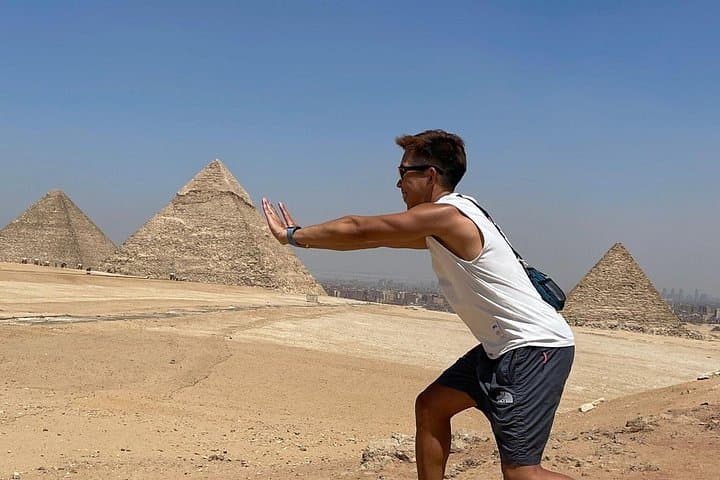
At first light the Giza plateau opens like a stone stage: the three great pyramids cut clean silhouettes against a pale sky while the desert wind presses sand into the pathways. A guide leads the group across compacted paths where tourists and camels pass in quiet choreography; the Sphinx watches as it has for millennia.
At first light the Giza plateau opens like a stone stage: the three great pyramids cut clean silhouettes against a pale sky while the desert wind presses sand into the pathways. A guide leads the group across compacted paths where tourists and camels pass in quiet choreography; the Sphinx watches as it has for millennia.
This single-day loop stitches together three chapters of ancient Egypt: Giza’s Fourth Dynasty monuments built in the 26th century BC, Saqqara’s innovation in the Step Pyramid of Djoser from the 27th century BC, and the open-air ruins of Memphis—the Old Kingdom’s administrative heart. Geologically the plateau is limestone bedrock capped by casing stones and weathered calcarenite; Saqqara’s burial complexes reveal mudbrick and stone evolution that predate royal pyramids.
Culturally, expect talk of pharaonic funerary rites, hieroglyphic inscriptions, and the role of Imhotep as architect. Local guides often point out lesser-seen reliefs and the reddish pigments still clinging to tomb walls.
Practical guidance: this is an eight-hour, low-technical but full-day outing with a fair amount of walking on uneven ground and exposure to sun and dust. Wear supportive shoes, sun protection, and bring at least 2 liters of water. Start early to avoid midday heat, carry cash for extra entrance tickets or camel photos, and confirm whether interior pyramid access is included—tickets are commonly extra. With solid planning this tour delivers a compact, immersive primer on ancient Egypt’s scale, craft, and urban beginnings.
