THE ADVENTURE COLLECTIVE® · Independent discovery and booking for outdoor travel

Avoid parking lines and long drives: this full-day coach tour from Williams delivers the South Rim’s most dramatic overlooks, a firsthand look at Native jewelry-making, and a final stop at a 100+-year-old trading post. Ideal for photographers and first-time canyon visitors who want a curated day at the rim.
Avoid parking lines and long drives: this full-day coach tour from Williams delivers the South Rim’s most dramatic overlooks, a firsthand look at Native jewelry-making, and a final stop at a 100+-year-old trading post. Ideal for photographers and first-time canyon visitors who want a curated day at the rim.
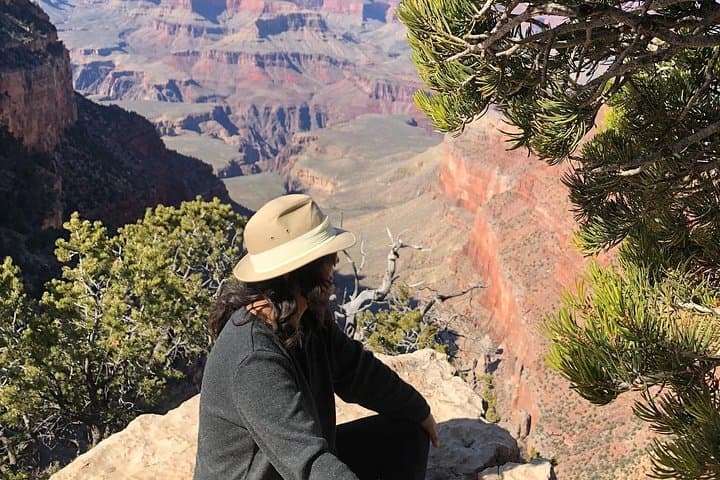
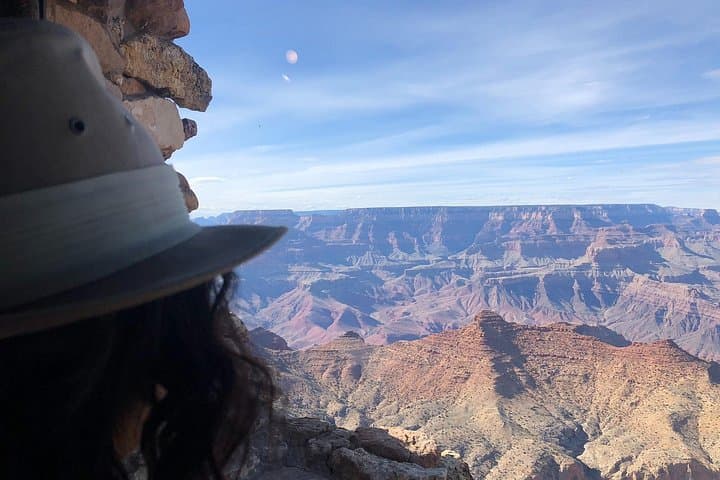
The bus eases off Route 66 and the cottonwoods thin; ahead, the South Rim unfolds in strata and silence. By mid-morning the group has already traded highway hum for the canyon’s slow, enormous breathing — plateaus stepping down in bands of rust and tan, the Colorado River a distant thread. The tour funnels visitors to the South Rim’s most immediate spectacles: Maricopa Point’s cantilevered views, the interpretive displays at Verkamp’s Visitor Center, and the knobby profile locals call Duck on a Rock.
Verified experiences and guided adventures in the surrounding area.
Operated by Jason · Grand Canyon Village, Arizona
The bus eases off Route 66 and the cottonwoods thin; ahead, the South Rim unfolds in strata and silence. By mid-morning the group has already traded highway hum for the canyon’s slow, enormous breathing — plateaus stepping down in bands of rust and tan, the Colorado River a distant thread. The tour funnels visitors to the South Rim’s most immediate spectacles: Maricopa Point’s cantilevered views, the interpretive displays at Verkamp’s Visitor Center, and the knobby profile locals call Duck on a Rock.
This is a day designed for people who want to maximize time on the rim without the navigation and parking logistics. Guides manage timing and context: a concise primer on the canyon’s geology — 1.8 billion years of exposed rock layers and 6 million years of river incision — followed by cultural stops highlighting the living Indigenous presence. The tour includes a chance to meet Native artisans, watch jewelry being crafted, and finish with a stop at a trading post that’s been operating for over a century.
Geologically, the South Rim is an open textbook. Visitors will see horizontal strata revealing ancient seas, desert dunes and volcanic episodes; the colors shift by angle and hour as sunlight chisels out shadows. Culturally, the rim is historically a crossroads: railroads, early tourism entrepreneurs like the Verkamp family, and continuous Native ties to the land shape the visitor experience.
Practical realities matter here. The South Rim sits around 7,000–7,400 feet (2,100–2,250 m); afternoons can bring strong sun and sudden thermals that lift dust and lift spirits. The tour runs roughly 7–8 hours with multiple short stops and one full lunch break; expect light walking at overlooks and paved paths at visitor centers. Lunch is provided as a deli sack; water and light snacks are included on board.
For photographers and timing-minded travelers: morning light favors east-facing overlooks; late afternoon deepens reds and tightens contrast across ridgelines. The tour’s route down Desert View Drive gives sweeping 180-degree panoramas and easier access to viewpoints that are otherwise scattered by driving time.
Prepare with layered clothing, breathable sun protection, and sturdy shoes for rim-side walking. Keep hydration upfront — a filling station exists at Verkamp’s Visitor Center but carry a refillable bottle. If you want to linger for sunset, consider booking extra time in Grand Canyon Village afterward; the tour’s schedule returns to Williams after the main circuit.
This is not a backcountry descent; it’s an intentionally curated rim experience that balances interpretive depth, cultural encounters, and photography-friendly stops — ideal for travelers who want the canyon’s magnitude without the logistics of self-driving or long hikes.
No—park admission is included in this tour, so you won’t need to pay separately at the gate.
Pickup is available in Williams and nearby hotels; the guide will confirm a pickup time (typically 15 minutes in advance).
Many viewpoints and visitor center areas are accessible, but some pullouts and older trading post areas have uneven surfaces—contact the operator for specific accessibility needs.
Yes—restrooms are available at visitor centers and many overlook pullouts along Desert View Drive.
Service animals are allowed; pets are generally not recommended on long coach tours or at canyon overlooks.
Tipping is customary for guides and drivers; 10–20% of the tour price is standard depending on service level.
Jason operates guided outdoor trips and adventures with an emphasis on safety, stewardship, and memorable experiences.
The bus eases off Route 66 and the cottonwoods thin; ahead, the South Rim unfolds in strata and silence. By mid-morning the group has already traded highway hum for the canyon’s slow, enormous breathing — plateaus stepping down in bands of rust and tan, the Colorado River a distant thread. The tour funnels visitors to the South Rim’s most immediate spectacles: Maricopa Point’s cantilevered views, the interpretive displays at Verkamp’s Visitor Center, and the knobby profile locals call Duck on a Rock.
The bus eases off Route 66 and the cottonwoods thin; ahead, the South Rim unfolds in strata and silence. By mid-morning the group has already traded highway hum for the canyon’s slow, enormous breathing — plateaus stepping down in bands of rust and tan, the Colorado River a distant thread. The tour funnels visitors to the South Rim’s most immediate spectacles: Maricopa Point’s cantilevered views, the interpretive displays at Verkamp’s Visitor Center, and the knobby profile locals call Duck on a Rock.
This is a day designed for people who want to maximize time on the rim without the navigation and parking logistics. Guides manage timing and context: a concise primer on the canyon’s geology — 1.8 billion years of exposed rock layers and 6 million years of river incision — followed by cultural stops highlighting the living Indigenous presence. The tour includes a chance to meet Native artisans, watch jewelry being crafted, and finish with a stop at a trading post that’s been operating for over a century.
Geologically, the South Rim is an open textbook. Visitors will see horizontal strata revealing ancient seas, desert dunes and volcanic episodes; the colors shift by angle and hour as sunlight chisels out shadows. Culturally, the rim is historically a crossroads: railroads, early tourism entrepreneurs like the Verkamp family, and continuous Native ties to the land shape the visitor experience.
Practical realities matter here. The South Rim sits around 7,000–7,400 feet (2,100–2,250 m); afternoons can bring strong sun and sudden thermals that lift dust and lift spirits. The tour runs roughly 7–8 hours with multiple short stops and one full lunch break; expect light walking at overlooks and paved paths at visitor centers. Lunch is provided as a deli sack; water and light snacks are included on board.
For photographers and timing-minded travelers: morning light favors east-facing overlooks; late afternoon deepens reds and tightens contrast across ridgelines. The tour’s route down Desert View Drive gives sweeping 180-degree panoramas and easier access to viewpoints that are otherwise scattered by driving time.
Prepare with layered clothing, breathable sun protection, and sturdy shoes for rim-side walking. Keep hydration upfront — a filling station exists at Verkamp’s Visitor Center but carry a refillable bottle. If you want to linger for sunset, consider booking extra time in Grand Canyon Village afterward; the tour’s schedule returns to Williams after the main circuit.
This is not a backcountry descent; it’s an intentionally curated rim experience that balances interpretive depth, cultural encounters, and photography-friendly stops — ideal for travelers who want the canyon’s magnitude without the logistics of self-driving or long hikes.