THE ADVENTURE COLLECTIVE® · Independent discovery and booking for outdoor travel

A full-day trek from Vila do Abraão to Dois Rios traverses Atlantic Forest, river crossings and historic prison ruins before arriving at a wide, white-sand beach. This hike blends nature, history and local cuisine into a balanced, achievable day on Ilha Grande.
A full-day trek from Vila do Abraão to Dois Rios traverses Atlantic Forest, river crossings and historic prison ruins before arriving at a wide, white-sand beach. This hike blends nature, history and local cuisine into a balanced, achievable day on Ilha Grande.
You leave Vila do Abraão before mid-morning and the village quickly becomes a watercolor of red roofs and palm shadow, shrinking as the forest swallows the trail. The path climbs and folds through dense Atlantic Forest, drops to river crossings that dare you to take off your boots, then opens onto Dois Rios: a broad crescent of white sand with a river at each end and mountains hemming the sea.
Verified experiences and guided adventures in the surrounding area.
You leave Vila do Abraão before mid-morning and the village quickly becomes a watercolor of red roofs and palm shadow, shrinking as the forest swallows the trail. The path climbs and folds through dense Atlantic Forest, drops to river crossings that dare you to take off your boots, then opens onto Dois Rios: a broad crescent of white sand with a river at each end and mountains hemming the sea.
Dois Rios carries layers of history — from colonial-era farms to a 20th-century high‑security federal prison whose ruins and the small Museu do Cárcere tell a stark chapter of Brazil’s past. Geologically the island is coastal granite and schist, worn by tropical rains into steep ridges and narrow saddles; trails here alternate between rocky steps, root-laced singletrack and occasional boardwalks.
Local culture on Ilha Grande is low-key and food-focused: a simple lunch at the village or a packed meal with freshly grilled fish and farofa is part of the rhythm. Guides often point out medicinal plants and discuss conservation measures that protect the island’s endemic flora and the resident monkeys and birds.
Practical guidance: expect a full day — plan for roughly 12–14 km round-trip with 400–600 m total elevation gain on uneven terrain. Wear sturdy shoes, bring 2–3 L of water, reef sandals for river crossings and a light rain shell; sun protection and insect repellent are essential. Museum access requires modest entry and limited visiting hours; check ahead. Move deliberately on the steeper sections, respect marked trails and leave no trace — the route rewards endurance with clear water, quiet beaches and a vivid slice of Ilha Grande’s past.
Most departures start in Abraão village; the trailhead is a short walk from the docks—follow the signed path north and check with your guide for the exact meeting point.
Yes, the small prison museum at Dois Rios is typically open to visitors but hours can vary—confirm with your operator and allow time for the guided exhibits.
The hike is moderate: unsteady footing, some sustained climbs and river crossings; beginners in reasonable shape can complete it with breaks or by hiring a local guide.
Private tours often include options for a local lunch in Dois Rios or a packed meal; confirm inclusions when booking to avoid surprises.
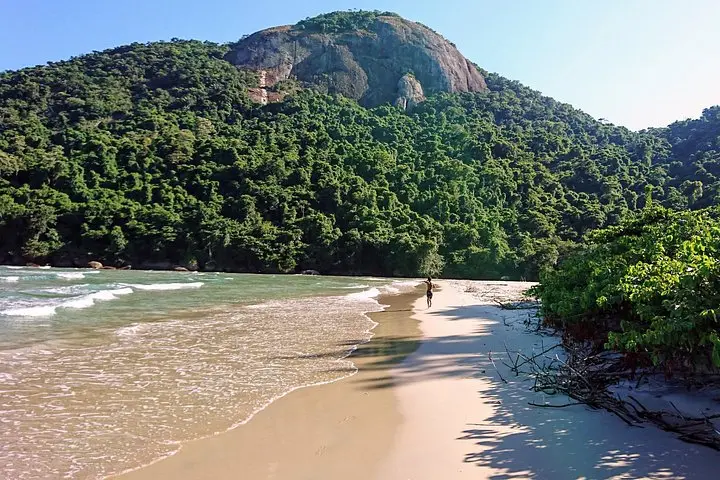
You leave Vila do Abraão before mid-morning and the village quickly becomes a watercolor of red roofs and palm shadow, shrinking as the forest swallows the trail. The path climbs and folds through dense Atlantic Forest, drops to river crossings that dare you to take off your boots, then opens onto Dois Rios: a broad crescent of white sand with a river at each end and mountains hemming the sea.
You leave Vila do Abraão before mid-morning and the village quickly becomes a watercolor of red roofs and palm shadow, shrinking as the forest swallows the trail. The path climbs and folds through dense Atlantic Forest, drops to river crossings that dare you to take off your boots, then opens onto Dois Rios: a broad crescent of white sand with a river at each end and mountains hemming the sea.
Dois Rios carries layers of history — from colonial-era farms to a 20th-century high‑security federal prison whose ruins and the small Museu do Cárcere tell a stark chapter of Brazil’s past. Geologically the island is coastal granite and schist, worn by tropical rains into steep ridges and narrow saddles; trails here alternate between rocky steps, root-laced singletrack and occasional boardwalks.
Local culture on Ilha Grande is low-key and food-focused: a simple lunch at the village or a packed meal with freshly grilled fish and farofa is part of the rhythm. Guides often point out medicinal plants and discuss conservation measures that protect the island’s endemic flora and the resident monkeys and birds.
Practical guidance: expect a full day — plan for roughly 12–14 km round-trip with 400–600 m total elevation gain on uneven terrain. Wear sturdy shoes, bring 2–3 L of water, reef sandals for river crossings and a light rain shell; sun protection and insect repellent are essential. Museum access requires modest entry and limited visiting hours; check ahead. Move deliberately on the steeper sections, respect marked trails and leave no trace — the route rewards endurance with clear water, quiet beaches and a vivid slice of Ilha Grande’s past.