THE ADVENTURE COLLECTIVE® · Independent discovery and booking for outdoor travel

A full-day loop from Salta into the Quebrada de Humahuaca that combines the seven-colored hill of Purmamarca, the Hornocal ridgeline, and the historic town of Humahuaca. Expect high-elevation lookouts, short village walks, and rich Andean cultural stops.
A full-day loop from Salta into the Quebrada de Humahuaca that combines the seven-colored hill of Purmamarca, the Hornocal ridgeline, and the historic town of Humahuaca. Expect high-elevation lookouts, short village walks, and rich Andean cultural stops.
You step from the bus into thin, cool air and the mountains seem to rearrange the horizon — layered ribbons of ochre, rust and pale lime climbing like folded pages. The road climbs out of the valley, and at the Mirador de las Serranías del Hornocal the ridgeline rises in a fan of color so sharp it reads like a geological chart.
Verified experiences and guided adventures in the surrounding area.
Operated by AGENCIA DE TURISMO TIAMAR EVT · Purmamarca, Jujuy
You step from the bus into thin, cool air and the mountains seem to rearrange the horizon — layered ribbons of ochre, rust and pale lime climbing like folded pages. The road climbs out of the valley, and at the Mirador de las Serranías del Hornocal the ridgeline rises in a fan of color so sharp it reads like a geological chart.
This full-day loop threads cultural and geological chapters of Argentina's north. Purmamarca’s Cerro de los Siete Colores records sediment laid down over millions of years; Humahuaca carries Inca and colonial marks in adobe streets and the baroque altarpieces of Uquía. The Quebrada de Humahuaca corridor has been a trade and pilgrimage route for centuries and is a UNESCO World Heritage Site for its living cultural landscape.
Expect long drives between lookouts with multiple short stops: an hour to explore Purmamarca village and its markets, a panoramic stop at Hornocal (high elevation, dramatic outcrops), lunch in a regional town, and a brief visit to Humahuaca and the Church of Uquía. Terrain is mostly paved or well-graded roads with short, flat walks at sites; the Hornocal viewpoint involves exposed, high-altitude conditions rather than trail climbing.
Practical edge: acclimate in Salta or Purmamarca beforehand, carry water and sun protection, and plan for cold, windy conditions at the viewpoint. Photography windows are narrow — early or late light brings out the best color contrast. This is a culturally rich day for travelers who want dramatic geology, Andean atmosphere, and manageable walking in high-altitude terrain.
The full-day excursion lasts about 13–15 hours and typically starts early in the morning from Salta; exact pickup time will be confirmed by the operator.
Yes — Hornocal viewpoint is at high elevation; travelers prone to altitude sickness should acclimate first and bring water and any needed medication.
Lunch is not specified as included; the itinerary allows about one hour for lunch in a town along the route, so budget for a local meal.
Yes — the tour includes short free-time stops (around an hour in Purmamarca and short visits in Humahuaca and Uquía) suitable for walking and shopping.
AGENCIA DE TURISMO TIAMAR EVT operates guided outdoor trips and adventures with an emphasis on safety, stewardship, and memorable experiences.


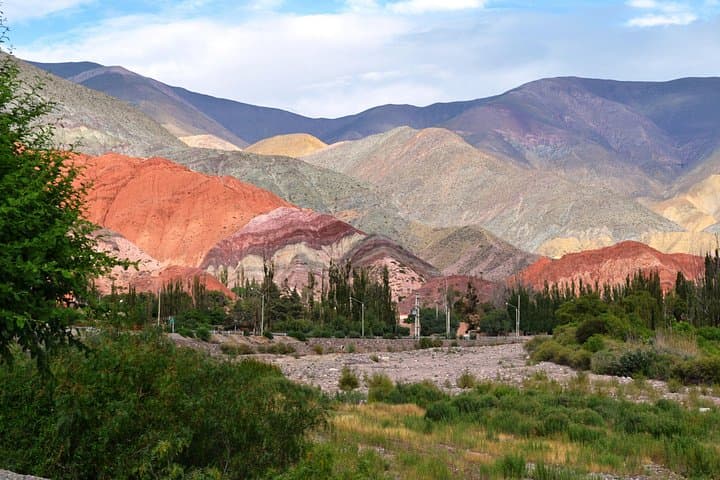
You step from the bus into thin, cool air and the mountains seem to rearrange the horizon — layered ribbons of ochre, rust and pale lime climbing like folded pages. The road climbs out of the valley, and at the Mirador de las Serranías del Hornocal the ridgeline rises in a fan of color so sharp it reads like a geological chart.
You step from the bus into thin, cool air and the mountains seem to rearrange the horizon — layered ribbons of ochre, rust and pale lime climbing like folded pages. The road climbs out of the valley, and at the Mirador de las Serranías del Hornocal the ridgeline rises in a fan of color so sharp it reads like a geological chart.
This full-day loop threads cultural and geological chapters of Argentina's north. Purmamarca’s Cerro de los Siete Colores records sediment laid down over millions of years; Humahuaca carries Inca and colonial marks in adobe streets and the baroque altarpieces of Uquía. The Quebrada de Humahuaca corridor has been a trade and pilgrimage route for centuries and is a UNESCO World Heritage Site for its living cultural landscape.
Expect long drives between lookouts with multiple short stops: an hour to explore Purmamarca village and its markets, a panoramic stop at Hornocal (high elevation, dramatic outcrops), lunch in a regional town, and a brief visit to Humahuaca and the Church of Uquía. Terrain is mostly paved or well-graded roads with short, flat walks at sites; the Hornocal viewpoint involves exposed, high-altitude conditions rather than trail climbing.
Practical edge: acclimate in Salta or Purmamarca beforehand, carry water and sun protection, and plan for cold, windy conditions at the viewpoint. Photography windows are narrow — early or late light brings out the best color contrast. This is a culturally rich day for travelers who want dramatic geology, Andean atmosphere, and manageable walking in high-altitude terrain.