THE ADVENTURE COLLECTIVE® · Independent discovery and booking for outdoor travel

Float the Perfume River, step into the Imperial Citadel and visit royal tombs on a private full‑day tour of Hue. This guided route pairs boat time with curated stops at Thien Mu Pagoda, Tu Duc and Khai Dinh tombs.
Float the Perfume River, step into the Imperial Citadel and visit royal tombs on a private full‑day tour of Hue. This guided route pairs boat time with curated stops at Thien Mu Pagoda, Tu Duc and Khai Dinh tombs.
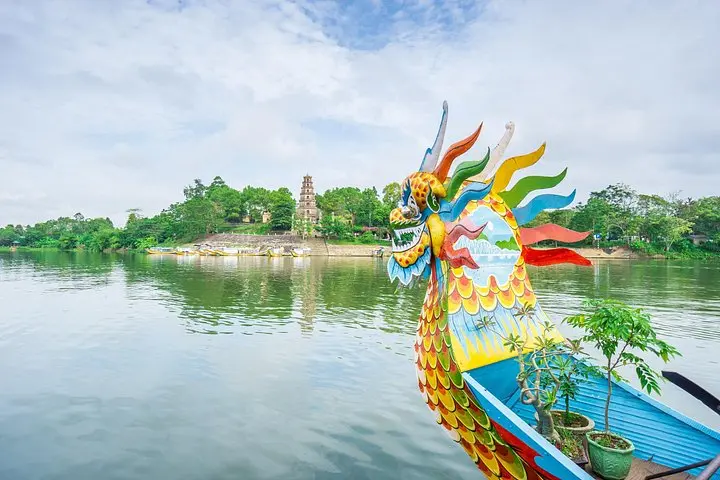
A slow dragon boat slips from the riverbank and the Perfume River pushes you past low stone embankments and lacquered temples; the city opens in tiers of tile roofs, tropical palms and the distant silhouette of the Citadel. That first glide sets the pace for a day where history and water alternately lead.
Verified experiences and guided adventures in the surrounding area.
Operated by Samtour Vietnam · Hue, Thua Thien-Hue
A slow dragon boat slips from the riverbank and the Perfume River pushes you past low stone embankments and lacquered temples; the city opens in tiers of tile roofs, tropical palms and the distant silhouette of the Citadel. That first glide sets the pace for a day where history and water alternately lead.
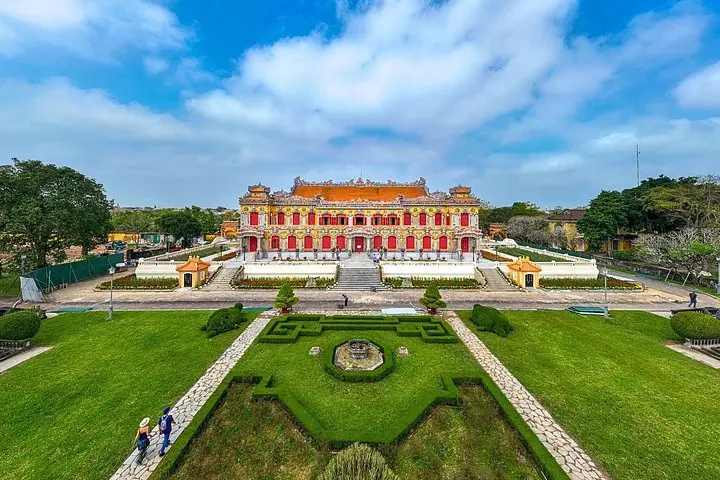
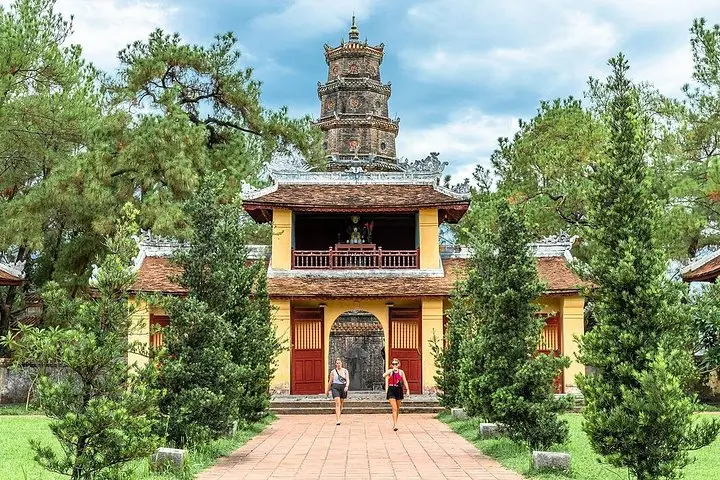
Hue was the capital of Vietnam under the Nguyen Dynasty (1802–1945). The Imperial Citadel—now a UNESCO World Heritage Site—holds layered courtyards, throne rooms and a defensive moat that tell of imperial ceremony and wartime scars. Downriver, tombs like Tu Duc and Khai Dinh reveal different design philosophies: Tu Duc’s serene gardens and lakes, Khai Dinh’s intricate mosaic work and East–West fusion. Thien Mu Pagoda, standing on a bend of the river since the 17th century, remains a living religious site.
Geologically, the low coastal plain around Hue is fed by alluvial deposits from the Perfume River, creating fertile ricelands and the slow, meandering course you’ll cross by dragon boat. Local life is visible in incense-making villages and market stalls where centuries-old crafts continue.
Practical notes: expect an 8–9 hour private day with hotel pickup, multiple short walks over stone and paved surfaces, and two short boat segments. Wear breathable, quick-dry clothing, sun protection, and comfortable walking shoes; bring cash for small entrance fees and village purchases. Mornings are cooler and quieter on the river; plan the boat leg early to avoid midday heat. The route balances cultural immersion with easy pacing—ideal for travelers who want focused history without long treks.
Some ticketed sites are included per the tour details, but confirm with your operator which tombs require additional fees at the gate.
Lunch is usually included according to the itinerary; expect a local restaurant meal with Vietnamese specialties but advise dietary restrictions in advance.
The dragon-boat segments are short, typically 15–30 minutes each—enough to view riverside landmarks and reach Thien Mu Pagoda.
Yes—this full-day itinerary is paced for easy access with minimal hiking, though participants should be comfortable boarding small boats and walking short distances on uneven ground.
Samtour Vietnam operates guided outdoor trips and adventures with an emphasis on safety, stewardship, and memorable experiences.
A slow dragon boat slips from the riverbank and the Perfume River pushes you past low stone embankments and lacquered temples; the city opens in tiers of tile roofs, tropical palms and the distant silhouette of the Citadel. That first glide sets the pace for a day where history and water alternately lead.
A slow dragon boat slips from the riverbank and the Perfume River pushes you past low stone embankments and lacquered temples; the city opens in tiers of tile roofs, tropical palms and the distant silhouette of the Citadel. That first glide sets the pace for a day where history and water alternately lead.
Hue was the capital of Vietnam under the Nguyen Dynasty (1802–1945). The Imperial Citadel—now a UNESCO World Heritage Site—holds layered courtyards, throne rooms and a defensive moat that tell of imperial ceremony and wartime scars. Downriver, tombs like Tu Duc and Khai Dinh reveal different design philosophies: Tu Duc’s serene gardens and lakes, Khai Dinh’s intricate mosaic work and East–West fusion. Thien Mu Pagoda, standing on a bend of the river since the 17th century, remains a living religious site.
Geologically, the low coastal plain around Hue is fed by alluvial deposits from the Perfume River, creating fertile ricelands and the slow, meandering course you’ll cross by dragon boat. Local life is visible in incense-making villages and market stalls where centuries-old crafts continue.
Practical notes: expect an 8–9 hour private day with hotel pickup, multiple short walks over stone and paved surfaces, and two short boat segments. Wear breathable, quick-dry clothing, sun protection, and comfortable walking shoes; bring cash for small entrance fees and village purchases. Mornings are cooler and quieter on the river; plan the boat leg early to avoid midday heat. The route balances cultural immersion with easy pacing—ideal for travelers who want focused history without long treks.