THE ADVENTURE COLLECTIVE® · Independent discovery and booking for outdoor travel

Spend a full day tracking elephants, predators, and rare species in Hwange National Park with hotel pickup from Victoria Falls. This full-day safari mixes long game drives, waterhole hides and a lunch stop—ideal for travelers seeking big-game sightings in Zimbabwe’s largest park.
Spend a full day tracking elephants, predators, and rare species in Hwange National Park with hotel pickup from Victoria Falls. This full-day safari mixes long game drives, waterhole hides and a lunch stop—ideal for travelers seeking big-game sightings in Zimbabwe’s largest park.
A low-slung Land Cruiser eases out of Victoria Falls before sunrise, headlights catching the mopane’s bronze silhouettes as the road opens onto the vastness of Hwange National Park. The air feels dry and charged; dust lifts like a warning and the first elephant tusks appear at a distant waterhole, daring the traveler closer with slow, deliberate intent.
Verified experiences and guided adventures in the surrounding area.
Operated by Khanondo Tours & Safaris · Hwange, Matabeleland North
A low-slung Land Cruiser eases out of Victoria Falls before sunrise, headlights catching the mopane’s bronze silhouettes as the road opens onto the vastness of Hwange National Park. The air feels dry and charged; dust lifts like a warning and the first elephant tusks appear at a distant waterhole, daring the traveler closer with slow, deliberate intent.
Hwange occupies roughly 14,650 km² on the edge of the Kalahari — a mix of Kalahari woodland, Zambezi teak stands and seasonal wetlands that turn into short-grass grazing grounds in the rains. It was set aside as a protected area in 1929 and carries layers of human history: Ndebele royal hunting grounds under Mzilikazi and long-standing local relationships with the land. Geologically the park is flat to undulating, with pans—shallow basins—holding life in the dry season.
On a full-day outing from Victoria Falls (about an hour’s drive), visitors can expect long game-drive windows, roadside hides by waterholes, and chances to see large herbivores and predators: elephants, buffalo, lion, and the rarer brown hyena and gemsbok. Tracks and dust are part of the route; drives alternate between open pans and denser mopane woodlands.
Practical guidance: carry binoculars and a camera with a long lens, drink plenty of water, and wear neutral, breathable clothing with a warm layer for early morning chill. Expect 10–11 hours including hotel pickup, game drives, and a picnic or lodge lunch. Respect vehicle guidance around animals, minimize noise, and bring cash for park fees or tips if not prepaid. Hwange rewards patient observation—sit with the light and let the park reveal its rhythms.
Expect about 10–11 hours from hotel pickup in Victoria Falls to return, including driving time, game drives and lunch.
Elephants are frequent and numerous; you'll also commonly see buffalo, giraffe, zebras and a variety of antelope, with carnivores like lion and hyena possible.
Lunch, bottled water and some beverages are included per the tour description; confirm whether park entry fees are covered at booking.
Infants must sit on laps and the tour is not recommended for travelers with spinal injuries; children are welcome but check vehicle comfort and dust exposure.
Khanondo Tours & Safaris operates guided outdoor trips and adventures with an emphasis on safety, stewardship, and memorable experiences.
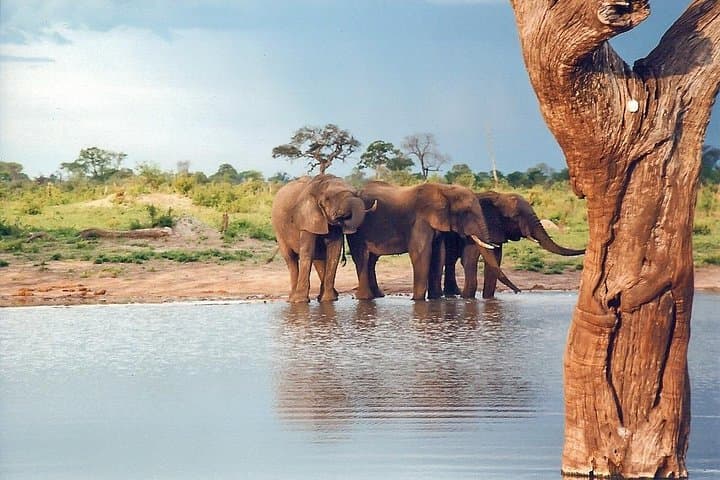


A low-slung Land Cruiser eases out of Victoria Falls before sunrise, headlights catching the mopane’s bronze silhouettes as the road opens onto the vastness of Hwange National Park. The air feels dry and charged; dust lifts like a warning and the first elephant tusks appear at a distant waterhole, daring the traveler closer with slow, deliberate intent.
A low-slung Land Cruiser eases out of Victoria Falls before sunrise, headlights catching the mopane’s bronze silhouettes as the road opens onto the vastness of Hwange National Park. The air feels dry and charged; dust lifts like a warning and the first elephant tusks appear at a distant waterhole, daring the traveler closer with slow, deliberate intent.
Hwange occupies roughly 14,650 km² on the edge of the Kalahari — a mix of Kalahari woodland, Zambezi teak stands and seasonal wetlands that turn into short-grass grazing grounds in the rains. It was set aside as a protected area in 1929 and carries layers of human history: Ndebele royal hunting grounds under Mzilikazi and long-standing local relationships with the land. Geologically the park is flat to undulating, with pans—shallow basins—holding life in the dry season.
On a full-day outing from Victoria Falls (about an hour’s drive), visitors can expect long game-drive windows, roadside hides by waterholes, and chances to see large herbivores and predators: elephants, buffalo, lion, and the rarer brown hyena and gemsbok. Tracks and dust are part of the route; drives alternate between open pans and denser mopane woodlands.
Practical guidance: carry binoculars and a camera with a long lens, drink plenty of water, and wear neutral, breathable clothing with a warm layer for early morning chill. Expect 10–11 hours including hotel pickup, game drives, and a picnic or lodge lunch. Respect vehicle guidance around animals, minimize noise, and bring cash for park fees or tips if not prepaid. Hwange rewards patient observation—sit with the light and let the park reveal its rhythms.