THE ADVENTURE COLLECTIVE® · Independent discovery and booking for outdoor travel

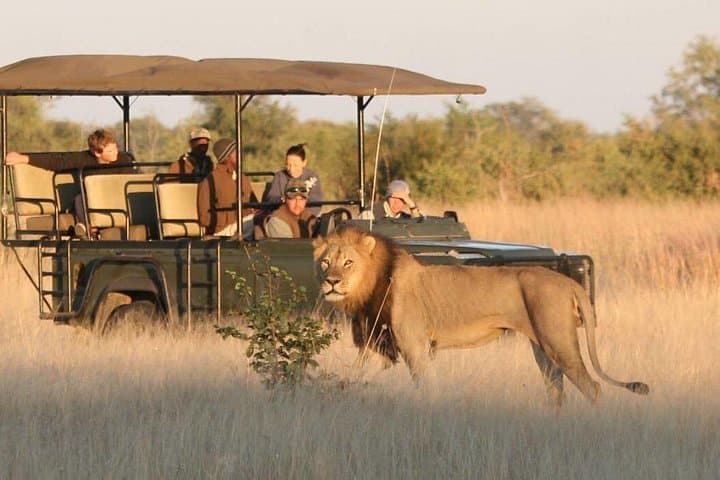
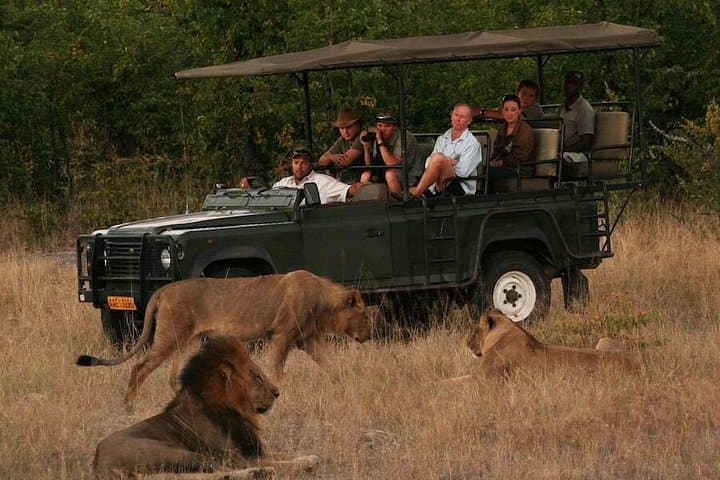
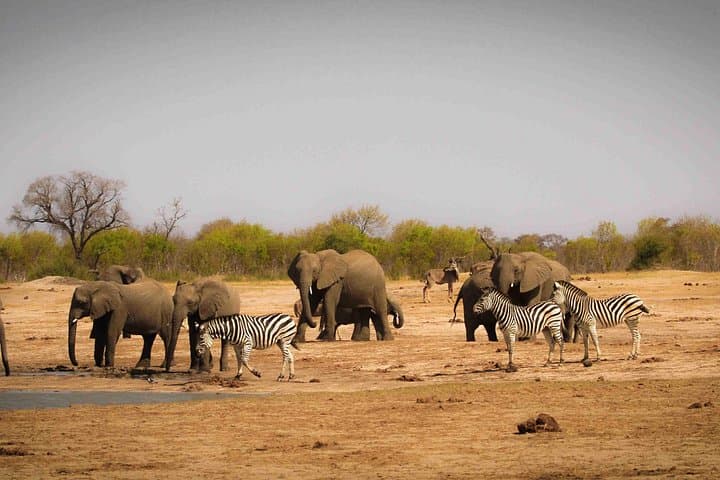
Depart Victoria Falls at dawn for a full-day jeep safari into Hwange National Park, home to Africa’s largest elephant population and reliable Big Five sightings. Expect long game drives, waterhole lunches, and close encounters with herds and predators across mopane woodland.
Depart Victoria Falls at dawn for a full-day jeep safari into Hwange National Park, home to Africa’s largest elephant population and reliable Big Five sightings. Expect long game drives, waterhole lunches, and close encounters with herds and predators across mopane woodland.
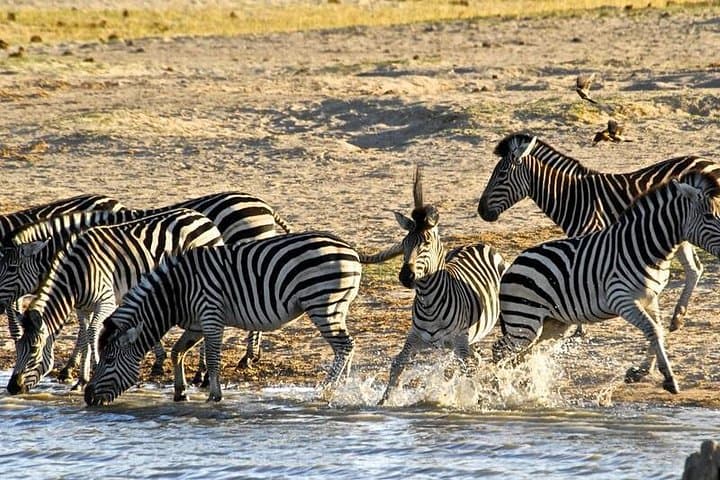
When the minibus slips away from Victoria Falls at first light, the world opens into flat grasslands and ancient termite mounds; the air tastes faintly of dust and distant water. By the time the jeeps roll through Hwange’s gate, elephants already line watering holes like slow-moving barges, trunks testing the air as if sizing up newcomers. The park’s dry pans and mopane woodland give rhythm to the day: long, patient scans of horizon followed by sudden, electrifying movement as predators or herds appear.
Verified experiences and guided adventures in the surrounding area.
Operated by Maximum Adventure Trails · Hwange, Matabeleland North
When the minibus slips away from Victoria Falls at first light, the world opens into flat grasslands and ancient termite mounds; the air tastes faintly of dust and distant water. By the time the jeeps roll through Hwange’s gate, elephants already line watering holes like slow-moving barges, trunks testing the air as if sizing up newcomers. The park’s dry pans and mopane woodland give rhythm to the day: long, patient scans of horizon followed by sudden, electrifying movement as predators or herds appear.
Hwange National Park sits on Kalahari sands and calcrete ridge systems that shape its network of waterholes—some natural, many supplemented—making it one of southern Africa’s most dependable wildlife-viewing landscapes. The park grew in prominence with colonial-era conservation and now supports Africa’s largest elephant population and more than 400 bird species, set against communities in Matabeleland North with strong pastoral and conservation ties.
On this full-day circuit you’ll experience morning and afternoon game drives separated by a picnic lunch at a waterhole: the rhythm is vehicle-bound observation punctuated by compressed, immersive encounters. Expect long stretches of bumpy gravel tracks, open-sky heat in the middle of the day, and the patient work of scanning for movement.
Practical guidance: bring binoculars and a long lens, sun protection, and a small daypack with water and snacks. Wear neutral, breathable layers and sturdy shoes for short off-vehicle stretches. Keep voices low and windows partly closed near drinking animals—Hwange’s wildlife responds to calm, predictable behavior. With an early start from Victoria Falls and a late return, plan for a full, rewarding day: early light and late afternoon are the most active hours for sightings.
Pickup from Victoria Falls is typically around 06:00 with return to town in the early evening; expect a 12–14 hour day including transit and game drives.
No—sightings depend on animal movements and conditions, but Hwange’s mix of waterholes and large elephant herds makes sightings likely, especially at dawn and dusk.
The tour is family-friendly but requires getting in and out of safari vehicles; it’s wheelchair accessible for portions but may not be suitable for those needing continuous mobility assistance.
Specify dietary restrictions and accessibility requirements at booking so guides can accommodate lunch and vehicle arrangements where possible.
Maximum Adventure Trails operates guided outdoor trips and adventures with an emphasis on safety, stewardship, and memorable experiences.
When the minibus slips away from Victoria Falls at first light, the world opens into flat grasslands and ancient termite mounds; the air tastes faintly of dust and distant water. By the time the jeeps roll through Hwange’s gate, elephants already line watering holes like slow-moving barges, trunks testing the air as if sizing up newcomers. The park’s dry pans and mopane woodland give rhythm to the day: long, patient scans of horizon followed by sudden, electrifying movement as predators or herds appear.
When the minibus slips away from Victoria Falls at first light, the world opens into flat grasslands and ancient termite mounds; the air tastes faintly of dust and distant water. By the time the jeeps roll through Hwange’s gate, elephants already line watering holes like slow-moving barges, trunks testing the air as if sizing up newcomers. The park’s dry pans and mopane woodland give rhythm to the day: long, patient scans of horizon followed by sudden, electrifying movement as predators or herds appear.
Hwange National Park sits on Kalahari sands and calcrete ridge systems that shape its network of waterholes—some natural, many supplemented—making it one of southern Africa’s most dependable wildlife-viewing landscapes. The park grew in prominence with colonial-era conservation and now supports Africa’s largest elephant population and more than 400 bird species, set against communities in Matabeleland North with strong pastoral and conservation ties.
On this full-day circuit you’ll experience morning and afternoon game drives separated by a picnic lunch at a waterhole: the rhythm is vehicle-bound observation punctuated by compressed, immersive encounters. Expect long stretches of bumpy gravel tracks, open-sky heat in the middle of the day, and the patient work of scanning for movement.
Practical guidance: bring binoculars and a long lens, sun protection, and a small daypack with water and snacks. Wear neutral, breathable layers and sturdy shoes for short off-vehicle stretches. Keep voices low and windows partly closed near drinking animals—Hwange’s wildlife responds to calm, predictable behavior. With an early start from Victoria Falls and a late return, plan for a full, rewarding day: early light and late afternoon are the most active hours for sightings.