THE ADVENTURE COLLECTIVE® · Independent discovery and booking for outdoor travel

A full‑day private tour from Durban that takes you to the sites of the 1879 Anglo‑Zulu battles at Isandlwana and Rorke’s Drift. Expect long drives, uneven battlefield terrain, expert guides, and a close look at the strategic and human stories of that day.
A full‑day private tour from Durban that takes you to the sites of the 1879 Anglo‑Zulu battles at Isandlwana and Rorke’s Drift. Expect long drives, uneven battlefield terrain, expert guides, and a close look at the strategic and human stories of that day.
Dawn on the inland road out of Durban thins the city into a rearview memory: sugarcane gives way to broad grasslands, and the land tightens into low ridges where history waits. The tour deposits you at Isandlwana’s open slope first — wind and grass, a scatter of stones marking where lines met — then at Rorke’s Drift, where a small mission station and a stubborn ridge tell a different end to the same day.
Verified experiences and guided adventures in the surrounding area.
Operated by Beyond Zulu Experience · Durban, KwaZulu-Natal
Dawn on the inland road out of Durban thins the city into a rearview memory: sugarcane gives way to broad grasslands, and the land tightens into low ridges where history waits. The tour deposits you at Isandlwana’s open slope first — wind and grass, a scatter of stones marking where lines met — then at Rorke’s Drift, where a small mission station and a stubborn ridge tell a different end to the same day.
On 22 January 1879 two pivotal engagements of the Anglo‑Zulu War unfolded here. At Isandlwana Zulu regiments led by commanders such as Ntshingwayo kaMahole Khoza overwhelmed a detached British column; later, a handful of defenders at Rorke’s Drift repelled repeated attacks. The terrain — rolling KwaZulu‑Natal plains cut by koppies and shallow valleys — influenced movements and clear lines of sight for both sides.
Local culture remains visible in village life and oral histories; guides often fold Zulu perspectives into battlefield interpretation. Geologically the area is worn sandstone and basaltic intrusions that create the low ridgelines and well‑drained soils beneath the grass.
Practical guidance: expect several hours of walking on uneven ground and open sun; the tour runs about 13 hours including a long drive from Durban with hotel pickup and drop‑off. Wear sturdy, closed footwear and sun protection, carry at least 1–2 liters of water, and be prepared for limited cell service. Treat graves and artifacts with respect, follow your specialist battlefield guide, and allow time to absorb both the tactical details and the human stories that linger on these fields.
The tour includes roughly a 3.5‑hour drive each way to Isandlwana, depending on traffic and stops—expect a full 13‑hour day.
Moderate fitness is required; children and older guests can join but should be comfortable with long vehicle time and walking on uneven ground.
Admission to the battlefield sites and lunch at Rorke’s Drift are included in the tour, as well as bottled water and a specialist battlefield guide on site.
Photography is generally allowed, but be respectful at graves and memorials; follow your guide’s directions about sensitive areas and any restricted zones.
Beyond Zulu Experience operates guided outdoor trips and adventures with an emphasis on safety, stewardship, and memorable experiences.
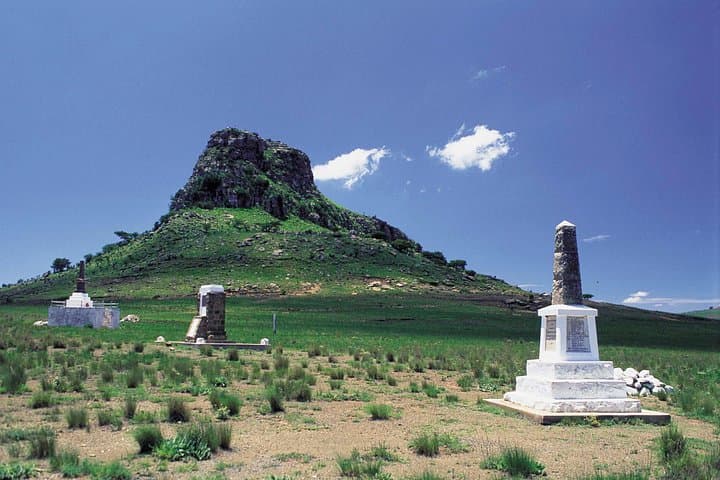

Dawn on the inland road out of Durban thins the city into a rearview memory: sugarcane gives way to broad grasslands, and the land tightens into low ridges where history waits. The tour deposits you at Isandlwana’s open slope first — wind and grass, a scatter of stones marking where lines met — then at Rorke’s Drift, where a small mission station and a stubborn ridge tell a different end to the same day.
Dawn on the inland road out of Durban thins the city into a rearview memory: sugarcane gives way to broad grasslands, and the land tightens into low ridges where history waits. The tour deposits you at Isandlwana’s open slope first — wind and grass, a scatter of stones marking where lines met — then at Rorke’s Drift, where a small mission station and a stubborn ridge tell a different end to the same day.
On 22 January 1879 two pivotal engagements of the Anglo‑Zulu War unfolded here. At Isandlwana Zulu regiments led by commanders such as Ntshingwayo kaMahole Khoza overwhelmed a detached British column; later, a handful of defenders at Rorke’s Drift repelled repeated attacks. The terrain — rolling KwaZulu‑Natal plains cut by koppies and shallow valleys — influenced movements and clear lines of sight for both sides.
Local culture remains visible in village life and oral histories; guides often fold Zulu perspectives into battlefield interpretation. Geologically the area is worn sandstone and basaltic intrusions that create the low ridgelines and well‑drained soils beneath the grass.
Practical guidance: expect several hours of walking on uneven ground and open sun; the tour runs about 13 hours including a long drive from Durban with hotel pickup and drop‑off. Wear sturdy, closed footwear and sun protection, carry at least 1–2 liters of water, and be prepared for limited cell service. Treat graves and artifacts with respect, follow your specialist battlefield guide, and allow time to absorb both the tactical details and the human stories that linger on these fields.