THE ADVENTURE COLLECTIVE® · Independent discovery and booking for outdoor travel

Explore Wadi Rum by 4x4 on a full-day Jeep tour that combines canyon walks, dune scrambles and a traditional Bedouin picnic. Practical, photo-ready and guided by locals, this route delivers geology, history and a desert sunset in one action-packed day.
Explore Wadi Rum by 4x4 on a full-day Jeep tour that combines canyon walks, dune scrambles and a traditional Bedouin picnic. Practical, photo-ready and guided by locals, this route delivers geology, history and a desert sunset in one action-packed day.
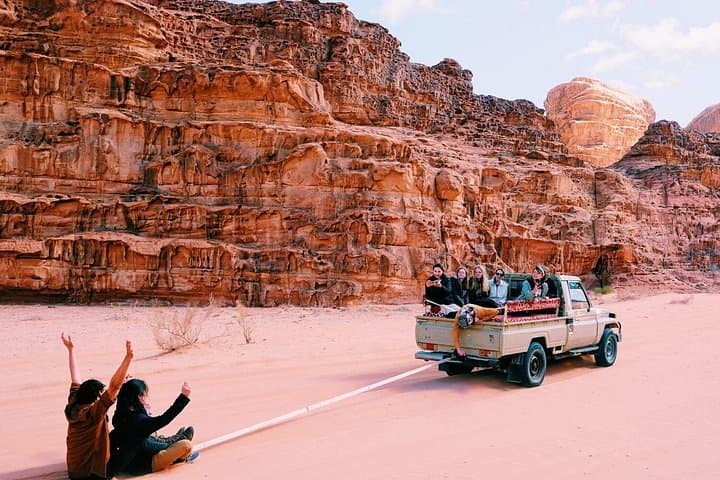
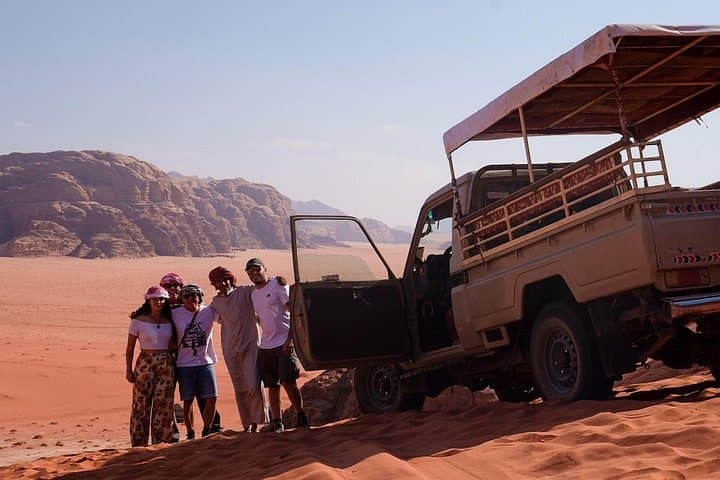
The Jeep shudders onto a wash of red sand and the desert suddenly feels like a living map—ridges folding away, cliffs throwing long shadows, and a guide tapping the brake to point at an ancient inscription faded into the rock. On a full-day 4x4 tour of Wadi Rum, travelers move between those human marks and massive geology: Lawrence’s spring, mushroom rocks, narrow canyons and sand dunes that shift underfoot like a tide.
Verified experiences and guided adventures in the surrounding area.
Operated by Wadi Rum Stars Valley · Wadi Rum Village, Ma'an Governorate
The Jeep shudders onto a wash of red sand and the desert suddenly feels like a living map—ridges folding away, cliffs throwing long shadows, and a guide tapping the brake to point at an ancient inscription faded into the rock. On a full-day 4x4 tour of Wadi Rum, travelers move between those human marks and massive geology: Lawrence’s spring, mushroom rocks, narrow canyons and sand dunes that shift underfoot like a tide.
Wadi Rum’s story is written in stone. Millennia of weather carved the sandstone and granite into freestanding arches, narrow gorges and towering walls. Bedouin families have lived with these shapes for centuries; their tents and trails show a human scale against the monumental landscape. T.E. Lawrence’s wartime passages here made the valley famous, but the area’s real character is its geologic patience—the slow work of wind and water that sculpts new features each season.
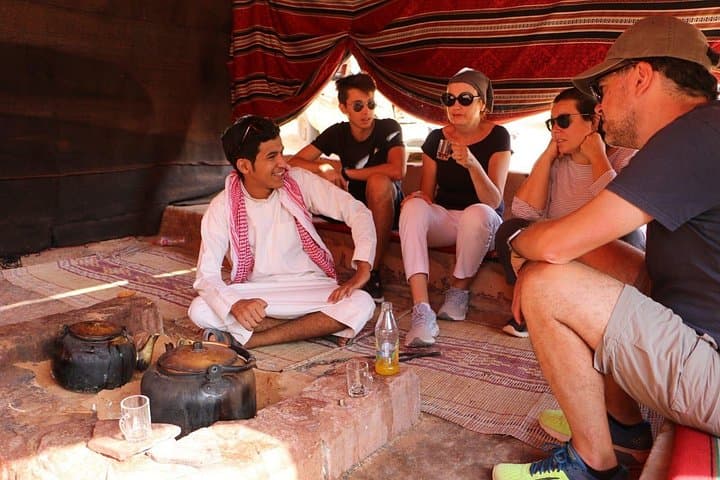
The day’s rhythm alternates between motion and walk. The Jeep stitches distant landmarks together so guests can spend 15–75 minutes on foot at each stop: scramble up the Small Arch, read Nabatean and Thamudic inscriptions in Khazali Canyon, and walk Abu Khashaba Canyon for 30–45 minutes of narrow-slot scenery. A picnic of hearty Bedouin fare—stews, hummus, cheese and salads—lands like a warm pause under sun-bleached rocks, with mint tea brewed shortly afterward.
Guides are part naturalist, part cultural translator. They point out lizard species warming on stones, describe traditional grazing rotations, and explain how scarce springs like Lawrence’s sustain life here. At sunset, the desert changes color fast; the guide times the stop at Um Sabatah so guests can sip tea while the cliffs flush orange.
Practicalities matter in a landscape that pushes you: bring closed-toe shoes for scrambling, a refillable water bottle (you’ll need more than you expect), sun protection and a light layered jacket for evening winds. The Jeep handles the rougher tracks, so the tour suits most fitness levels—you’ll sometimes climb short rock pitches and walk uneven canyon floors.
If staying overnight, the family-run Bedouin camp option provides hot showers, western-style toilets and a communal tent with tea, a charging station and star views few places can match. For photographers, golden hour and the blue hour right after sunset are essential; for quieter moments, arrive earlier at a dune or canyon mouth and listen—sand and stone have their own slow conversation.
The tour is a concise way to see Wadi Rum’s major features in one day while getting a grounded sense of Bedouin life and the desert’s geology. It leaves room for questions, for a brief scramble, and for the kind of silence that only an open expanse can offer.
The meeting point is the parking lot next to Wadi Rum Rest House (Rum Village); the Jeep returns you there at the end of the day.
Walking is intermittent—short hikes of 15–75 minutes at key sites; overall it suits most fitness levels but includes some basic scrambling.
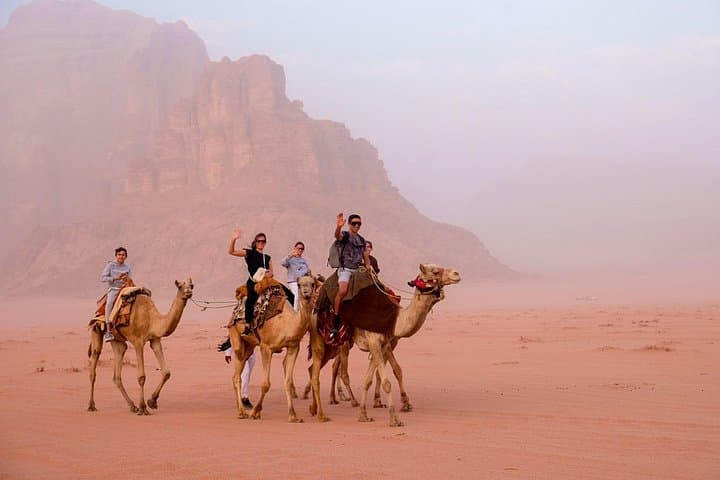
Yes—optional camel rides of 30, 60 or 120 minutes can be added for an extra fee on the day, subject to availability.
Basic facilities are available at the camp and at the village start/end; in the field, stops are rustic—your guide will advise suitable locations.
Yes; the tour accommodates families, but children should be supervised during scrambles and dune descents.
Full refunds are available if you cancel at least 24 hours before the scheduled departure time.
Wadi Rum Stars Valley operates guided outdoor trips and adventures with an emphasis on safety, stewardship, and memorable experiences.
The Jeep shudders onto a wash of red sand and the desert suddenly feels like a living map—ridges folding away, cliffs throwing long shadows, and a guide tapping the brake to point at an ancient inscription faded into the rock. On a full-day 4x4 tour of Wadi Rum, travelers move between those human marks and massive geology: Lawrence’s spring, mushroom rocks, narrow canyons and sand dunes that shift underfoot like a tide.
The Jeep shudders onto a wash of red sand and the desert suddenly feels like a living map—ridges folding away, cliffs throwing long shadows, and a guide tapping the brake to point at an ancient inscription faded into the rock. On a full-day 4x4 tour of Wadi Rum, travelers move between those human marks and massive geology: Lawrence’s spring, mushroom rocks, narrow canyons and sand dunes that shift underfoot like a tide.
Wadi Rum’s story is written in stone. Millennia of weather carved the sandstone and granite into freestanding arches, narrow gorges and towering walls. Bedouin families have lived with these shapes for centuries; their tents and trails show a human scale against the monumental landscape. T.E. Lawrence’s wartime passages here made the valley famous, but the area’s real character is its geologic patience—the slow work of wind and water that sculpts new features each season.
The day’s rhythm alternates between motion and walk. The Jeep stitches distant landmarks together so guests can spend 15–75 minutes on foot at each stop: scramble up the Small Arch, read Nabatean and Thamudic inscriptions in Khazali Canyon, and walk Abu Khashaba Canyon for 30–45 minutes of narrow-slot scenery. A picnic of hearty Bedouin fare—stews, hummus, cheese and salads—lands like a warm pause under sun-bleached rocks, with mint tea brewed shortly afterward.
Guides are part naturalist, part cultural translator. They point out lizard species warming on stones, describe traditional grazing rotations, and explain how scarce springs like Lawrence’s sustain life here. At sunset, the desert changes color fast; the guide times the stop at Um Sabatah so guests can sip tea while the cliffs flush orange.
Practicalities matter in a landscape that pushes you: bring closed-toe shoes for scrambling, a refillable water bottle (you’ll need more than you expect), sun protection and a light layered jacket for evening winds. The Jeep handles the rougher tracks, so the tour suits most fitness levels—you’ll sometimes climb short rock pitches and walk uneven canyon floors.
If staying overnight, the family-run Bedouin camp option provides hot showers, western-style toilets and a communal tent with tea, a charging station and star views few places can match. For photographers, golden hour and the blue hour right after sunset are essential; for quieter moments, arrive earlier at a dune or canyon mouth and listen—sand and stone have their own slow conversation.
The tour is a concise way to see Wadi Rum’s major features in one day while getting a grounded sense of Bedouin life and the desert’s geology. It leaves room for questions, for a brief scramble, and for the kind of silence that only an open expanse can offer.