THE ADVENTURE COLLECTIVE® · Independent discovery and booking for outdoor travel

Take an eight-hour guided walk through Chitwan’s forests and grasslands to search for rhino, deer, and rich birdlife while local naturalists share ecological and cultural insights. Practical route knowledge, permit handling, and a picnic lunch make this a focused, safe way to explore the Terai on foot.
Take an eight-hour guided walk through Chitwan’s forests and grasslands to search for rhino, deer, and rich birdlife while local naturalists share ecological and cultural insights. Practical route knowledge, permit handling, and a picnic lunch make this a focused, safe way to explore the Terai on foot.
You step off the jeep into humid air rich with earth and river dust, the Rapti calling from the edge of sight. The trail threads through tall sal and riverine forest, opens into broad grassland where hoofprints score the soft soil, and bends beside hidden waterholes where birds keep their distance until the guide signals silence.
Verified experiences and guided adventures in the surrounding area.
Operated by CAN Travels · Sauraha, Bagmati Province
You step off the jeep into humid air rich with earth and river dust, the Rapti calling from the edge of sight. The trail threads through tall sal and riverine forest, opens into broad grassland where hoofprints score the soft soil, and bends beside hidden waterholes where birds keep their distance until the guide signals silence.
Chitwan National Park protects a slice of Nepal's Terai plain—established as a national park in 1973 and inscribed as a UNESCO World Heritage Site for its rare lowland ecosystems. Geologically, the park sits on alluvial floodplains shaped by the Narayani-Rapti river system; the mix of grassland, sal forest, and oxbow lakes supports the famous greater one-horned rhinoceros and other megafauna. Local Tharu communities share cultural ties to these landscapes and often assist guides with traditional knowledge of animal behavior.
On a full-day guided walk expect steady, mostly flat terrain with intermittent muddy sections and waist-high grasses in places. The experience is observational rather than combative: the guide reads tracks, points out birdlife, and positions the group for distant sightings. A picnic lunch typically supplies a pause beneath a mango or fig tree.
Practical notes: arrive with closed-toe hiking shoes, at least 2–3 liters of water, insect repellent, and layered sun protection. Respect the guide's instructions—keep distance from rhinos and wild pigs, stay on established paths, and avoid loud noise. Morning and late afternoon walks increase wildlife activity; the guide and park permit are included, making this a focused, low-impact way to encounter Chitwan's living landscape.
Rhino sightings are reasonably common in grassland and riverbank areas; tiger sightings on foot are rare—guides look for indirect signs and usually position groups for distant visual or auditory clues.
The tour is private and can accommodate varied ages, but it’s not recommended for infants, pregnant travelers, or those with spinal or serious heart conditions; a moderate fitness level is required.
Typical inclusions are a government-licensed English-speaking guide, national park permit, picnic lunch, bottled water, hiking pole, and hotel pick-up/drop-off.
Remain silent, follow the guide’s directions, back away slowly when instructed, and never attempt to approach or feed animals; guides are trained to manage close encounters safely.
CAN Travels operates guided outdoor trips and adventures with an emphasis on safety, stewardship, and memorable experiences.
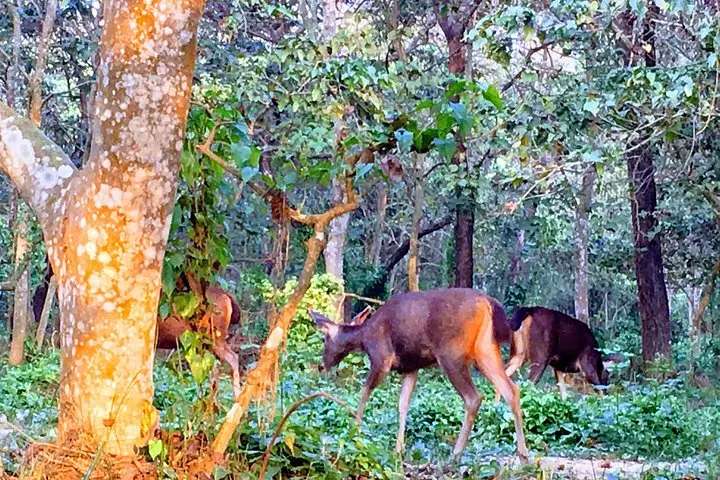
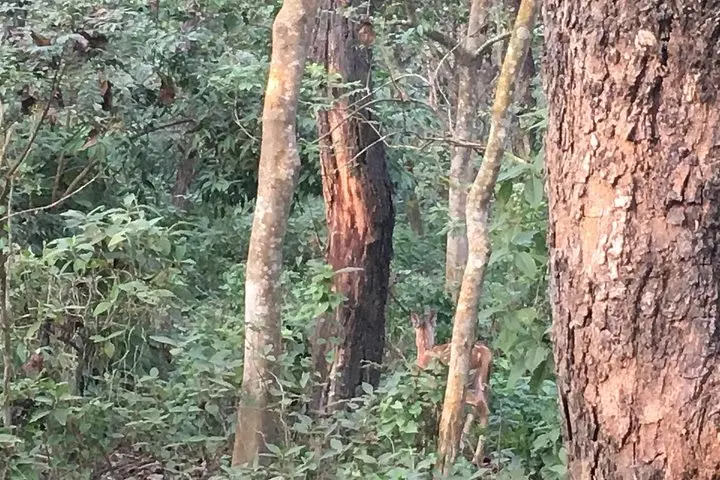
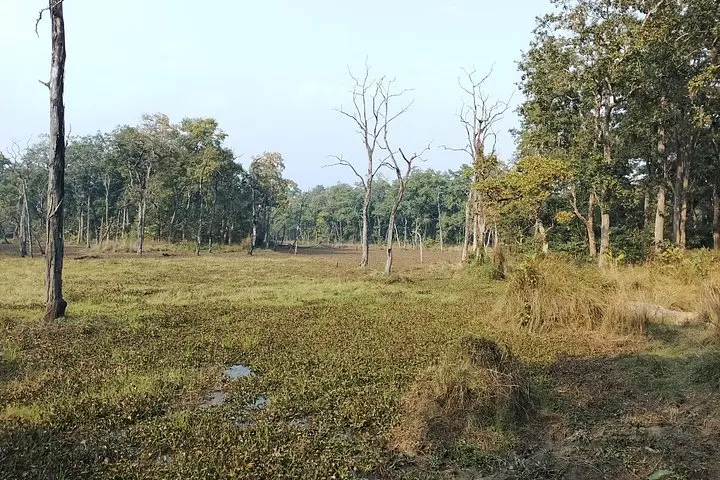
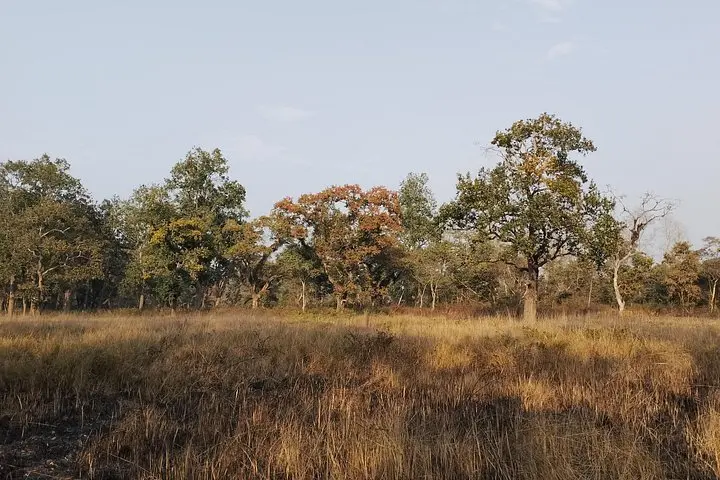
You step off the jeep into humid air rich with earth and river dust, the Rapti calling from the edge of sight. The trail threads through tall sal and riverine forest, opens into broad grassland where hoofprints score the soft soil, and bends beside hidden waterholes where birds keep their distance until the guide signals silence.
You step off the jeep into humid air rich with earth and river dust, the Rapti calling from the edge of sight. The trail threads through tall sal and riverine forest, opens into broad grassland where hoofprints score the soft soil, and bends beside hidden waterholes where birds keep their distance until the guide signals silence.
Chitwan National Park protects a slice of Nepal's Terai plain—established as a national park in 1973 and inscribed as a UNESCO World Heritage Site for its rare lowland ecosystems. Geologically, the park sits on alluvial floodplains shaped by the Narayani-Rapti river system; the mix of grassland, sal forest, and oxbow lakes supports the famous greater one-horned rhinoceros and other megafauna. Local Tharu communities share cultural ties to these landscapes and often assist guides with traditional knowledge of animal behavior.
On a full-day guided walk expect steady, mostly flat terrain with intermittent muddy sections and waist-high grasses in places. The experience is observational rather than combative: the guide reads tracks, points out birdlife, and positions the group for distant sightings. A picnic lunch typically supplies a pause beneath a mango or fig tree.
Practical notes: arrive with closed-toe hiking shoes, at least 2–3 liters of water, insect repellent, and layered sun protection. Respect the guide's instructions—keep distance from rhinos and wild pigs, stay on established paths, and avoid loud noise. Morning and late afternoon walks increase wildlife activity; the guide and park permit are included, making this a focused, low-impact way to encounter Chitwan's living landscape.