THE ADVENTURE COLLECTIVE® · Independent discovery and booking for outdoor travel

Spend a day walking the lower slopes of Mt. Kilimanjaro from Machame Gate to Machame Hut—through dense rainforest, past coffee farms, and up to alpine scrub—then return for lunch. This private day trip offers a concentrated taste of Kilimanjaro’s ecosystems without the multi-day summit push.
Spend a day walking the lower slopes of Mt. Kilimanjaro from Machame Gate to Machame Hut—through dense rainforest, past coffee farms, and up to alpine scrub—then return for lunch. This private day trip offers a concentrated taste of Kilimanjaro’s ecosystems without the multi-day summit push.
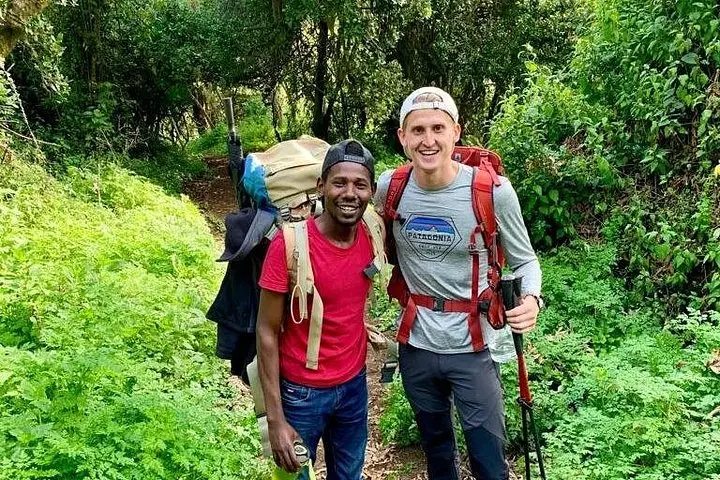
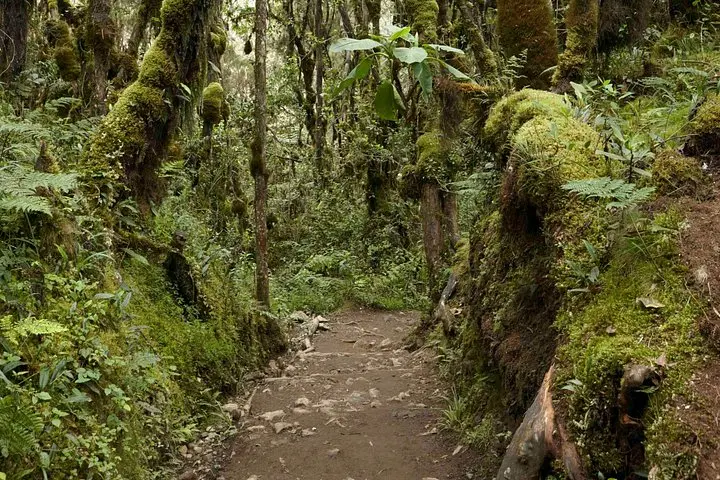
You step through the iron park gate and the forest closes behind you—giant tree ferns and moss-slick trunks shading a narrow path that climbs steadily uphill. Birds puncture the canopy; a distant stream keeps time. This is the lower flank of Kilimanjaro, where the mountain’s moods are measured in cloud, mist and sudden shafts of sunlight.
Verified experiences and guided adventures in the surrounding area.
Operated by Duma Explorer · Moshi, Kilimanjaro Region
You step through the iron park gate and the forest closes behind you—giant tree ferns and moss-slick trunks shading a narrow path that climbs steadily uphill. Birds puncture the canopy; a distant stream keeps time. This is the lower flank of Kilimanjaro, where the mountain’s moods are measured in cloud, mist and sudden shafts of sunlight.
Geology here is raw: Kilimanjaro is a dormant stratovolcano whose layered lava and ash built a high dome that catches moisture, feeding distinct ecological bands from rainforest to heath and, farther up, alpine desert. The slopes are also home to the Chagga people, whose terraced farms and coffee gardens fringe the park boundary and shape local culture and hospitality.
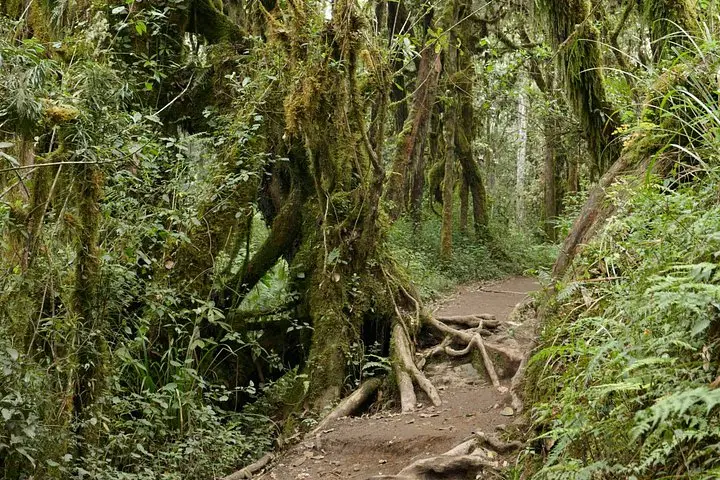
On a full-day trip from Machame Gate you’ll experience the rain forest zone and reach the Machame Hut area before returning to the gate for lunch. Expect steep, rooted trails, intermittent muddy sections and repeated short climbs; the round-trip is typically 8–12 km with roughly 1,000–1,400 m of total elevation change to the hut area depending on how far your guide takes you. Wildlife is subtle—monkeys, forest antelope and an array of birds—while the trees seem to lean toward the trail, as if encouraging you onward.
Practical points: bring layered clothing, a waterproof shell, sturdy boots, 2–3 liters of water and sun protection. Altitude rises quickly—this is a day of ascent and descent, not summit acclimatization—so move at a steady pace and communicate any symptoms to your guide. The tour includes lunch and park fees; cancellation is possible for bad weather. Arrive in Moshi the night before and let the guide set the pace—Kilimanjaros’ lower slopes are generous, but unrelenting if you push too hard.
The route involves steady uphill walking with significant elevation gain; expect 6 hours of active hiking and plan for repeated climbs on uneven ground.
No formal experience required, but prior day-hiking and good fitness help—this trip is not an acclimatization substitute for summit attempts.
Lunch is included and is typically served near the park gate or a designated rest area after returning from the hut zone.
This experience is not recommended for travelers with spinal injuries due to uneven terrain and sustained exertion; consult your physician first.
Duma Explorer operates guided outdoor trips and adventures with an emphasis on safety, stewardship, and memorable experiences.
You step through the iron park gate and the forest closes behind you—giant tree ferns and moss-slick trunks shading a narrow path that climbs steadily uphill. Birds puncture the canopy; a distant stream keeps time. This is the lower flank of Kilimanjaro, where the mountain’s moods are measured in cloud, mist and sudden shafts of sunlight.
You step through the iron park gate and the forest closes behind you—giant tree ferns and moss-slick trunks shading a narrow path that climbs steadily uphill. Birds puncture the canopy; a distant stream keeps time. This is the lower flank of Kilimanjaro, where the mountain’s moods are measured in cloud, mist and sudden shafts of sunlight.
Geology here is raw: Kilimanjaro is a dormant stratovolcano whose layered lava and ash built a high dome that catches moisture, feeding distinct ecological bands from rainforest to heath and, farther up, alpine desert. The slopes are also home to the Chagga people, whose terraced farms and coffee gardens fringe the park boundary and shape local culture and hospitality.
On a full-day trip from Machame Gate you’ll experience the rain forest zone and reach the Machame Hut area before returning to the gate for lunch. Expect steep, rooted trails, intermittent muddy sections and repeated short climbs; the round-trip is typically 8–12 km with roughly 1,000–1,400 m of total elevation change to the hut area depending on how far your guide takes you. Wildlife is subtle—monkeys, forest antelope and an array of birds—while the trees seem to lean toward the trail, as if encouraging you onward.
Practical points: bring layered clothing, a waterproof shell, sturdy boots, 2–3 liters of water and sun protection. Altitude rises quickly—this is a day of ascent and descent, not summit acclimatization—so move at a steady pace and communicate any symptoms to your guide. The tour includes lunch and park fees; cancellation is possible for bad weather. Arrive in Moshi the night before and let the guide set the pace—Kilimanjaros’ lower slopes are generous, but unrelenting if you push too hard.