THE ADVENTURE COLLECTIVE® · Independent discovery and booking for outdoor travel

Spend six hours traversing roughly 160 km of Kruger National Park with a professional guide, two scheduled stops for breakfast and lunch, and mineral water supplied. Ideal for travelers wanting concentrated wildlife viewing with minimal walking.
Spend six hours traversing roughly 160 km of Kruger National Park with a professional guide, two scheduled stops for breakfast and lunch, and mineral water supplied. Ideal for travelers wanting concentrated wildlife viewing with minimal walking.
Dust lifts from the gravel road as the vehicle threads into morning light; acacia silhouettes sharpen against a cooling sky and the guide eases the truck toward a herd grazing under fever trees. You feel the landscape change with every kilometer — mopane scrub giving way to riverine gallery forest, and the occasional thunder of elephant footsteps vibrating through the air.
Verified experiences and guided adventures in the surrounding area.
Operated by Discover Tours & Safaris · Hazyview, Mpumalanga
Dust lifts from the gravel road as the vehicle threads into morning light; acacia silhouettes sharpen against a cooling sky and the guide eases the truck toward a herd grazing under fever trees. You feel the landscape change with every kilometer — mopane scrub giving way to riverine gallery forest, and the occasional thunder of elephant footsteps vibrating through the air.
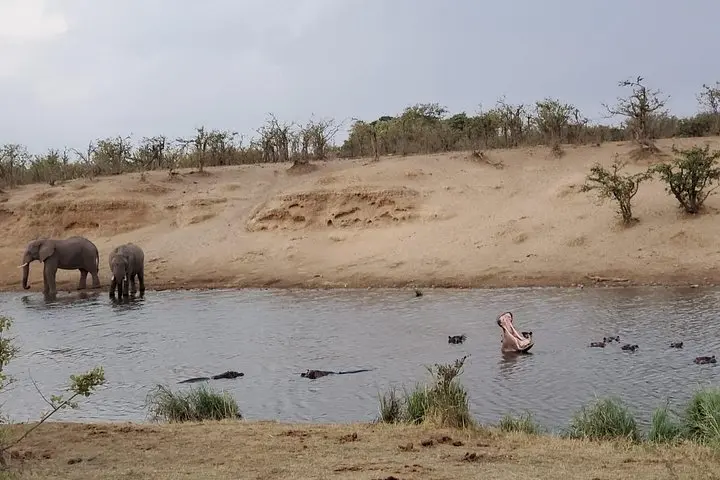
Kruger National Park, created in the early 20th century and named after President Paul Kruger, preserves one of Africa’s largest savanna ecosystems. Its geology is ancient—granite and gneiss foundations capped by laterite soils—and seasonal rainfall sculpts wildlife movement: dry months concentrate animals near permanent rivers, while the wet season spreads them through thicker cover.
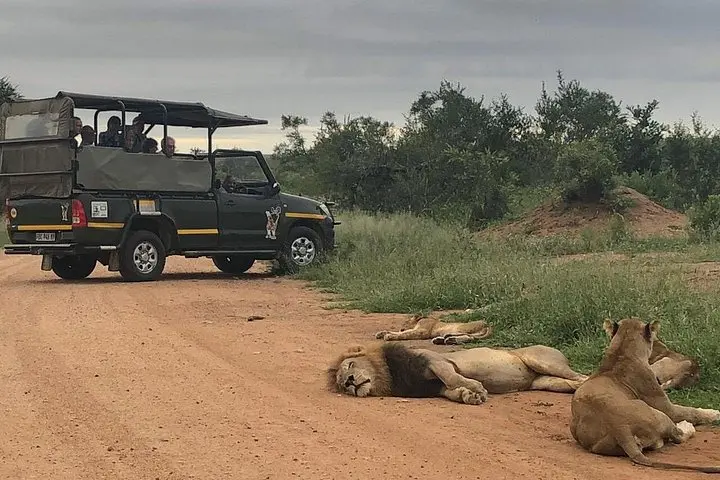
A full-day game drive covers roughly 160 km (about 100 miles) over six hours, with two scheduled breaks (a 45-minute breakfast pause and a one-hour lunch stop). Expect long stretches seated in an open vehicle, frequent binocular checks, and photo stops at river crossings and clearings where predators and plains game intersect.
Practical guidance: bring sun protection, a reusable water bottle (mineral water is supplied), and neutral clothing to reduce glare. Park entrance fees are often separate from the tour price—confirm in booking. Early starts improve sightings and cooler temperatures; the dry winter months concentrate wildlife and are best for viewing, while summer brings lush scenery and abundant birds but more insects.
Travelers should follow the guide’s instructions, stay inside the vehicle unless directed, and keep noise low to increase sighting chances. This is a vehicle-first safari: minimal walking, maximum window time.
Most listings exclude national park entrance fees; confirm with the operator and bring payment for the fee if required.
Guides maximize sighting chances through knowledge of animal movement, but wildlife is wild—sightings cannot be guaranteed.
Many operators offer pickup from Hazyview or nearby lodges—provide your pickup point at booking to confirm logistics.
Infants under 4 are typically not permitted; older children are allowed but check age rules and safety provisions before booking.
Discover Tours & Safaris operates guided outdoor trips and adventures with an emphasis on safety, stewardship, and memorable experiences.
Dust lifts from the gravel road as the vehicle threads into morning light; acacia silhouettes sharpen against a cooling sky and the guide eases the truck toward a herd grazing under fever trees. You feel the landscape change with every kilometer — mopane scrub giving way to riverine gallery forest, and the occasional thunder of elephant footsteps vibrating through the air.
Dust lifts from the gravel road as the vehicle threads into morning light; acacia silhouettes sharpen against a cooling sky and the guide eases the truck toward a herd grazing under fever trees. You feel the landscape change with every kilometer — mopane scrub giving way to riverine gallery forest, and the occasional thunder of elephant footsteps vibrating through the air.
Kruger National Park, created in the early 20th century and named after President Paul Kruger, preserves one of Africa’s largest savanna ecosystems. Its geology is ancient—granite and gneiss foundations capped by laterite soils—and seasonal rainfall sculpts wildlife movement: dry months concentrate animals near permanent rivers, while the wet season spreads them through thicker cover.
A full-day game drive covers roughly 160 km (about 100 miles) over six hours, with two scheduled breaks (a 45-minute breakfast pause and a one-hour lunch stop). Expect long stretches seated in an open vehicle, frequent binocular checks, and photo stops at river crossings and clearings where predators and plains game intersect.
Practical guidance: bring sun protection, a reusable water bottle (mineral water is supplied), and neutral clothing to reduce glare. Park entrance fees are often separate from the tour price—confirm in booking. Early starts improve sightings and cooler temperatures; the dry winter months concentrate wildlife and are best for viewing, while summer brings lush scenery and abundant birds but more insects.
Travelers should follow the guide’s instructions, stay inside the vehicle unless directed, and keep noise low to increase sighting chances. This is a vehicle-first safari: minimal walking, maximum window time.