THE ADVENTURE COLLECTIVE® · Independent discovery and booking for outdoor travel

Spend a day in Kruger National Park with experienced guides who know where wildlife concentrates and why. This full-day safari from Nelspruit or White River combines patient game-viewing, riverine scenery, and practical local knowledge to maximize sightings.
Spend a day in Kruger National Park with experienced guides who know where wildlife concentrates and why. This full-day safari from Nelspruit or White River combines patient game-viewing, riverine scenery, and practical local knowledge to maximize sightings.
Dawn arrives over the lowveld like a slow exhale: acacia crowns etch the horizon and the road through Kruger rolls forward under a pale, warming sky. The vehicle threads past pans and mopane thickets; birds flare like punctuation, and distant trumpet calls pull focus toward a stand of fever trees. For ten hours the park directs the pace — the bush slows you, then nudges you toward a sighting.
Verified experiences and guided adventures in the surrounding area.
Dawn arrives over the lowveld like a slow exhale: acacia crowns etch the horizon and the road through Kruger rolls forward under a pale, warming sky. The vehicle threads past pans and mopane thickets; birds flare like punctuation, and distant trumpet calls pull focus toward a stand of fever trees. For ten hours the park directs the pace — the bush slows you, then nudges you toward a sighting.
Kruger National Park was proclaimed in the late 19th century and expanded into one of Africa’s largest protected areas. The landscape sits on ancient granite and basalt, whose eroded kopjes and riverine floodplains shape routes animals follow. Local communities — Tsonga and Shangaan among them — have long ties to the land and contribute to cultural tourism and guiding knowledge visitors now benefit from.
On a full-day drive from Nelspruit or White River, expect long stretches on gravel roads, frequent stops at waterholes, and opportunities to photograph elephant herds, lionesses at midday shade, and clusters of plains game. Guides read spoor and listen for wingbeats; their experience converts patience into sightings. The park demands respect: keep to roads, maintain distance, and keep engines low to let wildlife set the tempo.
Practicalities: start before sunrise for cooler light and active animals, carry at least 2 liters of water, dress in neutral layers, and bring binoculars and a camera with a long lens. Cellular service is patchy; plan logistics and park fees ahead. A full-day Kruger safari is equal parts observation and quiet endurance — come ready to be present.
Park entrance fees are usually separate from the vehicle/guide rate; confirm with the operator before booking and have payment method ready.
No — wildlife sightings depend on season, animal movements, and luck; experienced guides increase your chances but cannot guarantee specific encounters.
Neutral-colored layers, a sun hat, and comfortable closed shoes are best; avoid bright colors and strong fragrances that can attract attention.
Generally yes if they can tolerate long vehicle rides; inform the operator about mobility needs so the guide can accommodate shorter stops or seating preferences.
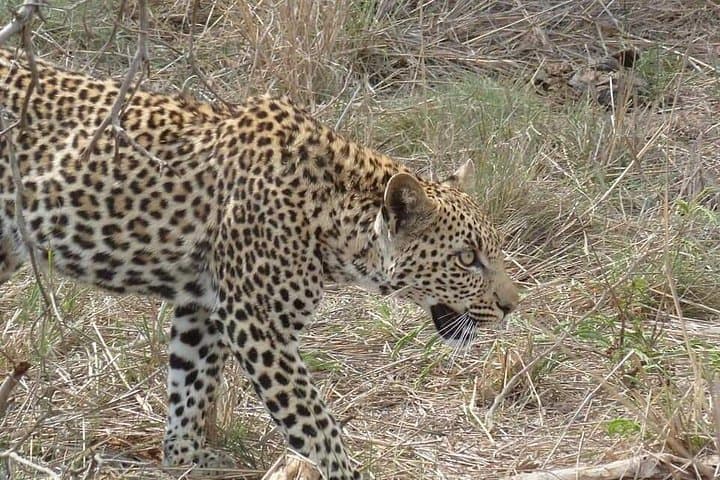
Dawn arrives over the lowveld like a slow exhale: acacia crowns etch the horizon and the road through Kruger rolls forward under a pale, warming sky. The vehicle threads past pans and mopane thickets; birds flare like punctuation, and distant trumpet calls pull focus toward a stand of fever trees. For ten hours the park directs the pace — the bush slows you, then nudges you toward a sighting.
Dawn arrives over the lowveld like a slow exhale: acacia crowns etch the horizon and the road through Kruger rolls forward under a pale, warming sky. The vehicle threads past pans and mopane thickets; birds flare like punctuation, and distant trumpet calls pull focus toward a stand of fever trees. For ten hours the park directs the pace — the bush slows you, then nudges you toward a sighting.
Kruger National Park was proclaimed in the late 19th century and expanded into one of Africa’s largest protected areas. The landscape sits on ancient granite and basalt, whose eroded kopjes and riverine floodplains shape routes animals follow. Local communities — Tsonga and Shangaan among them — have long ties to the land and contribute to cultural tourism and guiding knowledge visitors now benefit from.
On a full-day drive from Nelspruit or White River, expect long stretches on gravel roads, frequent stops at waterholes, and opportunities to photograph elephant herds, lionesses at midday shade, and clusters of plains game. Guides read spoor and listen for wingbeats; their experience converts patience into sightings. The park demands respect: keep to roads, maintain distance, and keep engines low to let wildlife set the tempo.
Practicalities: start before sunrise for cooler light and active animals, carry at least 2 liters of water, dress in neutral layers, and bring binoculars and a camera with a long lens. Cellular service is patchy; plan logistics and park fees ahead. A full-day Kruger safari is equal parts observation and quiet endurance — come ready to be present.