THE ADVENTURE COLLECTIVE® · Independent discovery and booking for outdoor travel

A dawn start from Cusco takes hikers through high puna to the milky-blue Humantay Lagoon beneath Salkantay. This full-day outing combines a steep, short alpine climb with cultural landscape and glacier-fed views—ideal for travelers acclimatized to high altitude.
A dawn start from Cusco takes hikers through high puna to the milky-blue Humantay Lagoon beneath Salkantay. This full-day outing combines a steep, short alpine climb with cultural landscape and glacier-fed views—ideal for travelers acclimatized to high altitude.
A cold dawn lifts off Cusco as a convoy threads high puna and puna grasslands toward Soraypampa. By the time the group steps out of the van the air already bites—thin, bright, and pregnant with the kind of light that makes snow and turquoise water sing. The trail climbs steady from Soraypampa (≈3,900 m) to Laguna Humantay (≈4,200 m): roughly 3 km each way with 350–450 m of elevation gain depending on the route. Expect rocky switchbacks, compacted dirt, and occasional scree underfoot.
Verified experiences and guided adventures in the surrounding area.
Operated by Perou Magique Tours · Cusco, Cusco Region
A cold dawn lifts off Cusco as a convoy threads high puna and puna grasslands toward Soraypampa. By the time the group steps out of the van the air already bites—thin, bright, and pregnant with the kind of light that makes snow and turquoise water sing. The trail climbs steady from Soraypampa (≈3,900 m) to Laguna Humantay (≈4,200 m): roughly 3 km each way with 350–450 m of elevation gain depending on the route. Expect rocky switchbacks, compacted dirt, and occasional scree underfoot.
The lake sits below the Salkantay massif, a glaciated peak sacred to local Quechua communities for centuries; glaciers and glacial melt carve the basin and feed the lagoon, giving the water its iconic milky-blue hue. The area’s geology is dominated by metamorphic and igneous rock uplifted by Andean orogeny; cultural traces—stone cairns and woven offerings—mark the pass as a living ritual landscape.
Practically: allow 12–14 hours for the round trip from Cusco including pickup, breakfast in Mollepata, and transfers. Moderate fitness is required; altitude acclimatization before the day is essential. Carry 2+ liters of water, warm layers, sun protection, and a light rain shell—weather shifts fast. Guides commonly provide wooden canes; trekking poles are recommended for knees and balance. Start early to avoid afternoon cloud build-up and to see the lagoon in its clearest light. Leave no trace: this high‑Andean wetland is fragile. With care, the Humantay hike is a compact, high-altitude day that pairs sharp views with compact effort—an achievable taste of the Cordillera Vilcabamba for travelers based in Cusco.
The trail is about 3 km each way with 350–450 m of ascent; it’s short but steep—classified as moderate due to altitude and gradient.
Yes—spend at least 48 hours in Cusco or nearby to reduce altitude sickness risk; climb slowly and hydrate.
Some local operators offer horse rental on the ascent for an additional fee; horses are not always available near the very top and cannot replace walking in the final steep sections.
The dry season (May–September) offers clearer skies and firmer trails; the wet season (November–March) brings frequent afternoon storms and muddier conditions.
Perou Magique Tours operates guided outdoor trips and adventures with an emphasis on safety, stewardship, and memorable experiences.

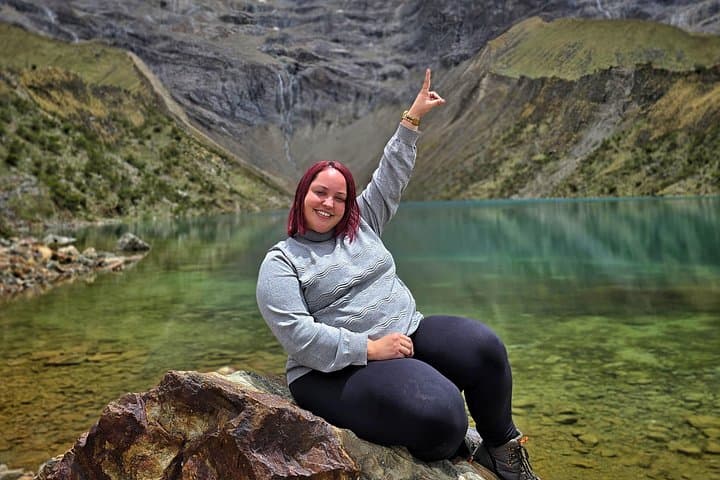
A cold dawn lifts off Cusco as a convoy threads high puna and puna grasslands toward Soraypampa. By the time the group steps out of the van the air already bites—thin, bright, and pregnant with the kind of light that makes snow and turquoise water sing. The trail climbs steady from Soraypampa (≈3,900 m) to Laguna Humantay (≈4,200 m): roughly 3 km each way with 350–450 m of elevation gain depending on the route. Expect rocky switchbacks, compacted dirt, and occasional scree underfoot.
A cold dawn lifts off Cusco as a convoy threads high puna and puna grasslands toward Soraypampa. By the time the group steps out of the van the air already bites—thin, bright, and pregnant with the kind of light that makes snow and turquoise water sing. The trail climbs steady from Soraypampa (≈3,900 m) to Laguna Humantay (≈4,200 m): roughly 3 km each way with 350–450 m of elevation gain depending on the route. Expect rocky switchbacks, compacted dirt, and occasional scree underfoot.
The lake sits below the Salkantay massif, a glaciated peak sacred to local Quechua communities for centuries; glaciers and glacial melt carve the basin and feed the lagoon, giving the water its iconic milky-blue hue. The area’s geology is dominated by metamorphic and igneous rock uplifted by Andean orogeny; cultural traces—stone cairns and woven offerings—mark the pass as a living ritual landscape.
Practically: allow 12–14 hours for the round trip from Cusco including pickup, breakfast in Mollepata, and transfers. Moderate fitness is required; altitude acclimatization before the day is essential. Carry 2+ liters of water, warm layers, sun protection, and a light rain shell—weather shifts fast. Guides commonly provide wooden canes; trekking poles are recommended for knees and balance. Start early to avoid afternoon cloud build-up and to see the lagoon in its clearest light. Leave no trace: this high‑Andean wetland is fragile. With care, the Humantay hike is a compact, high-altitude day that pairs sharp views with compact effort—an achievable taste of the Cordillera Vilcabamba for travelers based in Cusco.