THE ADVENTURE COLLECTIVE® · Independent discovery and booking for outdoor travel

Spend a full day cruising Lake Tana’s island monasteries and walking to the Blue Nile Falls. This private tour blends centuries-old church art with a short, scenic hike to the spray of Tis Abay.
Spend a full day cruising Lake Tana’s island monasteries and walking to the Blue Nile Falls. This private tour blends centuries-old church art with a short, scenic hike to the spray of Tis Abay.
Morning light slices across Lake Tana and the boat slips forward like a quiet promise. Church domes appear as low halos on the Zege peninsula, their ochre walls and painted interiors holding centuries of pilgrimage. Later, the Blue Nile thunders into view — Tis Abay, the “smoking water” — steam and spray daring you closer while the Portuguese bridge holds a calm vantage point.
Verified experiences and guided adventures in the surrounding area.
Operated by Ethio Travel And Tours · Bahir Dar, Amhara
Morning light slices across Lake Tana and the boat slips forward like a quiet promise. Church domes appear as low halos on the Zege peninsula, their ochre walls and painted interiors holding centuries of pilgrimage. Later, the Blue Nile thunders into view — Tis Abay, the “smoking water” — steam and spray daring you closer while the Portuguese bridge holds a calm vantage point.
This route threads history and geology: Lake Tana’s shallow basin collects tributaries from the Ethiopian plateau, feeding the Blue Nile that gouges deep gorges en route to Sudan. The island monasteries date to the 14th–16th centuries and conserve illuminated manuscripts and Coptic-style frescoes; the Blue Nile Falls has long shaped local culture and seasonal farming rhythms downstream.
Practical guidance is straightforward. The day is long (7–9 hours): expect a 1–2 hour boat ride with short landings, then roughly a 1-hour uphill walk each way to the falls on uneven, sometimes muddy trails. Wear sturdy shoes, bring sun protection and a refillable water bottle — bottled water and lunch are usually provided. Photography is generous but remember many islands and churches are active religious sites; follow local rules (no flash in chapels, modest dress).
Timing matters: flow is highest after the rains but accessibility is best in the dry season. A private, air-conditioned vehicle handles transfers; infants typically sit on laps. Carry small local cash for tips or purchases at the falls. Respect the landscapes — stick to paths, avoid disturbing wildlife, and pack out trash. This day pairs cultural depth with a dose of raw hydrology: it’s both an easy cultural tour and a hands-on nature walk.
Boat time varies by itinerary but expect roughly 1–2 hours of cruising and short stops to visit island monasteries.
Yes — most guided itineraries include entrance to the monasteries listed in the tour program.
The path involves uneven terrain and some uphill sections; many visitors manage it at a steady pace but those with mobility issues should plan assistance or shorter viewpoints.
After the rainy season (roughly July–September) the flow is strongest, but access and visibility are often best in the dry months when trails are less muddy.
Ethio Travel And Tours operates guided outdoor trips and adventures with an emphasis on safety, stewardship, and memorable experiences.
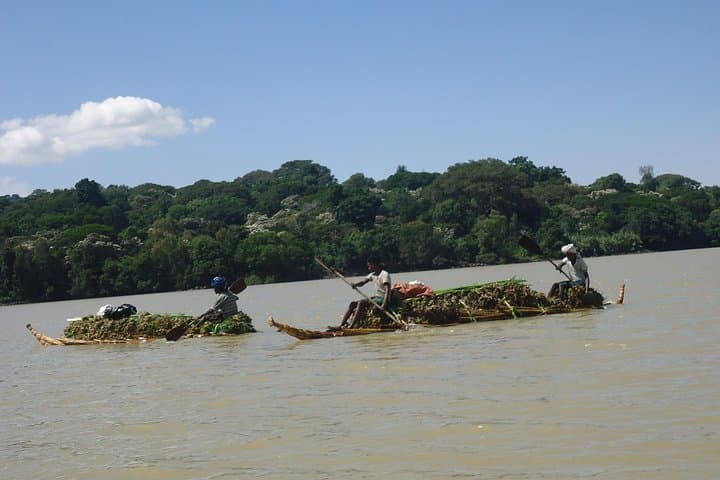


Morning light slices across Lake Tana and the boat slips forward like a quiet promise. Church domes appear as low halos on the Zege peninsula, their ochre walls and painted interiors holding centuries of pilgrimage. Later, the Blue Nile thunders into view — Tis Abay, the “smoking water” — steam and spray daring you closer while the Portuguese bridge holds a calm vantage point.
Morning light slices across Lake Tana and the boat slips forward like a quiet promise. Church domes appear as low halos on the Zege peninsula, their ochre walls and painted interiors holding centuries of pilgrimage. Later, the Blue Nile thunders into view — Tis Abay, the “smoking water” — steam and spray daring you closer while the Portuguese bridge holds a calm vantage point.
This route threads history and geology: Lake Tana’s shallow basin collects tributaries from the Ethiopian plateau, feeding the Blue Nile that gouges deep gorges en route to Sudan. The island monasteries date to the 14th–16th centuries and conserve illuminated manuscripts and Coptic-style frescoes; the Blue Nile Falls has long shaped local culture and seasonal farming rhythms downstream.
Practical guidance is straightforward. The day is long (7–9 hours): expect a 1–2 hour boat ride with short landings, then roughly a 1-hour uphill walk each way to the falls on uneven, sometimes muddy trails. Wear sturdy shoes, bring sun protection and a refillable water bottle — bottled water and lunch are usually provided. Photography is generous but remember many islands and churches are active religious sites; follow local rules (no flash in chapels, modest dress).
Timing matters: flow is highest after the rains but accessibility is best in the dry season. A private, air-conditioned vehicle handles transfers; infants typically sit on laps. Carry small local cash for tips or purchases at the falls. Respect the landscapes — stick to paths, avoid disturbing wildlife, and pack out trash. This day pairs cultural depth with a dose of raw hydrology: it’s both an easy cultural tour and a hands-on nature walk.