THE ADVENTURE COLLECTIVE® · Independent discovery and booking for outdoor travel

Trade the beach for millennia on a full-day transfer from Hurghada to Luxor. Visit the Valley of the Kings, Hatshepsut’s temple, the Colossi of Memnon and Karnak with a licensed Egyptologist on a long but rewarding 12-hour day.
Trade the beach for millennia on a full-day transfer from Hurghada to Luxor. Visit the Valley of the Kings, Hatshepsut’s temple, the Colossi of Memnon and Karnak with a licensed Egyptologist on a long but rewarding 12-hour day.
You leave Hurghada before dawn, the Red Sea light thinning as the road heads inland. The desert flattens into a ochre plain, and the Nile valley appears like a green ribbon where civilization gathers. By midmorning you arrive in Luxor — columns, cliffs and river air replace the hotel skyline.
Verified experiences and guided adventures in the surrounding area.
Operated by EGYPT EXPERIENCE · Luxor, Luxor Governorate
You leave Hurghada before dawn, the Red Sea light thinning as the road heads inland. The desert flattens into a ochre plain, and the Nile valley appears like a green ribbon where civilization gathers. By midmorning you arrive in Luxor — columns, cliffs and river air replace the hotel skyline.
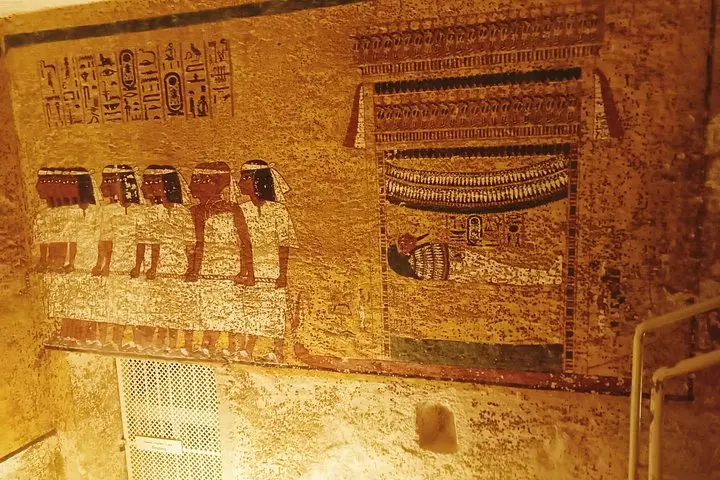
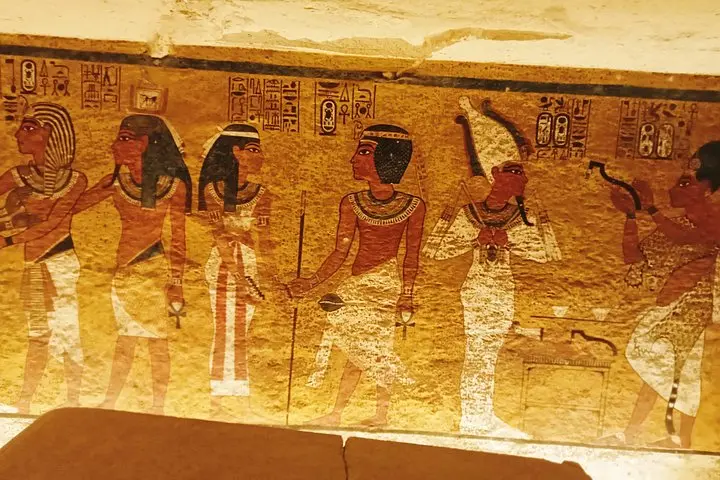
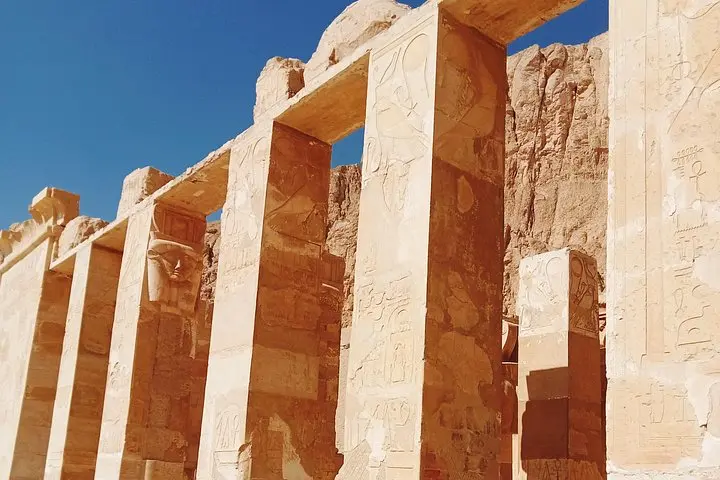
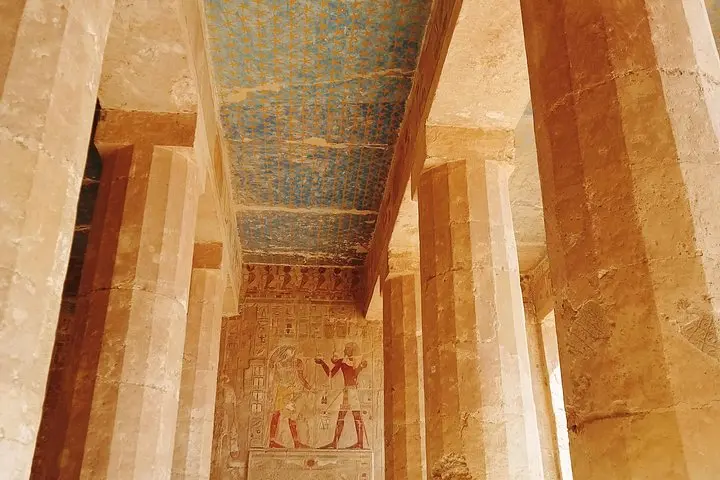
Luxor stands on the ruins of ancient Thebes, once Egypt’s religious and political heart. The east bank holds Karnak, a deliberately overwhelming complex of hypostyle halls, obelisks and chapels built and rebuilt across millennia. Cross the Nile to the west bank and the landscape changes to arid hills and burial valleys: the Valley of the Kings, Hatshepsut’s terraced mortuary temple carved into rock, and the stern Colossi of Memnon.
Geology here is plain and limestone, worked into tomb chambers with low ceilings and narrow corridors; expect uneven stone steps and dust. Culturally, the sites are living museums managed in partnership with the Egyptian Antiquities authorities — photography limits and conservation rules apply.
Practical guidance: the round trip from Hurghada is long — plan on roughly 3.5–4 hours each way by air-conditioned vehicle and a 12-hour day overall. Wear sturdy, closed-toe shoes for stairs and sand, sun protection for exposed ruins, and carry a reusable water bottle; bottled water is usually provided but shade is sparse. Bring passport details for ticketing, and budget time for security checks and payments for souvenirs or extra museum entries. Move deliberately through tombs — slow steps help protect both fragile paintings and your joints. With an Egyptologist guide, you’ll leave with context that turns columns and hieroglyphs into human stories rather than just photo stops.
Expect roughly 3.5–4 hours each way by air-conditioned vehicle depending on traffic and stops, making this a full 10–12 hour day.
This tour lists entrance fees to major sites and a local lunch as included; confirm any optional extras with your guide on the day.
The tour is suitable for most ages, but sites like tombs require climbing steps and navigating low, uneven passages—people with significant mobility limitations may find access challenging.
Photography rules vary by tomb and conservation policy; flash photography is often prohibited to protect wall paintings, so follow signage and your guide’s instructions.
EGYPT EXPERIENCE operates guided outdoor trips and adventures with an emphasis on safety, stewardship, and memorable experiences.
You leave Hurghada before dawn, the Red Sea light thinning as the road heads inland. The desert flattens into a ochre plain, and the Nile valley appears like a green ribbon where civilization gathers. By midmorning you arrive in Luxor — columns, cliffs and river air replace the hotel skyline.
You leave Hurghada before dawn, the Red Sea light thinning as the road heads inland. The desert flattens into a ochre plain, and the Nile valley appears like a green ribbon where civilization gathers. By midmorning you arrive in Luxor — columns, cliffs and river air replace the hotel skyline.
Luxor stands on the ruins of ancient Thebes, once Egypt’s religious and political heart. The east bank holds Karnak, a deliberately overwhelming complex of hypostyle halls, obelisks and chapels built and rebuilt across millennia. Cross the Nile to the west bank and the landscape changes to arid hills and burial valleys: the Valley of the Kings, Hatshepsut’s terraced mortuary temple carved into rock, and the stern Colossi of Memnon.
Geology here is plain and limestone, worked into tomb chambers with low ceilings and narrow corridors; expect uneven stone steps and dust. Culturally, the sites are living museums managed in partnership with the Egyptian Antiquities authorities — photography limits and conservation rules apply.
Practical guidance: the round trip from Hurghada is long — plan on roughly 3.5–4 hours each way by air-conditioned vehicle and a 12-hour day overall. Wear sturdy, closed-toe shoes for stairs and sand, sun protection for exposed ruins, and carry a reusable water bottle; bottled water is usually provided but shade is sparse. Bring passport details for ticketing, and budget time for security checks and payments for souvenirs or extra museum entries. Move deliberately through tombs — slow steps help protect both fragile paintings and your joints. With an Egyptologist guide, you’ll leave with context that turns columns and hieroglyphs into human stories rather than just photo stops.