THE ADVENTURE COLLECTIVE® · Independent discovery and booking for outdoor travel

Spend a private day with an Egyptologist exploring Luxor’s East and West Banks: Valley of the Kings, Hatshepsut’s terrace temple, Karnak and Luxor Temple. Expect an eight-hour itinerary with hotel pickup, a local lunch, and walking on uneven ground with significant sun exposure.
Spend a private day with an Egyptologist exploring Luxor’s East and West Banks: Valley of the Kings, Hatshepsut’s terrace temple, Karnak and Luxor Temple. Expect an eight-hour itinerary with hotel pickup, a local lunch, and walking on uneven ground with significant sun exposure.
Morning light slides across the Nile and the columns of Karnak throw long, geometric shadows — Luxor reveals itself in a single day of layered history. This private Egyptology-led tour moves from the West Bank’s cliff-cut tombs to the East Bank’s monumental temples, tracing routes carved by pharaohs and later recycled by successive cultures.
Verified experiences and guided adventures in the surrounding area.
Operated by Egypt Package Tours · Luxor, Luxor Governorate
Morning light slides across the Nile and the columns of Karnak throw long, geometric shadows — Luxor reveals itself in a single day of layered history. This private Egyptology-led tour moves from the West Bank’s cliff-cut tombs to the East Bank’s monumental temples, tracing routes carved by pharaohs and later recycled by successive cultures.
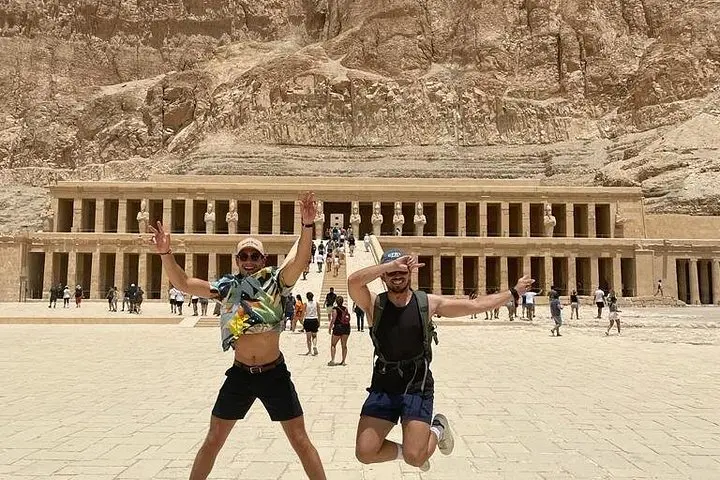
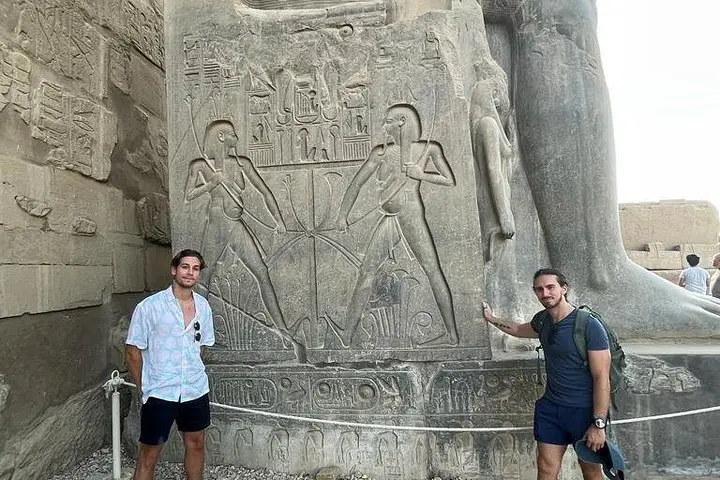
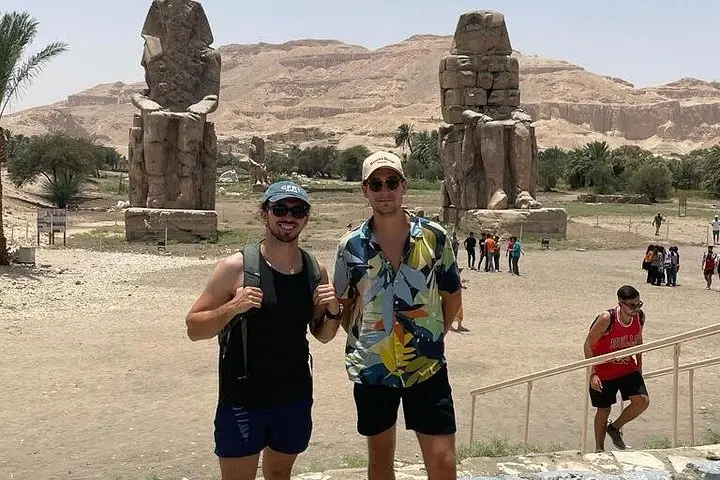
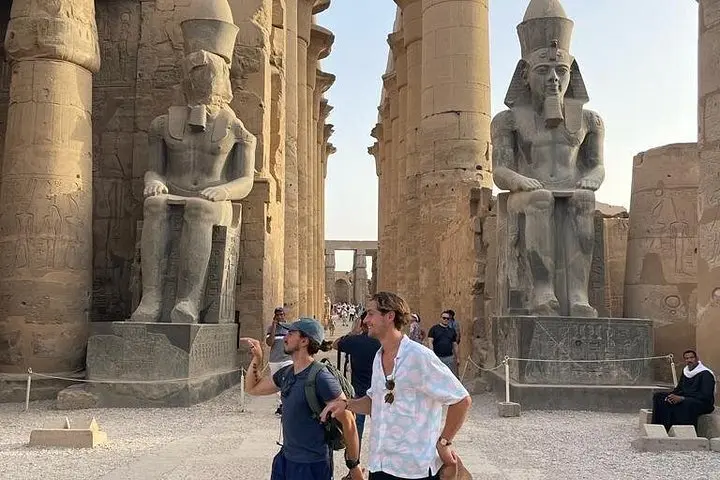
Start on the West Bank at the Valley of the Kings, where New Kingdom rulers cut burial chambers into limestone and decorated them with spells meant to guide the dead. Nearby, Hatshepsut’s Mortuary Temple rises from the desert in terraced form, a mix of royal ambition and funerary ritual; the Colossi of Memnon stand as weathered gatekeepers to that landscape. Return to the Nile and walk the vast precinct of Karnak — a complex expanded over 2,000 years from sandstone and mudbrick — then end beneath the pylons of Luxor Temple, where New Kingdom, Christian and Islamic layers meet.
Practicalities are straightforward: the private tour lasts roughly eight hours with hotel pickup in an air-conditioned vehicle and lunch at a local restaurant; entrance fees and drinks are typically paid on-site. Expect uneven ground, sun exposure, and brief walks between sites. Photographs are welcome in most open areas but restrictions apply inside certain tombs. Carry a refillable water bottle, sun protection, and small change for tipping. Travel with a guide and you’ll gain context — dates, dynasties and the practical reasons temples were sited where they were — turning monuments into readable history rather than distant ruins.
Entrance fees are typically not included; most sites accept card payments but bring some cash for smaller purchases and tips.
The private tour is about 8 hours with a usual pickup around 8:00 a.m., but pickup time can often be adjusted when booking.
The tour involves uneven terrain, steps and short walks between sites; the operator notes wheelchair-accessible transportation but some sites have limited accessibility.
An English-speaking Egyptology guide is provided; other languages may be available for an extra charge if requested in advance.
Egypt Package Tours operates guided outdoor trips and adventures with an emphasis on safety, stewardship, and memorable experiences.
Morning light slides across the Nile and the columns of Karnak throw long, geometric shadows — Luxor reveals itself in a single day of layered history. This private Egyptology-led tour moves from the West Bank’s cliff-cut tombs to the East Bank’s monumental temples, tracing routes carved by pharaohs and later recycled by successive cultures.
Morning light slides across the Nile and the columns of Karnak throw long, geometric shadows — Luxor reveals itself in a single day of layered history. This private Egyptology-led tour moves from the West Bank’s cliff-cut tombs to the East Bank’s monumental temples, tracing routes carved by pharaohs and later recycled by successive cultures.
Start on the West Bank at the Valley of the Kings, where New Kingdom rulers cut burial chambers into limestone and decorated them with spells meant to guide the dead. Nearby, Hatshepsut’s Mortuary Temple rises from the desert in terraced form, a mix of royal ambition and funerary ritual; the Colossi of Memnon stand as weathered gatekeepers to that landscape. Return to the Nile and walk the vast precinct of Karnak — a complex expanded over 2,000 years from sandstone and mudbrick — then end beneath the pylons of Luxor Temple, where New Kingdom, Christian and Islamic layers meet.
Practicalities are straightforward: the private tour lasts roughly eight hours with hotel pickup in an air-conditioned vehicle and lunch at a local restaurant; entrance fees and drinks are typically paid on-site. Expect uneven ground, sun exposure, and brief walks between sites. Photographs are welcome in most open areas but restrictions apply inside certain tombs. Carry a refillable water bottle, sun protection, and small change for tipping. Travel with a guide and you’ll gain context — dates, dynasties and the practical reasons temples were sited where they were — turning monuments into readable history rather than distant ruins.