
Full-Day Marrakech Day Trip from Agadir: Medina, Jemaa el-Fnaa & Bahia Palace
Make the six-hour coastal transfer worth it with a guided spin through Marrakech’s medina, from the theatrical pulse of Jemaa el-Fnaa to the decorative calm of Bahia Palace. This shared day trip from Agadir compresses the city’s architectural and cultural essentials into a single, walkable itinerary.
An Adventure In Agadir.
Make the six-hour coastal transfer worth it with a guided spin through Marrakech’s medina, from the theatrical pulse of Jemaa el-Fnaa to the decorative calm of Bahia Palace. This shared day trip from Agadir compresses the city’s architectural and cultural essentials into a single, walkable itinerary.
Read the full experience
You arrive in Marrakech as the Atlas foothills recede and the city’s minarets cut the horizon—an immediate shift from coastal Agadir’s Atlantic light to the warm ochres of the old city. The coach drops you at the edge of the medina and you step into alleyways where merchants call, spices scent the air, and mosaics flash in narrow shafts of sun.
You arrive in Marrakech as the Atlas foothills recede and the city’s minarets cut the horizon—an immediate shift from coastal Agadir’s Atlantic light to the warm ochres of the old city. The coach drops you at the edge of the medina and you step into alleyways where merchants call, spices scent the air, and mosaics flash in narrow shafts of sun.
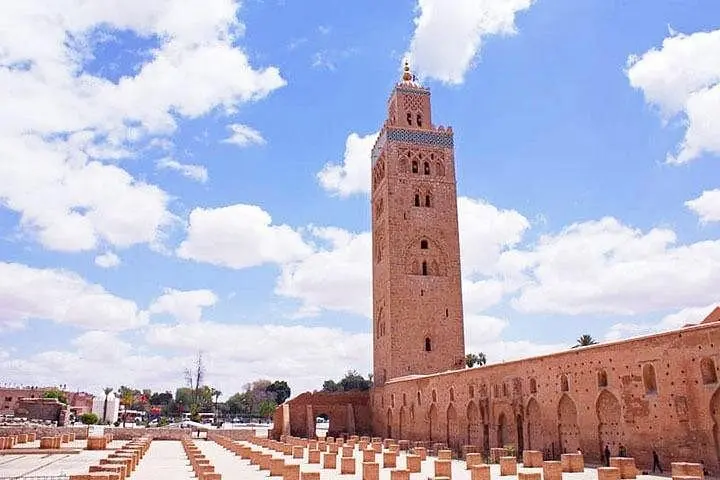
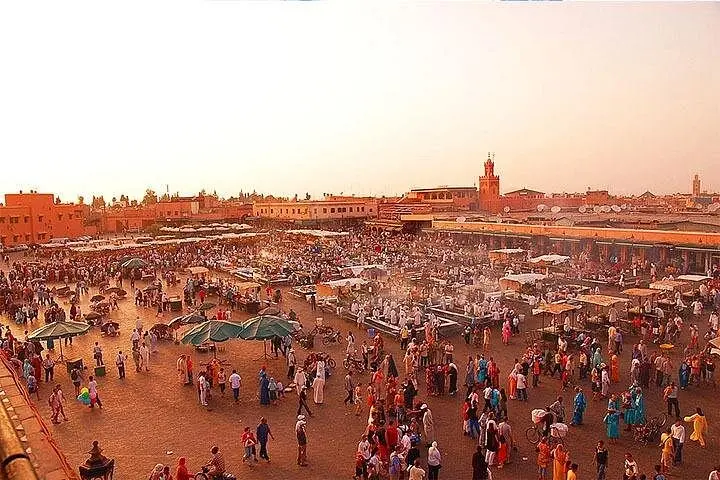
Marrakech grew into a political and trading hub in the 11th century under the Almoravids; the medina today is a UNESCO World Heritage area where centuries of Andalusian and Berber craftsmanship meet modern street life. Geologically, the red clay of the region gives the city its color and creates the compact, heat-retaining walls that define narrow souks and cool riads. Cultural highlights on this route include the kinetic drama of Jemaa el-Fnaa, the 12th-century Koutoubia minaret, and the 19th-century ornamentation of Bahia Palace.
Practically, expect 4–6 hours on your feet across mostly flat, cobbled surfaces—distance walked can approach 2–4 km depending on stops. Wear sturdy shoes for uneven paving, carry at least 1 liter of water, and budget small bills for market purchases and tips. Timing matters: mornings are cooler and less congested; late afternoon brings golden light ideal for photos but denser crowds.
This shared full-day option from Agadir is efficient for travelers short on time: it pairs guided context with free moments to explore, but note that major sites may require separate entrance fees and pairs of comfortable legs. Pack sunscreen, patience for bargaining, and a willingness to move with the city’s brisk rhythm.
Frequently asked questions
The road transfer is roughly 3 to 3.5 hours each way depending on traffic, making the full experience about six hours on the road plus time in the city.
Entrance to Bahia Palace and other paid sites is typically not included—bring cash or card for admissions as needed.
Yes—it's labeled easy and generally family-friendly, but note the long coach transfer and considerable walking in the medina which may be tiring for some.
No—non-Muslims cannot enter Koutoubia’s interior, but its gardens and exterior viewpoints are accessible and excellent for photos.
About This Experience
Agatrips operates guided outdoor trips and adventures with an emphasis on safety, stewardship, and memorable experiences.
Adventure tips
Recommended gear
- Sturdy walking shoes: Protects against uneven cobbles and long stretches of standing in markets.
- Refillable water bottle: Keeps you hydrated during long walks and in Marrakech’s dry heat.
- Sun hat and sunscreen: Sun protection is essential for midday exposure in the square and open sites.
- Portable phone charger: Useful for photos, navigation, and staying in touch during a long day trip.
Photos of the experience
Related adventures & guides
Read the full experience
You arrive in Marrakech as the Atlas foothills recede and the city’s minarets cut the horizon—an immediate shift from coastal Agadir’s Atlantic light to the warm ochres of the old city. The coach drops you at the edge of the medina and you step into alleyways where merchants call, spices scent the air, and mosaics flash in narrow shafts of sun.
You arrive in Marrakech as the Atlas foothills recede and the city’s minarets cut the horizon—an immediate shift from coastal Agadir’s Atlantic light to the warm ochres of the old city. The coach drops you at the edge of the medina and you step into alleyways where merchants call, spices scent the air, and mosaics flash in narrow shafts of sun.
Marrakech grew into a political and trading hub in the 11th century under the Almoravids; the medina today is a UNESCO World Heritage area where centuries of Andalusian and Berber craftsmanship meet modern street life. Geologically, the red clay of the region gives the city its color and creates the compact, heat-retaining walls that define narrow souks and cool riads. Cultural highlights on this route include the kinetic drama of Jemaa el-Fnaa, the 12th-century Koutoubia minaret, and the 19th-century ornamentation of Bahia Palace.
Practically, expect 4–6 hours on your feet across mostly flat, cobbled surfaces—distance walked can approach 2–4 km depending on stops. Wear sturdy shoes for uneven paving, carry at least 1 liter of water, and budget small bills for market purchases and tips. Timing matters: mornings are cooler and less congested; late afternoon brings golden light ideal for photos but denser crowds.
This shared full-day option from Agadir is efficient for travelers short on time: it pairs guided context with free moments to explore, but note that major sites may require separate entrance fees and pairs of comfortable legs. Pack sunscreen, patience for bargaining, and a willingness to move with the city’s brisk rhythm.
Make a day of it nearby.
Verified experiences and guided adventures in the surrounding area.