THE ADVENTURE COLLECTIVE® · Independent discovery and booking for outdoor travel

A full-day coach trip from Thessaloniki brings you to Meteora’s towering sandstone pillars and centuries-old monasteries. Expect a long but easy-paced day of short walks, steep steps, cultural insight, and dramatic viewpoints.
A full-day coach trip from Thessaloniki brings you to Meteora’s towering sandstone pillars and centuries-old monasteries. Expect a long but easy-paced day of short walks, steep steps, cultural insight, and dramatic viewpoints.
You leave Thessaloniki before dawn and the road eases into rolling farmland; three hours later the world shifts — massive sandstone pillars rise like ruined towers, each capped by a monastery that clings to ledges 300–400 meters above the valley.
Verified experiences and guided adventures in the surrounding area.
Operated by PrimeTaxi - Transfers & Tours Services · Kalambaka, Thessaly
You leave Thessaloniki before dawn and the road eases into rolling farmland; three hours later the world shifts — massive sandstone pillars rise like ruined towers, each capped by a monastery that clings to ledges 300–400 meters above the valley.
Meteora’s monasteries began as hermit retreats in the medieval period and grew into organized Orthodox communities between the 14th and 16th centuries. The rock pillars are the product of ancient river deposits and relentless erosion that sculpted vertical fins of conglomerate and sandstone. UNESCO listed the complex in 1988 for its cultural and geological significance.
Visiting feels part pilgrimage, part geology lesson: narrow switchbacks deliver you to terraces and stairways hewn into stone, while bells and iconography anchor the spiritual history. The main monasteries open to visitors include Great Meteoron, Varlaam, Rousanou, and Agios Stefanos; several require modest dress and offer limited photography inside.
Practical edge: expect an 8–10 hour day including transport, short walking sections and steep steps—comfortable shoes and water are non-negotiable. Plan lunch in Kalambaka or Kastraki for traditional fare, and time the trip for morning light or late afternoon for fewer crowds and softer shadows on the rocks. Respect dress codes and stay on marked paths to protect fragile lichen and nesting raptors. Meteora rewards patience: quiet viewpoints reward early risers, and the rocks seem to shift their mood as clouds and wind move through them, pushing you to look up and keep moving.
Men should wear long trousers and long sleeves; women must wear long skirts and cover shoulders—wraps are often supplied if needed.
The drive is roughly 3 hours each way (about 260 km), making the outing an 8–10 hour day including visits and stops.
Photography is restricted inside some chapels and sacred rooms—obey signs and staff instructions; exterior viewpoints are fine for photos.
Kalambaka and Kastraki have tavernas for a traditional lunch; options at monasteries are limited to small kiosks or none at all.
PrimeTaxi - Transfers & Tours Services operates guided outdoor trips and adventures with an emphasis on safety, stewardship, and memorable experiences.
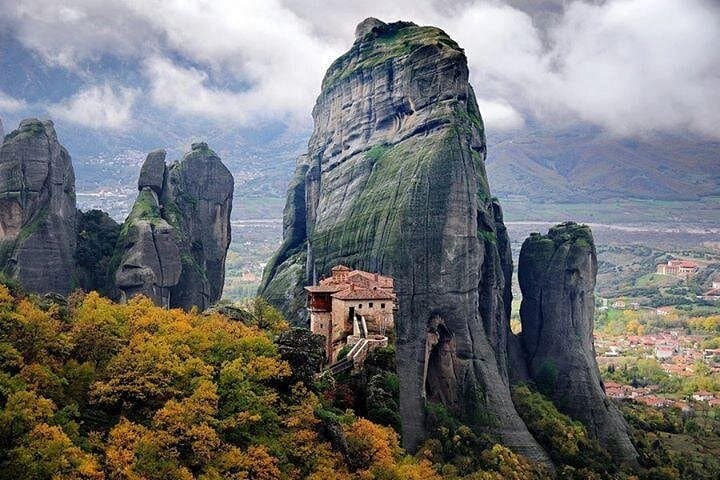

You leave Thessaloniki before dawn and the road eases into rolling farmland; three hours later the world shifts — massive sandstone pillars rise like ruined towers, each capped by a monastery that clings to ledges 300–400 meters above the valley.
You leave Thessaloniki before dawn and the road eases into rolling farmland; three hours later the world shifts — massive sandstone pillars rise like ruined towers, each capped by a monastery that clings to ledges 300–400 meters above the valley.
Meteora’s monasteries began as hermit retreats in the medieval period and grew into organized Orthodox communities between the 14th and 16th centuries. The rock pillars are the product of ancient river deposits and relentless erosion that sculpted vertical fins of conglomerate and sandstone. UNESCO listed the complex in 1988 for its cultural and geological significance.
Visiting feels part pilgrimage, part geology lesson: narrow switchbacks deliver you to terraces and stairways hewn into stone, while bells and iconography anchor the spiritual history. The main monasteries open to visitors include Great Meteoron, Varlaam, Rousanou, and Agios Stefanos; several require modest dress and offer limited photography inside.
Practical edge: expect an 8–10 hour day including transport, short walking sections and steep steps—comfortable shoes and water are non-negotiable. Plan lunch in Kalambaka or Kastraki for traditional fare, and time the trip for morning light or late afternoon for fewer crowds and softer shadows on the rocks. Respect dress codes and stay on marked paths to protect fragile lichen and nesting raptors. Meteora rewards patience: quiet viewpoints reward early risers, and the rocks seem to shift their mood as clouds and wind move through them, pushing you to look up and keep moving.