THE ADVENTURE COLLECTIVE® · Independent discovery and booking for outdoor travel

Spend a day in Miyama Kayabuki-no-Sato exploring thatched houses, riverside trails, and forest hikes guided by local custodians of tradition. This full-day private tour pairs cultural insight with accessible outdoor walking.
Spend a day in Miyama Kayabuki-no-Sato exploring thatched houses, riverside trails, and forest hikes guided by local custodians of tradition. This full-day private tour pairs cultural insight with accessible outdoor walking.
You arrive on a country road where fields open and a cluster of steep-roofed houses sits like a page from older Japan. Thatched eaves slope into lanes; smoke from woodstoves drifts slowly and the Miyama River runs with a low, steady insistence that seems to set the day’s pace.
Verified experiences and guided adventures in the surrounding area.
Operated by MY Travel Consulting · Miyama, Kyoto Prefecture
You arrive on a country road where fields open and a cluster of steep-roofed houses sits like a page from older Japan. Thatched eaves slope into lanes; smoke from woodstoves drifts slowly and the Miyama River runs with a low, steady insistence that seems to set the day’s pace.
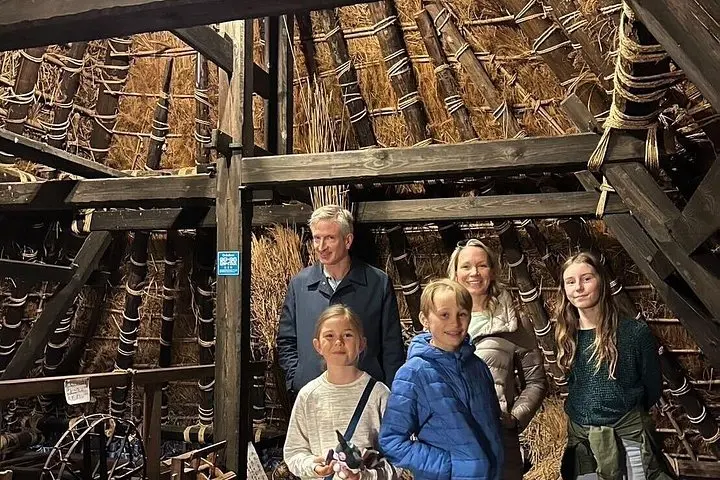
Miyama Kayabuki-no-Sato was designated an Important Preservation District for Groups of Traditional Buildings in 1993 and recognized by the UNWTO in 2021 for community-led conservation. Geologically the area is folded lowland carved by tributaries of the Yura River; forests of cedar and beech cloak the hills and feed the streams that shaped the rice terraces below. Visitors will cross riverside paths, step inside wooden farmhouses, and watch thatch craftsmen tend roofs that must be renewed every few decades.
The pace is unhurried: local hospitality centers on hearty soba, preserved vegetables, and the quiet craft of daily life. Guides explain how seasonal rice cycles, timber management, and communal labor keep the village intact.
Practical guidance: expect an active full day—roughly 8–9 hours including transfers. Trails are mostly gentle forest tracks and riverside walks but include uneven stone and short inclines; sturdy footwear and layered clothing are recommended. Bring water, cash for small shops, and be prepared to follow village etiquette—stay on public paths, ask before photographing interiors, and respect private property. Morning light favors photography and quieter trails; afternoons are better for sampling local food and watching roof repairs in progress.
The drive is about 90 minutes from central Kyoto by private vehicle, depending on traffic and exact pickup location.
The tour highlights local cuisine but meal inclusion varies—check the booking; dietary restrictions can be accommodated if notified in advance.
Trails are generally gentle but involve uneven ground; the tour notes that infants can use strollers and infant seats are available—assess mobility and request suitable pickup points.
Some houses are open as museums or shops while others are private—follow your guide’s direction and always ask permission before entering.
MY Travel Consulting operates guided outdoor trips and adventures with an emphasis on safety, stewardship, and memorable experiences.
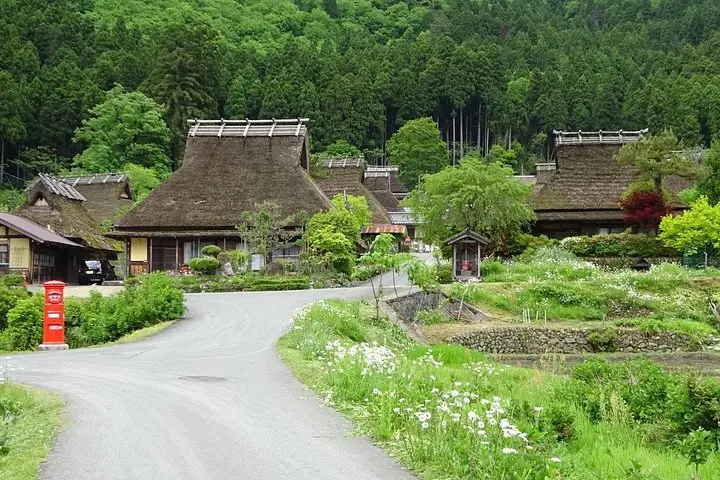
You arrive on a country road where fields open and a cluster of steep-roofed houses sits like a page from older Japan. Thatched eaves slope into lanes; smoke from woodstoves drifts slowly and the Miyama River runs with a low, steady insistence that seems to set the day’s pace.
You arrive on a country road where fields open and a cluster of steep-roofed houses sits like a page from older Japan. Thatched eaves slope into lanes; smoke from woodstoves drifts slowly and the Miyama River runs with a low, steady insistence that seems to set the day’s pace.
Miyama Kayabuki-no-Sato was designated an Important Preservation District for Groups of Traditional Buildings in 1993 and recognized by the UNWTO in 2021 for community-led conservation. Geologically the area is folded lowland carved by tributaries of the Yura River; forests of cedar and beech cloak the hills and feed the streams that shaped the rice terraces below. Visitors will cross riverside paths, step inside wooden farmhouses, and watch thatch craftsmen tend roofs that must be renewed every few decades.
The pace is unhurried: local hospitality centers on hearty soba, preserved vegetables, and the quiet craft of daily life. Guides explain how seasonal rice cycles, timber management, and communal labor keep the village intact.
Practical guidance: expect an active full day—roughly 8–9 hours including transfers. Trails are mostly gentle forest tracks and riverside walks but include uneven stone and short inclines; sturdy footwear and layered clothing are recommended. Bring water, cash for small shops, and be prepared to follow village etiquette—stay on public paths, ask before photographing interiors, and respect private property. Morning light favors photography and quieter trails; afternoons are better for sampling local food and watching roof repairs in progress.