THE ADVENTURE COLLECTIVE® · Independent discovery and booking for outdoor travel

Spend a day tracing Champagne’s story from Dom Pérignon’s tomb at Hautvillers to the vaulted chalk cellars of Moët & Chandon in Épernay, finishing with an intimate tasting at a family producer. Expect scenic vineyard drives, historic sites, and multiple tastings guided by a local sommelier-guide.
Spend a day tracing Champagne’s story from Dom Pérignon’s tomb at Hautvillers to the vaulted chalk cellars of Moët & Chandon in Épernay, finishing with an intimate tasting at a family producer. Expect scenic vineyard drives, historic sites, and multiple tastings guided by a local sommelier-guide.
Morning light slants across the rows of vines as the minivan eases out of Reims and into the Marne Valley. The river below pushes a cool hush through terraced slopes, and the driver points toward the chalky rise where Hautvillers perches — the village that still feels like the place Dom Pérignon once walked.
Verified experiences and guided adventures in the surrounding area.
Operated by Uncork Champagne Tours · Épernay, Grand Est
Morning light slants across the rows of vines as the minivan eases out of Reims and into the Marne Valley. The river below pushes a cool hush through terraced slopes, and the driver points toward the chalky rise where Hautvillers perches — the village that still feels like the place Dom Pérignon once walked.
This full-day private tour pairs the grand history of Moët & Chandon with hands-on cellar time at a small producer. Moët’s Avenue de Champagne sits atop vast chalk cellars, part of the region’s UNESCO heritage; those subterranean galleries keep a steady temperature that shaped Champagne’s winemaking. Geology matters here — porous Champagne chalk filters water and stores heat, shaping the vines’ slow, mineral-driven ripening.
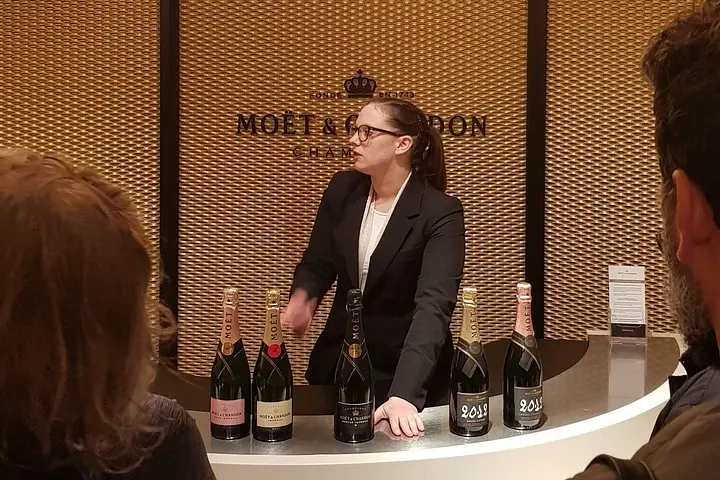
Culturally, Épernay and the neighboring villages are a working landscape: family domaines share lanes with large houses like Moët, Bollinger and Deutz. Stops include a view from Hautvillers and a walk down Avenue de Champagne, followed by a guided cellar tour at Moët with two tastings, then a boutique producer tasting of three wines.
Practically speaking, expect an active but gentle day: several short walks on uneven cellar steps and village lanes, indoor standing during tastings, and time for a leisurely lunch in Épernay. Bring ID for tastings, comfortable shoes for chalky cellars, and water between pours. Book ahead for private guides; small producers limit visitors, and tastings can be weather‑indifferent — cellars stay cool even in summer. The itinerary balances spectacle and craft: world-class cellars and the quieter workrooms where Champagne is still shaped by hand.
The tour includes two tastings at Moët & Chandon and a three-glass tasting at a selected boutique producer.
The guide meets outside Reims Centre train station and finishes at the same point; logistics can be adjusted by request.
Many parts of the tour are accessible, but some cellars and village streets have steps — notify the operator at booking to plan accommodations.
Children are welcome, but under-18s are not served alcohol; activities and pacing are suitable for families with supervision.
Uncork Champagne Tours operates guided outdoor trips and adventures with an emphasis on safety, stewardship, and memorable experiences.
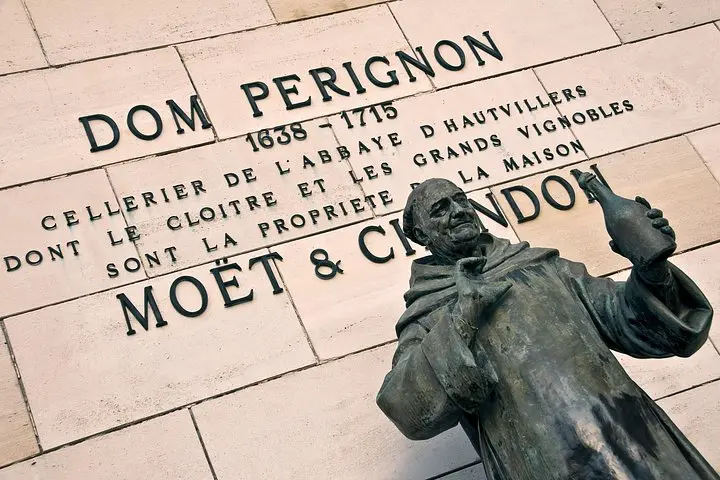
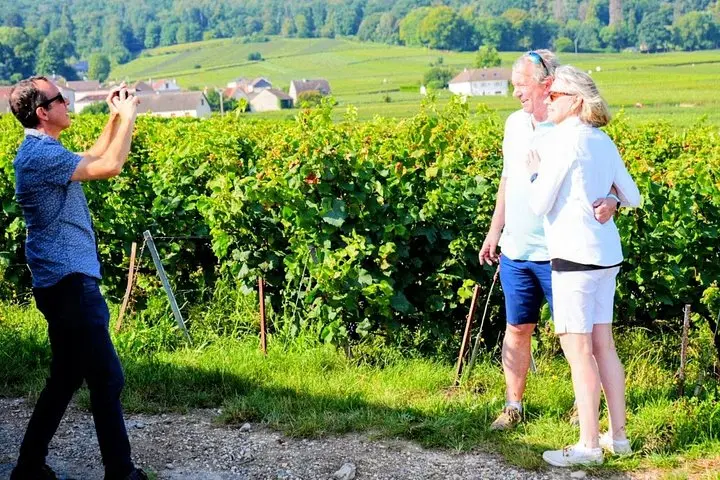
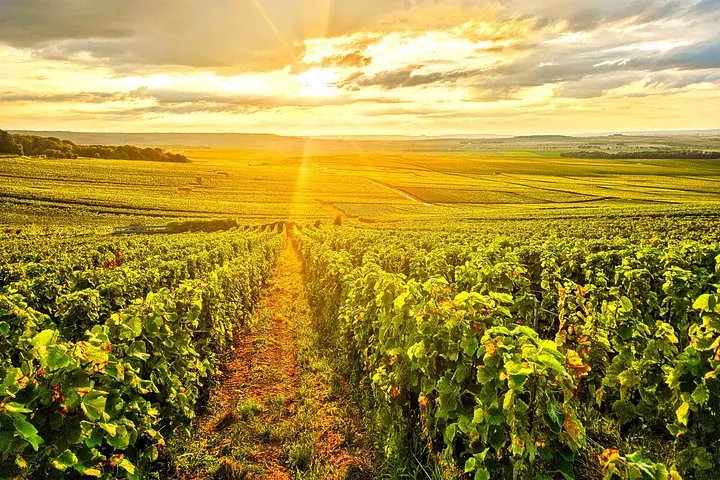
Morning light slants across the rows of vines as the minivan eases out of Reims and into the Marne Valley. The river below pushes a cool hush through terraced slopes, and the driver points toward the chalky rise where Hautvillers perches — the village that still feels like the place Dom Pérignon once walked.
Morning light slants across the rows of vines as the minivan eases out of Reims and into the Marne Valley. The river below pushes a cool hush through terraced slopes, and the driver points toward the chalky rise where Hautvillers perches — the village that still feels like the place Dom Pérignon once walked.
This full-day private tour pairs the grand history of Moët & Chandon with hands-on cellar time at a small producer. Moët’s Avenue de Champagne sits atop vast chalk cellars, part of the region’s UNESCO heritage; those subterranean galleries keep a steady temperature that shaped Champagne’s winemaking. Geology matters here — porous Champagne chalk filters water and stores heat, shaping the vines’ slow, mineral-driven ripening.
Culturally, Épernay and the neighboring villages are a working landscape: family domaines share lanes with large houses like Moët, Bollinger and Deutz. Stops include a view from Hautvillers and a walk down Avenue de Champagne, followed by a guided cellar tour at Moët with two tastings, then a boutique producer tasting of three wines.
Practically speaking, expect an active but gentle day: several short walks on uneven cellar steps and village lanes, indoor standing during tastings, and time for a leisurely lunch in Épernay. Bring ID for tastings, comfortable shoes for chalky cellars, and water between pours. Book ahead for private guides; small producers limit visitors, and tastings can be weather‑indifferent — cellars stay cool even in summer. The itinerary balances spectacle and craft: world-class cellars and the quieter workrooms where Champagne is still shaped by hand.