THE ADVENTURE COLLECTIVE® · Independent discovery and booking for outdoor travel

Glide through reed-lined channels in a traditional mokoro, join a local poler on a full-day safari that pairs quiet canoe travel with a guided bushwalk and picnic on a Delta island. This full-day excursion from Maun blends wildlife viewing, cultural insight, and hands-on navigation of one of Africa’s most dynamic wetlands.
Glide through reed-lined channels in a traditional mokoro, join a local poler on a full-day safari that pairs quiet canoe travel with a guided bushwalk and picnic on a Delta island. This full-day excursion from Maun blends wildlife viewing, cultural insight, and hands-on navigation of one of Africa’s most dynamic wetlands.
Morning mist lifts off the channels as your mokoro pushes away from the poling station—reeds whisper and water pulls you forward. The long, narrow canoe moves with patient authority while a local poler stands at the stern, reading currents and wildlife the way a navigator reads a map. The Delta spreads in low-lying islands, shallow waterways and vast reed belts; each bend opens a new corridor of birdcalls, hippo grunts and shy antelope glimpsed through papyrus.
Verified experiences and guided adventures in the surrounding area.
Operated by Open Sands Safari (Okavango Delta Safari experiences) · Maun, North-West District
Morning mist lifts off the channels as your mokoro pushes away from the poling station—reeds whisper and water pulls you forward. The long, narrow canoe moves with patient authority while a local poler stands at the stern, reading currents and wildlife the way a navigator reads a map. The Delta spreads in low-lying islands, shallow waterways and vast reed belts; each bend opens a new corridor of birdcalls, hippo grunts and shy antelope glimpsed through papyrus.
The Okavango is an inland delta formed where the Okavango River fans out and drowns the Kalahari sands, creating seasonal channels that flood from Angolan rains. Human ties here run deep: mokoros were traditionally dug from large trees and remain a cultural symbol; today fibre-glass versions carry visitors while local polers share indigenous knowledge of plants, tracks and seasonal animal patterns. The landscape is as much cultural as geological—sand islands that host short bushwalks, channels that dare you to be quiet, and margins where fishermen and community life meet conservation.
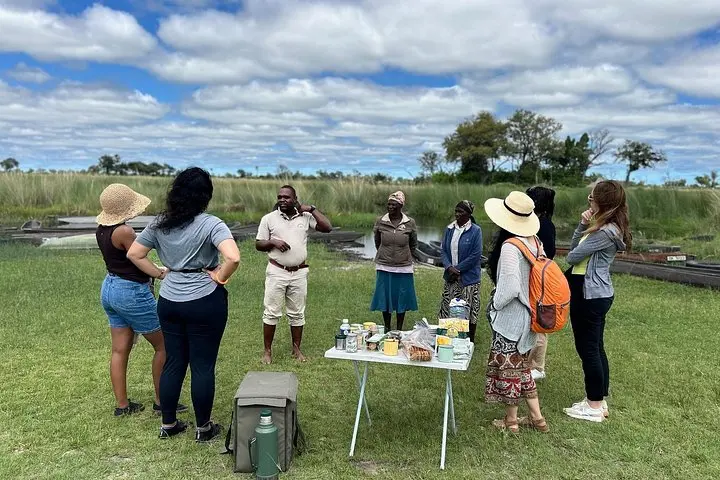
Practicalities: expect a full eight-hour day with pre-dawn pickup from Maun, a mokoro leg of roughly 1.5 hours to the central island, a guided bushwalk and picnic lunch, then afternoon exploring before return. Wear quick-dry clothes, sun protection, and closed shoes for island walks; insect repellent is essential in wet months. Cameras and binoculars are recommended; maintain a respectful distance from wildlife and follow your guide’s instructions. Water levels change with the season, affecting channel width and wildlife visibility—plan timing based on desired sightings and comfort with wetland navigation.
Pickup is typically between 6:00–7:00 AM from Maun accommodations; exact time confirmed at booking and depends on lodge location.
Polers are trained to navigate channels safely; keep quiet, follow the guide’s distance instructions and never approach hippos on foot or by canoe.
Families with older children can join, but operators may restrict very young children for safety—check age and weight limits at booking.
Yes—this full-day experience includes breakfast, lunch, refreshments, bottled water and park fees as part of the package.
Open Sands Safari (Okavango Delta Safari experiences) operates guided outdoor trips and adventures with an emphasis on safety, stewardship, and memorable experiences.
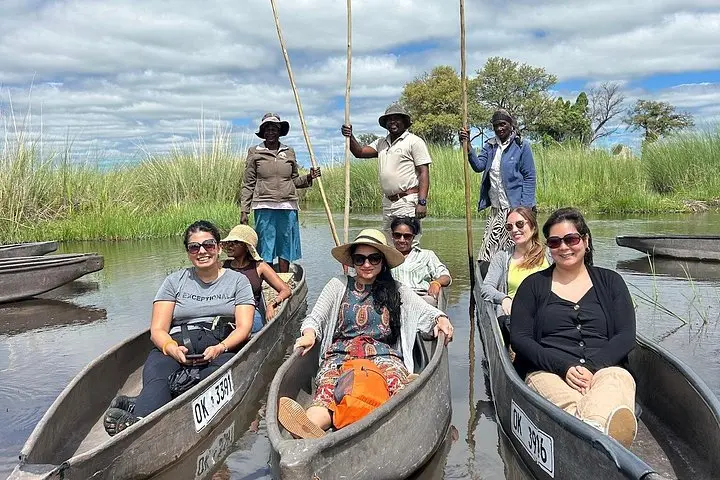
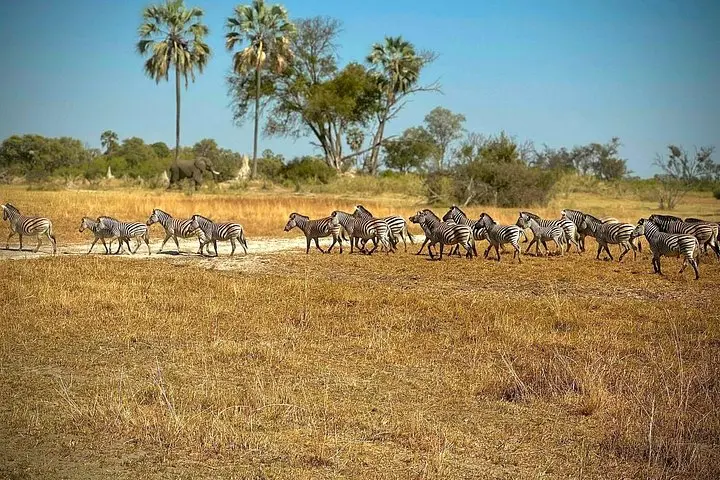
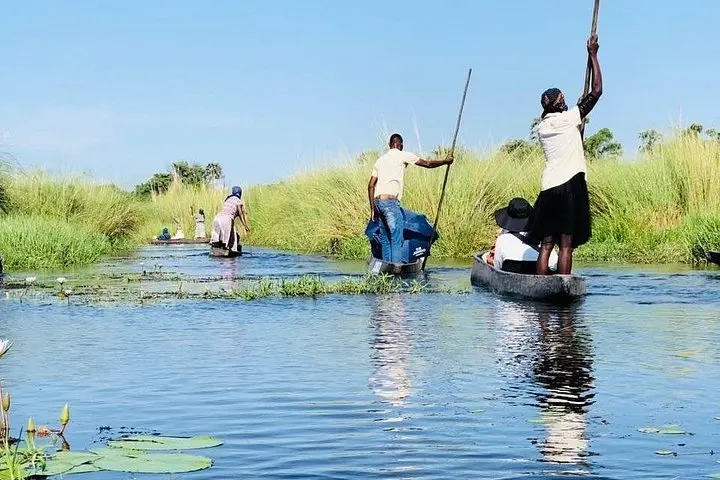
Morning mist lifts off the channels as your mokoro pushes away from the poling station—reeds whisper and water pulls you forward. The long, narrow canoe moves with patient authority while a local poler stands at the stern, reading currents and wildlife the way a navigator reads a map. The Delta spreads in low-lying islands, shallow waterways and vast reed belts; each bend opens a new corridor of birdcalls, hippo grunts and shy antelope glimpsed through papyrus.
Morning mist lifts off the channels as your mokoro pushes away from the poling station—reeds whisper and water pulls you forward. The long, narrow canoe moves with patient authority while a local poler stands at the stern, reading currents and wildlife the way a navigator reads a map. The Delta spreads in low-lying islands, shallow waterways and vast reed belts; each bend opens a new corridor of birdcalls, hippo grunts and shy antelope glimpsed through papyrus.
The Okavango is an inland delta formed where the Okavango River fans out and drowns the Kalahari sands, creating seasonal channels that flood from Angolan rains. Human ties here run deep: mokoros were traditionally dug from large trees and remain a cultural symbol; today fibre-glass versions carry visitors while local polers share indigenous knowledge of plants, tracks and seasonal animal patterns. The landscape is as much cultural as geological—sand islands that host short bushwalks, channels that dare you to be quiet, and margins where fishermen and community life meet conservation.
Practicalities: expect a full eight-hour day with pre-dawn pickup from Maun, a mokoro leg of roughly 1.5 hours to the central island, a guided bushwalk and picnic lunch, then afternoon exploring before return. Wear quick-dry clothes, sun protection, and closed shoes for island walks; insect repellent is essential in wet months. Cameras and binoculars are recommended; maintain a respectful distance from wildlife and follow your guide’s instructions. Water levels change with the season, affecting channel width and wildlife visibility—plan timing based on desired sightings and comfort with wetland navigation.