THE ADVENTURE COLLECTIVE® · Independent discovery and booking for outdoor travel

See Mt. Fuji up close at the Fuji Subaru Line 5th Station, stroll Lake Kawaguchiko, wander the spring ponds of Oshino Hakkai, and shop at Gotemba Premium Outlets — all in one full day from Tokyo. This bus tour packs geology, culture, and shopping into a single, practical outing.
See Mt. Fuji up close at the Fuji Subaru Line 5th Station, stroll Lake Kawaguchiko, wander the spring ponds of Oshino Hakkai, and shop at Gotemba Premium Outlets — all in one full day from Tokyo. This bus tour packs geology, culture, and shopping into a single, practical outing.
You step off an air‑conditioned bus into thin, crisp air at roughly 2,300 meters — the Fuji Subaru Line 5th Station — where shops and observation decks frame the lower flanks of Japan’s highest peak. The mountain demands attention: clouds braid around its shoulders and the alpine wind seems to nudge visitors toward the observation rails.
Verified experiences and guided adventures in the surrounding area.
Operated by VIP Japan Tours · Fujikawaguchiko, Yamanashi
You step off an air‑conditioned bus into thin, crisp air at roughly 2,300 meters — the Fuji Subaru Line 5th Station — where shops and observation decks frame the lower flanks of Japan’s highest peak. The mountain demands attention: clouds braid around its shoulders and the alpine wind seems to nudge visitors toward the observation rails.
Geology here is blunt and recent; Mt. Fuji’s cone is a composite of volcanic layers built over millennia, while the Fuji Five Lakes occupy depressions and river valleys carved by ancient lava flows. Kawaguchiko, the second-largest of those lakes, reflects light differently through the day and gives you a wide plain to walk and photograph.
Culturally, Mount Fuji has been a pilgrimage site and artistic subject for centuries — nearby shrines like Kitaguchi Hongu Fuji Sengen have marked the mountain’s spiritual gateway since the early Heian period.
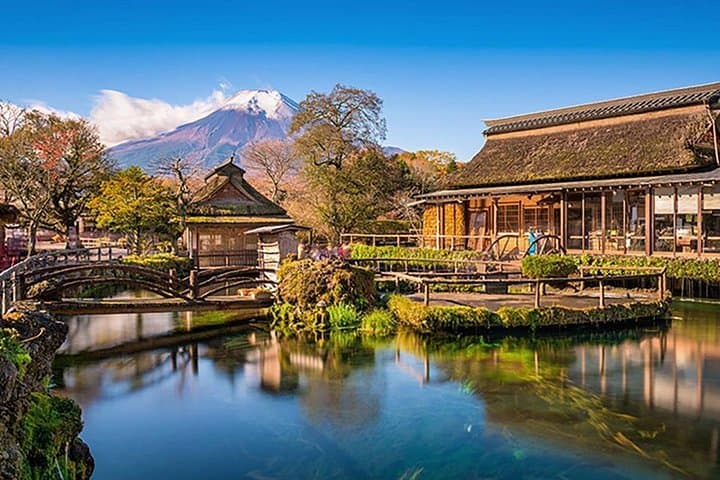
The tour stitches natural highlights with local life: Oshino Hakkai’s eight spring-fed ponds offer startlingly clear water filtered through volcanic ash, and Gotemba Premium Outlets gives a modern contrast with hundreds of domestic and international brands.
Practicalities are straightforward: expect a 9–10 hour day with two main meeting points in Tokyo (Shinjuku and Ueno) and guaranteed return only to Shinjuku. Weather governs views — visibility isn’t guaranteed — and the 5th Station can be cold year‑round, so bring a warm layer. Walk gently around ponds and shorelines, carry water, and keep camera batteries warm in cold weather. The itinerary is bus‑based and suitable for most travelers seeking a concentrated introduction to Mount Fuji’s surroundings.
The tour runs about 9–10 hours (540–600 minutes) with morning meet points at Shinjuku Post Office (8:20am) and JR Ueno Station (7:30am) and returns to Shinjuku only.
No — the road can close due to weather or seasonal conditions; if closed the itinerary visits Kitaguchi Hongu Fuji Sengen Shrine instead.
Lunch is optional at Kawaguchiko Craft Park with menu choices like wagyu steak, houtou noodles, salmon bowl, or vegan curry; these are not included in the base price.
Yes — the itinerary typically allows about 90 minutes at Gotemba Premium Outlets, enough for browsing but limited for extensive shopping.
VIP Japan Tours operates guided outdoor trips and adventures with an emphasis on safety, stewardship, and memorable experiences.



You step off an air‑conditioned bus into thin, crisp air at roughly 2,300 meters — the Fuji Subaru Line 5th Station — where shops and observation decks frame the lower flanks of Japan’s highest peak. The mountain demands attention: clouds braid around its shoulders and the alpine wind seems to nudge visitors toward the observation rails.
You step off an air‑conditioned bus into thin, crisp air at roughly 2,300 meters — the Fuji Subaru Line 5th Station — where shops and observation decks frame the lower flanks of Japan’s highest peak. The mountain demands attention: clouds braid around its shoulders and the alpine wind seems to nudge visitors toward the observation rails.
Geology here is blunt and recent; Mt. Fuji’s cone is a composite of volcanic layers built over millennia, while the Fuji Five Lakes occupy depressions and river valleys carved by ancient lava flows. Kawaguchiko, the second-largest of those lakes, reflects light differently through the day and gives you a wide plain to walk and photograph.
Culturally, Mount Fuji has been a pilgrimage site and artistic subject for centuries — nearby shrines like Kitaguchi Hongu Fuji Sengen have marked the mountain’s spiritual gateway since the early Heian period.
The tour stitches natural highlights with local life: Oshino Hakkai’s eight spring-fed ponds offer startlingly clear water filtered through volcanic ash, and Gotemba Premium Outlets gives a modern contrast with hundreds of domestic and international brands.
Practicalities are straightforward: expect a 9–10 hour day with two main meeting points in Tokyo (Shinjuku and Ueno) and guaranteed return only to Shinjuku. Weather governs views — visibility isn’t guaranteed — and the 5th Station can be cold year‑round, so bring a warm layer. Walk gently around ponds and shorelines, carry water, and keep camera batteries warm in cold weather. The itinerary is bus‑based and suitable for most travelers seeking a concentrated introduction to Mount Fuji’s surroundings.