THE ADVENTURE COLLECTIVE® · Independent discovery and booking for outdoor travel

Spend a full day on multi-pitch routes above Pisgah National Forest with a private guide from Asheville. Expect 4–6 pitches, deliberate ropework, and sweeping forest views—perfect for climbers ready to trade single-pitch comfort for extended exposure and skill-building.
Spend a full day on multi-pitch routes above Pisgah National Forest with a private guide from Asheville. Expect 4–6 pitches, deliberate ropework, and sweeping forest views—perfect for climbers ready to trade single-pitch comfort for extended exposure and skill-building.
By 7:30 a.m. the parking lot at Cultivate Climbing hums with quiet focus: ropes coil like sleeping snakes, helmets click under one hand, coffee steams in the cold. You caravan up narrow forest roads, windows down to inhale the resinous air of old pines, until the canyon opens and slabs of rock appear—vertical pages of stone that demand steady hands and patient breath.
Verified experiences and guided adventures in the surrounding area.
Operated by Cultivate Climbing · Asheville, North Carolina
By 7:30 a.m. the parking lot at Cultivate Climbing hums with quiet focus: ropes coil like sleeping snakes, helmets click under one hand, coffee steams in the cold. You caravan up narrow forest roads, windows down to inhale the resinous air of old pines, until the canyon opens and slabs of rock appear—vertical pages of stone that demand steady hands and patient breath.
This is Pisgah National Forest: an ancient range of folded metamorphic rock carved by glaciers and rivers, now offering vertical routes that climb through oak and hemlock to broad overlooks. The cliffs here are part of a landscape shaped by Appalachian uplift and deep-time erosion—rock that reads like a history book in striations and cracks. Local climbing culture in Asheville and nearby Brevard is pragmatic and tight-knit; guides from the city ferry small private groups to quiet multi-pitch lines and manage the logistics that make a big-day climb possible.
The region also carries deeper histories. These slopes sit on ancestral Cherokee lands and later supported timber economies that cleared and then regrew into the forest you see today. Conservation efforts in the last century have focused on balancing recreation with habitat protection—climbing routes sometimes close seasonally for nesting raptors, and leave-no-trace practices are enforced at popular trailheads.
On a full-day multi-pitch outing expect sustained vertical travel: most guided routes in Pisgah run 4–6 pitches, roughly 300–600 feet of climbing, with approaches from a 10–40 minute walk to longer scrambles where the trail fades. Route style varies—solid face climbing, cracks that demand hand jams, and intermediate belay stances where the guide builds anchors and talks through efficient movement. The rock is generally sound metamorphic gneiss and granite; protection is placed or pre-bolted depending on the route, and guides supply ropes, harnesses, helmets, shoes, and anchors.
Practical guidance: plan for an 8-hour day with early starts; bring 2–3 liters of water, layered clothing (mountain weather shifts fast), and snacks for steady energy. Footwear matters—good approach shoes and the provided climbing shoes both matter for comfort and performance. Fitness-wise, be ready for sustained isometric effort and exposure: a baseline of regular cardio and some prior climbing experience helps, though guided instruction can bring a novice through basic multi-pitch procedures.
Safety and pacing are non-negotiable here. Expect instruction on anchor systems, rope management, and how to move at height for hours. Weather cancels or reschedules the trip; guides enforce a 24-hour cancellation window for refunds. When you top out and look back at the valley, the forest pushes green to the horizon and the river below dares you to return—this is climbing that rewards focus and curiosity in equal measure.
No—guided trips accommodate motivated beginners, but some previous top-roping or sport climbing experience helps you move more comfortably and get more from the day.
Guides supply ropes, harnesses, helmets, anchors, chalk bags and typically climbing shoes; bring your own approach shoes and layered clothing.
Groups meet at Cultivate Climbing in Asheville; the guide coordinates a caravan and drives participants to the selected trailhead (approach varies by route).
Trips are suitable for ages 10+ as noted by the operator; discuss individual weight, fitness, or medical concerns with the guide during booking.
The operator cancels or reschedules in unsafe weather—thunderstorms, heavy rain, or high winds—refunds are available if you cancel at least 24 hours prior.
Yes—each booking is a private group with a maximum of three participants, allowing personalized instruction and pace.
Cultivate Climbing operates guided outdoor trips and adventures with an emphasis on safety, stewardship, and memorable experiences.
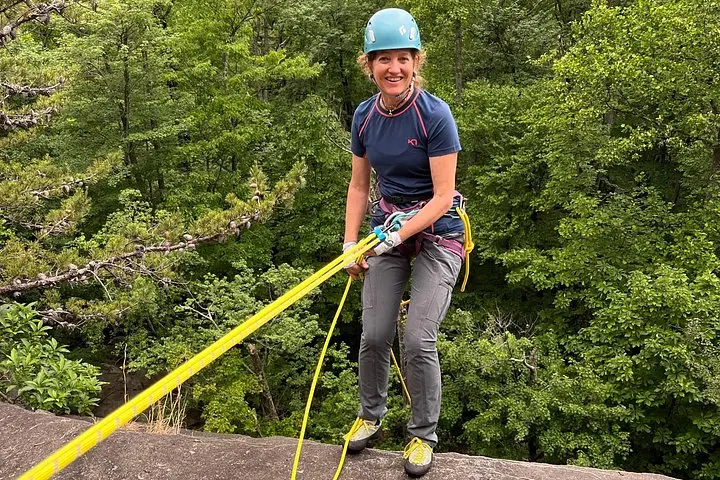
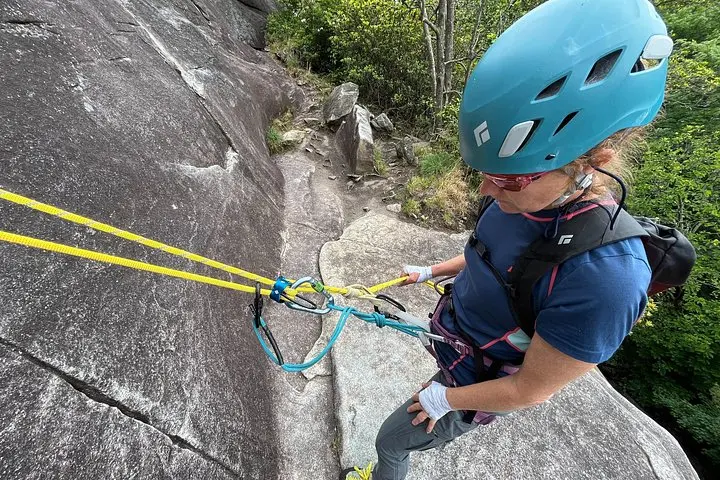
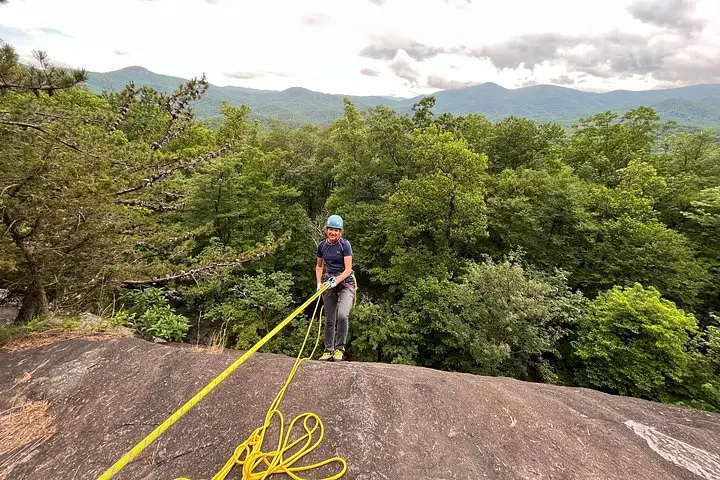
By 7:30 a.m. the parking lot at Cultivate Climbing hums with quiet focus: ropes coil like sleeping snakes, helmets click under one hand, coffee steams in the cold. You caravan up narrow forest roads, windows down to inhale the resinous air of old pines, until the canyon opens and slabs of rock appear—vertical pages of stone that demand steady hands and patient breath.
By 7:30 a.m. the parking lot at Cultivate Climbing hums with quiet focus: ropes coil like sleeping snakes, helmets click under one hand, coffee steams in the cold. You caravan up narrow forest roads, windows down to inhale the resinous air of old pines, until the canyon opens and slabs of rock appear—vertical pages of stone that demand steady hands and patient breath.
This is Pisgah National Forest: an ancient range of folded metamorphic rock carved by glaciers and rivers, now offering vertical routes that climb through oak and hemlock to broad overlooks. The cliffs here are part of a landscape shaped by Appalachian uplift and deep-time erosion—rock that reads like a history book in striations and cracks. Local climbing culture in Asheville and nearby Brevard is pragmatic and tight-knit; guides from the city ferry small private groups to quiet multi-pitch lines and manage the logistics that make a big-day climb possible.
The region also carries deeper histories. These slopes sit on ancestral Cherokee lands and later supported timber economies that cleared and then regrew into the forest you see today. Conservation efforts in the last century have focused on balancing recreation with habitat protection—climbing routes sometimes close seasonally for nesting raptors, and leave-no-trace practices are enforced at popular trailheads.
On a full-day multi-pitch outing expect sustained vertical travel: most guided routes in Pisgah run 4–6 pitches, roughly 300–600 feet of climbing, with approaches from a 10–40 minute walk to longer scrambles where the trail fades. Route style varies—solid face climbing, cracks that demand hand jams, and intermediate belay stances where the guide builds anchors and talks through efficient movement. The rock is generally sound metamorphic gneiss and granite; protection is placed or pre-bolted depending on the route, and guides supply ropes, harnesses, helmets, shoes, and anchors.
Practical guidance: plan for an 8-hour day with early starts; bring 2–3 liters of water, layered clothing (mountain weather shifts fast), and snacks for steady energy. Footwear matters—good approach shoes and the provided climbing shoes both matter for comfort and performance. Fitness-wise, be ready for sustained isometric effort and exposure: a baseline of regular cardio and some prior climbing experience helps, though guided instruction can bring a novice through basic multi-pitch procedures.
Safety and pacing are non-negotiable here. Expect instruction on anchor systems, rope management, and how to move at height for hours. Weather cancels or reschedules the trip; guides enforce a 24-hour cancellation window for refunds. When you top out and look back at the valley, the forest pushes green to the horizon and the river below dares you to return—this is climbing that rewards focus and curiosity in equal measure.