THE ADVENTURE COLLECTIVE® · Independent discovery and booking for outdoor travel

Explore Mumbai’s seaside monuments and take a one-hour harbour crossing to the ancient Elephanta Caves. This full-day private tour pairs colonial landmarks with rock‑cut Shiva temples and practical travel support—hotel pickup, guide, and boat transfer.
Explore Mumbai’s seaside monuments and take a one-hour harbour crossing to the ancient Elephanta Caves. This full-day private tour pairs colonial landmarks with rock‑cut Shiva temples and practical travel support—hotel pickup, guide, and boat transfer.
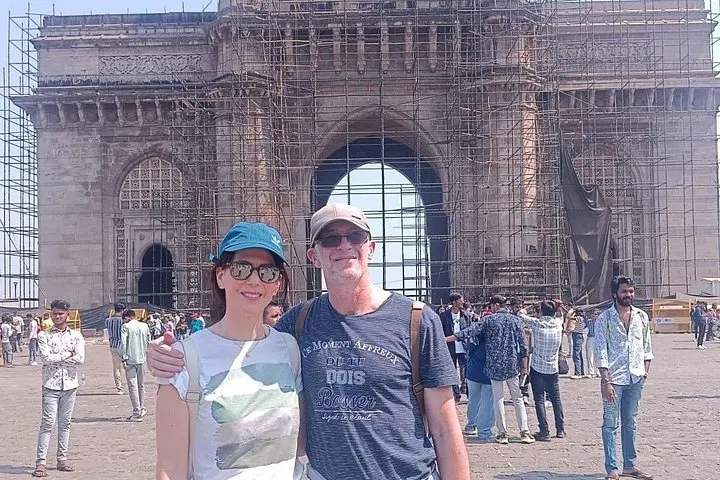
You step onto Apollo Bunder at dawn as the Gateway of India throws its pale shadow across the Arabian Sea. Salt and diesel mix with the first market calls; a catamaran waits, and the harbour pulls you away from the city’s concrete edge toward a green island carved from basalt.
Verified experiences and guided adventures in the surrounding area.
Operated by The Taj Wonder Tours · Mumbai, Maharashtra
You step onto Apollo Bunder at dawn as the Gateway of India throws its pale shadow across the Arabian Sea. Salt and diesel mix with the first market calls; a catamaran waits, and the harbour pulls you away from the city’s concrete edge toward a green island carved from basalt.
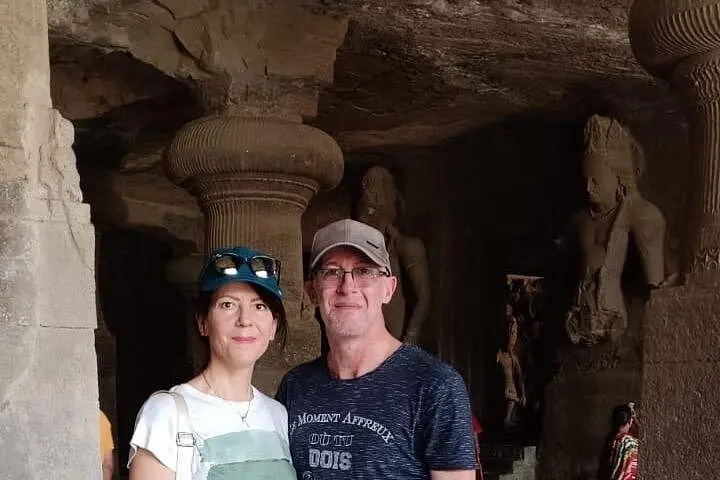
Elephanta’s hill rises from the water in carved cliffs and stone steps. The island’s main complex dates to roughly the 5th–8th centuries and its central Trimurti—Shiva as creator, preserver and destroyer—still dominantly occupies the cave’s inner sanctum. Back in the city, Marine Drive’s 3‑km curve, the 85‑m Rajabai clock tower, and the 140‑year‑old Dhobi Ghat reveal Mumbai’s layered history: colonial trade, Victorian civic pride, and the labor rhythms that sustain a megacity.
Geology here is coastal basalt—hard, fractured rock that sculptors hollowed into temples. Culture arrives in loud, practical forms: chai vendors, ferry crews, and guide-commentary that stitches myth to street life. Expect one hour each way on the boat and about 60–120 stone steps on Elephanta’s approach; surfaces are uneven and can be slippery after rain.
Practical notes: hotel pickup and private AC transfer streamline travel; bring sturdy shoes, water, and sunscreen; start early to beat heat and crowds. Photography is allowed but avoid touching sculptures. If mobility is limited, the vehicular portions are accessible but the cave complex is not fully wheelchair-friendly. Plan for a full-day outing—roughly 8–10 hours including transfers—and leave room in your schedule for traffic and market browsing.
The catamaran crossing takes about one hour each way, though schedules vary with tides and port traffic.
Boat and city transport can be wheelchair accessible, but the Elephanta cave precinct requires climbing uneven stone steps and is not fully accessible.
This private tour includes an English-speaking professional guide; other language options may be available on request—confirm at booking.
Boat and entry tickets are often handled by the tour; if travelling independently, buy catamaran and site entry tickets in advance for busy periods.
The Taj Wonder Tours operates guided outdoor trips and adventures with an emphasis on safety, stewardship, and memorable experiences.
You step onto Apollo Bunder at dawn as the Gateway of India throws its pale shadow across the Arabian Sea. Salt and diesel mix with the first market calls; a catamaran waits, and the harbour pulls you away from the city’s concrete edge toward a green island carved from basalt.
You step onto Apollo Bunder at dawn as the Gateway of India throws its pale shadow across the Arabian Sea. Salt and diesel mix with the first market calls; a catamaran waits, and the harbour pulls you away from the city’s concrete edge toward a green island carved from basalt.
Elephanta’s hill rises from the water in carved cliffs and stone steps. The island’s main complex dates to roughly the 5th–8th centuries and its central Trimurti—Shiva as creator, preserver and destroyer—still dominantly occupies the cave’s inner sanctum. Back in the city, Marine Drive’s 3‑km curve, the 85‑m Rajabai clock tower, and the 140‑year‑old Dhobi Ghat reveal Mumbai’s layered history: colonial trade, Victorian civic pride, and the labor rhythms that sustain a megacity.
Geology here is coastal basalt—hard, fractured rock that sculptors hollowed into temples. Culture arrives in loud, practical forms: chai vendors, ferry crews, and guide-commentary that stitches myth to street life. Expect one hour each way on the boat and about 60–120 stone steps on Elephanta’s approach; surfaces are uneven and can be slippery after rain.
Practical notes: hotel pickup and private AC transfer streamline travel; bring sturdy shoes, water, and sunscreen; start early to beat heat and crowds. Photography is allowed but avoid touching sculptures. If mobility is limited, the vehicular portions are accessible but the cave complex is not fully wheelchair-friendly. Plan for a full-day outing—roughly 8–10 hours including transfers—and leave room in your schedule for traffic and market browsing.