THE ADVENTURE COLLECTIVE® · Independent discovery and booking for outdoor travel

This full-day cultural circuit pairs the jungle-shrouded temple complex of My Son with the lantern-lit streets of Hoi An. Expect guided history at the ruins, a tranquil sampan ride, and an evening at the night market.
This full-day cultural circuit pairs the jungle-shrouded temple complex of My Son with the lantern-lit streets of Hoi An. Expect guided history at the ruins, a tranquil sampan ride, and an evening at the night market.
You arrive from Da Nang on a road that eases into rice paddies and low, green hills; by midday the ruined towers of My Son push through the treeline like timeworn sentinels. The air smells of warm brick and damp earth as your guide walks you between carved lintels and collapsed halls, then later the Thu Bon River dares you to slow down — a wooden sampan waits to ferry you through Hoi An’s glassy backstreets under lantern light.
Verified experiences and guided adventures in the surrounding area.
Operated by Andy Private Tours and Transfers · Hoi An, Quang Nam
You arrive from Da Nang on a road that eases into rice paddies and low, green hills; by midday the ruined towers of My Son push through the treeline like timeworn sentinels. The air smells of warm brick and damp earth as your guide walks you between carved lintels and collapsed halls, then later the Thu Bon River dares you to slow down — a wooden sampan waits to ferry you through Hoi An’s glassy backstreets under lantern light.
My Son was the spiritual heart of the Champa kingdom from the 4th to the 13th century: compact brick towers built without mortar, bas-reliefs of Hindu deities and a mountain-ringed valley that sheltered ritual life. Hoi An, by contrast, grew as an international port between the 15th and 19th centuries; its Japanese Covered Bridge and Chinese assembly halls reflect that trading cosmopolitanism. Together they show centuries of cultural exchange, from Indian-influenced temple architecture to the lantern-lit river culture born of maritime trade.
Practically, expect an eight-hour day with about 2–3 miles of on-foot exploration, uneven brick steps and short walks along cobbled lanes. Midday shade is limited at My Son — bring sun protection, plenty of water and comfortable walking shoes. In Hoi An, plan for warm, humid evenings; the night market is cash-friendly and perfect for sampling cao lầu or white rose dumplings. Be respectful at religious sites (modest dress, quiet photography where requested), and allow time for a calm sampan glide: the river slows you down, and the lanterns reward the patience.
Yes—strollers are manageable in Hoi An and the operator provides infant seats, but the My Son ruins have uneven ground and short climbs so supervision is needed.
Yes; entrance tickets for My Son and Hoi An are included in the tour price per the itinerary.
Expect several short walks totaling 2–3 miles and periods of standing while guides explain sites; a moderate fitness level is recommended.
Special dietary requirements can usually be accommodated if noted at booking; inform the operator when you reserve.
Andy Private Tours and Transfers operates guided outdoor trips and adventures with an emphasis on safety, stewardship, and memorable experiences.
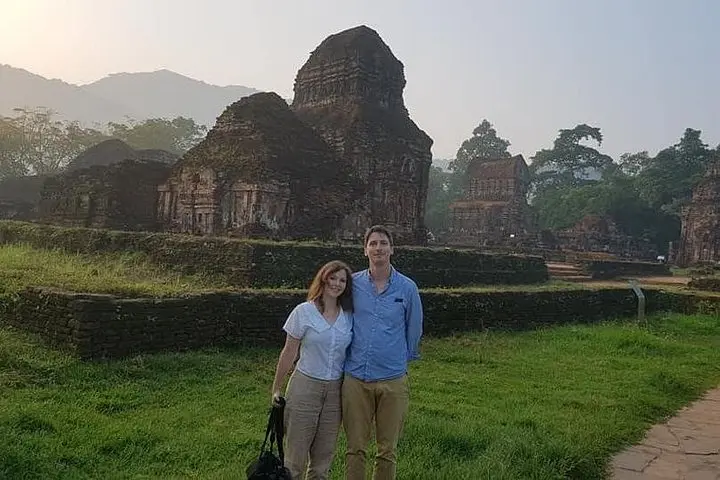
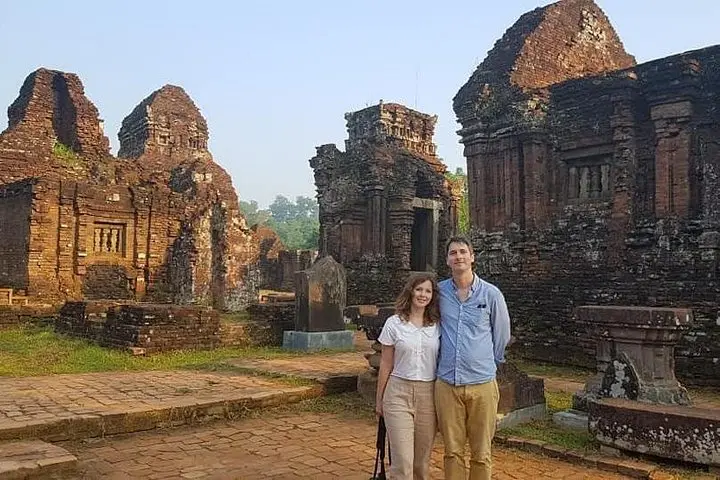

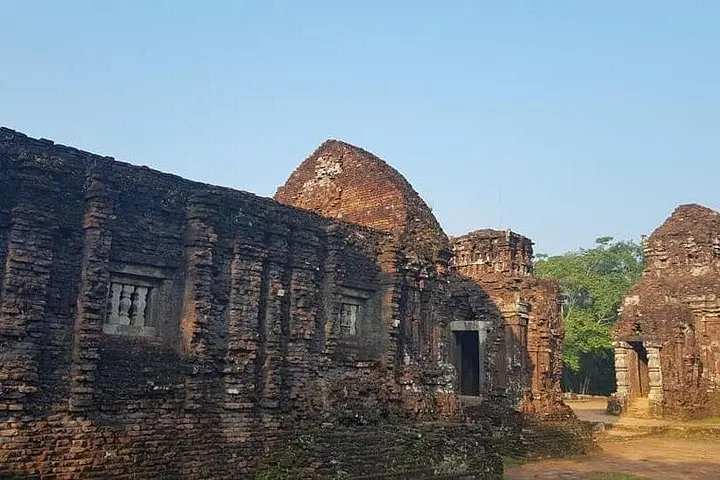
You arrive from Da Nang on a road that eases into rice paddies and low, green hills; by midday the ruined towers of My Son push through the treeline like timeworn sentinels. The air smells of warm brick and damp earth as your guide walks you between carved lintels and collapsed halls, then later the Thu Bon River dares you to slow down — a wooden sampan waits to ferry you through Hoi An’s glassy backstreets under lantern light.
You arrive from Da Nang on a road that eases into rice paddies and low, green hills; by midday the ruined towers of My Son push through the treeline like timeworn sentinels. The air smells of warm brick and damp earth as your guide walks you between carved lintels and collapsed halls, then later the Thu Bon River dares you to slow down — a wooden sampan waits to ferry you through Hoi An’s glassy backstreets under lantern light.
My Son was the spiritual heart of the Champa kingdom from the 4th to the 13th century: compact brick towers built without mortar, bas-reliefs of Hindu deities and a mountain-ringed valley that sheltered ritual life. Hoi An, by contrast, grew as an international port between the 15th and 19th centuries; its Japanese Covered Bridge and Chinese assembly halls reflect that trading cosmopolitanism. Together they show centuries of cultural exchange, from Indian-influenced temple architecture to the lantern-lit river culture born of maritime trade.
Practically, expect an eight-hour day with about 2–3 miles of on-foot exploration, uneven brick steps and short walks along cobbled lanes. Midday shade is limited at My Son — bring sun protection, plenty of water and comfortable walking shoes. In Hoi An, plan for warm, humid evenings; the night market is cash-friendly and perfect for sampling cao lầu or white rose dumplings. Be respectful at religious sites (modest dress, quiet photography where requested), and allow time for a calm sampan glide: the river slows you down, and the lanterns reward the patience.