THE ADVENTURE COLLECTIVE® · Independent discovery and booking for outdoor travel

Spend a day hiking Mua Peak, cycling past rice paddies and drifting through limestone caves on a traditional sampan. This full-day Ninh Binh trip blends panoramic viewpoints, rural life and 10th-century history into one packed itinerary.
Spend a day hiking Mua Peak, cycling past rice paddies and drifting through limestone caves on a traditional sampan. This full-day Ninh Binh trip blends panoramic viewpoints, rural life and 10th-century history into one packed itinerary.
You start the day before sunrise on a road that unwinds from Hanoi into low karst ridges—limestone spires rise like pale teeth against a humid sky. By midmorning you’re at Mua Cave (Hang Mua), where a steep stone stair pushes you upward; the cliffs breathe wind across terraced rice fields and the Ngo Dong River daring you to look further.
Verified experiences and guided adventures in the surrounding area.
Operated by Vietnam Stunning Travel · Ninh Binh, Ninh Binh Province
You start the day before sunrise on a road that unwinds from Hanoi into low karst ridges—limestone spires rise like pale teeth against a humid sky. By midmorning you’re at Mua Cave (Hang Mua), where a steep stone stair pushes you upward; the cliffs breathe wind across terraced rice fields and the Ngo Dong River daring you to look further.
This region was the seat of Vietnam’s first centralized state in the 10th–11th centuries—Hoa Lu’s temples are compact, carved with names and dates that anchor modern villages to medieval courts. Geologically, the plain is classic tropical karst: soluble limestone sculpted into caves and towers, a landscape shaped by both river and time.
Culturally, Tam Coc’s sampan rowers and farmers live with the rhythm of two seasons—monsoon and dry—so the scene changes fast: emerald paddies one month, gold the next. The boat ride threads through low cave mouths and reeds, the rower’s rhythm a quiet metronome as stalactites trace centuries overhead.
Practical guidance: come early to avoid midday heat and the largest tour groups. Wear sturdy shoes for the 500-600 step ascent at Mua; bring biodegradable sunscreen and a refillable water bottle. The bike loop around rice paddies is flat and family-friendly, but expect loose gravel on backroads. If rain is in the forecast, a lightweight rain jacket and quick-dry layers will keep you moving.
By late afternoon you return to Hanoi with a day’s worth of vistas, a clearer sense of northern Vietnam’s landscape-making forces, and a few quiet memories of limestone cliffs mirrored in slow water.
The full-day tour runs about 11–12 hours, typically departing Hanoi early morning (around 07:15) with return in the early evening.
Yes—sampans are operated by experienced rowers and life jackets are usually available; inform the guide if you have concerns.
Lunch, round-trip transport from Hanoi’s Old Quarter, bottled water in the vehicle, and all entrance fees are included.
The climb involves several hundred uneven stone steps; travelers should have moderate fitness—those with spinal or heart issues are advised not to attempt it.
Vietnam Stunning Travel operates guided outdoor trips and adventures with an emphasis on safety, stewardship, and memorable experiences.

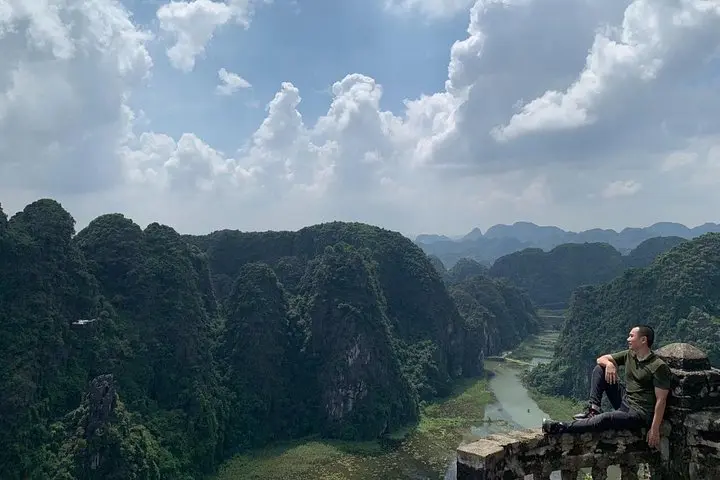


You start the day before sunrise on a road that unwinds from Hanoi into low karst ridges—limestone spires rise like pale teeth against a humid sky. By midmorning you’re at Mua Cave (Hang Mua), where a steep stone stair pushes you upward; the cliffs breathe wind across terraced rice fields and the Ngo Dong River daring you to look further.
You start the day before sunrise on a road that unwinds from Hanoi into low karst ridges—limestone spires rise like pale teeth against a humid sky. By midmorning you’re at Mua Cave (Hang Mua), where a steep stone stair pushes you upward; the cliffs breathe wind across terraced rice fields and the Ngo Dong River daring you to look further.
This region was the seat of Vietnam’s first centralized state in the 10th–11th centuries—Hoa Lu’s temples are compact, carved with names and dates that anchor modern villages to medieval courts. Geologically, the plain is classic tropical karst: soluble limestone sculpted into caves and towers, a landscape shaped by both river and time.
Culturally, Tam Coc’s sampan rowers and farmers live with the rhythm of two seasons—monsoon and dry—so the scene changes fast: emerald paddies one month, gold the next. The boat ride threads through low cave mouths and reeds, the rower’s rhythm a quiet metronome as stalactites trace centuries overhead.
Practical guidance: come early to avoid midday heat and the largest tour groups. Wear sturdy shoes for the 500-600 step ascent at Mua; bring biodegradable sunscreen and a refillable water bottle. The bike loop around rice paddies is flat and family-friendly, but expect loose gravel on backroads. If rain is in the forecast, a lightweight rain jacket and quick-dry layers will keep you moving.
By late afternoon you return to Hanoi with a day’s worth of vistas, a clearer sense of northern Vietnam’s landscape-making forces, and a few quiet memories of limestone cliffs mirrored in slow water.