THE ADVENTURE COLLECTIVE® · Independent discovery and booking for outdoor travel

A full-day loop from Hanoi that packs UNESCO waterways, Southeast Asia’s largest pagoda complex, and a panoramic climb at Mua Cave into one accessible but active day. Perfect for travelers who want culture, karst scenery and a steady dose of stairs.
A full-day loop from Hanoi that packs UNESCO waterways, Southeast Asia’s largest pagoda complex, and a panoramic climb at Mua Cave into one accessible but active day. Perfect for travelers who want culture, karst scenery and a steady dose of stairs.
You step off the limousine in a wide green plain where limestone towers rise like folded pages of an old map, and a slow river threads between them. Morning light slides across rice paddies as the bus pulls into Bai Dinh, where bronze bells and rows of stone arhats mark a modern pilgrimage site built to grand proportions.
Verified experiences and guided adventures in the surrounding area.
Operated by Indochina Today Travel · Ninh Binh, Ninh Binh Province
You step off the limousine in a wide green plain where limestone towers rise like folded pages of an old map, and a slow river threads between them. Morning light slides across rice paddies as the bus pulls into Bai Dinh, where bronze bells and rows of stone arhats mark a modern pilgrimage site built to grand proportions.
The day travels from big-architecture to intimate karst: Bai Dinh’s monumental pagoda complex—one of the region’s most photographed religious sites—speaks to recent Vietnamese Buddhist devotion and large-scale temple construction. A short ride later, Trang An’s UNESCO-listed waterways show a different story: millennia of river-sculpted limestone caves and narrow tunnels formed by rising and falling seas, now traversed by low wooden boats guided by local oarspeople. Geology here is hands-on—draped stalactites, submerged cave mouths and steep, terraced rice slopes.
Mua Cave (Hang Múa) closes the loop with a demanding stair climb—about 500 steps—to a ridge called Lying Dragon Mountain, where a panoramic sweep of Tam Coc’s patchwork of water and paddy fields rewards the ascent.
Practical note: expect a full 12-hour day with hotel pickup from Hanoi Old Quarter, a buffet lunch, and multiple short walks and boat transfers. Wear sturdy shoes for steps and slippery docks, bring sun protection and a refillable bottle, and allow time for crowds at Bai Dinh and the Trang An embarkation points. The route offers cultural insight, geology on display and manageable adventure for anyone in average fitness who can handle stairs and a few hours sitting in a boat.
Pickup and drop-off are at hotels in the Hanoi Old Quarter, with a full-day loop returning to central Hanoi in the evening.
Boats are low and slow on calm inland waterways; seasickness is less common than at sea but bring medication if you are sensitive.
Lunch is included—typically a local buffet with vegetarian options available if requested in advance.
The tour lists wheelchair accessibility for some transfers, but many sites have uneven paths, low boats and stairs—contact the operator to confirm specific needs.
Indochina Today Travel operates guided outdoor trips and adventures with an emphasis on safety, stewardship, and memorable experiences.


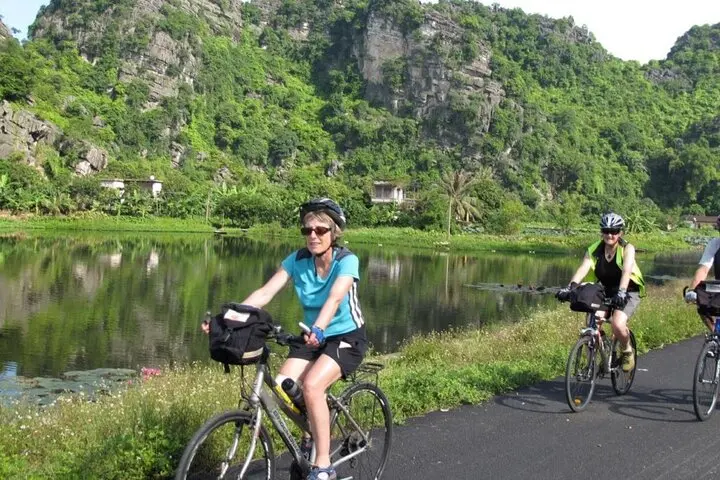

You step off the limousine in a wide green plain where limestone towers rise like folded pages of an old map, and a slow river threads between them. Morning light slides across rice paddies as the bus pulls into Bai Dinh, where bronze bells and rows of stone arhats mark a modern pilgrimage site built to grand proportions.
You step off the limousine in a wide green plain where limestone towers rise like folded pages of an old map, and a slow river threads between them. Morning light slides across rice paddies as the bus pulls into Bai Dinh, where bronze bells and rows of stone arhats mark a modern pilgrimage site built to grand proportions.
The day travels from big-architecture to intimate karst: Bai Dinh’s monumental pagoda complex—one of the region’s most photographed religious sites—speaks to recent Vietnamese Buddhist devotion and large-scale temple construction. A short ride later, Trang An’s UNESCO-listed waterways show a different story: millennia of river-sculpted limestone caves and narrow tunnels formed by rising and falling seas, now traversed by low wooden boats guided by local oarspeople. Geology here is hands-on—draped stalactites, submerged cave mouths and steep, terraced rice slopes.
Mua Cave (Hang Múa) closes the loop with a demanding stair climb—about 500 steps—to a ridge called Lying Dragon Mountain, where a panoramic sweep of Tam Coc’s patchwork of water and paddy fields rewards the ascent.
Practical note: expect a full 12-hour day with hotel pickup from Hanoi Old Quarter, a buffet lunch, and multiple short walks and boat transfers. Wear sturdy shoes for steps and slippery docks, bring sun protection and a refillable bottle, and allow time for crowds at Bai Dinh and the Trang An embarkation points. The route offers cultural insight, geology on display and manageable adventure for anyone in average fitness who can handle stairs and a few hours sitting in a boat.