THE ADVENTURE COLLECTIVE® · Independent discovery and booking for outdoor travel

In a single, well-paced day from Oaxaca City you can see the towering Tule tree, walk beside the petrified cascades of Hierve el Agua, explore Mitla's stonework, visit Teotitlán's weaving studios, and taste regional mezcal. This guide explains what to expect and how to prepare.
In a single, well-paced day from Oaxaca City you can see the towering Tule tree, walk beside the petrified cascades of Hierve el Agua, explore Mitla's stonework, visit Teotitlán's weaving studios, and taste regional mezcal. This guide explains what to expect and how to prepare.
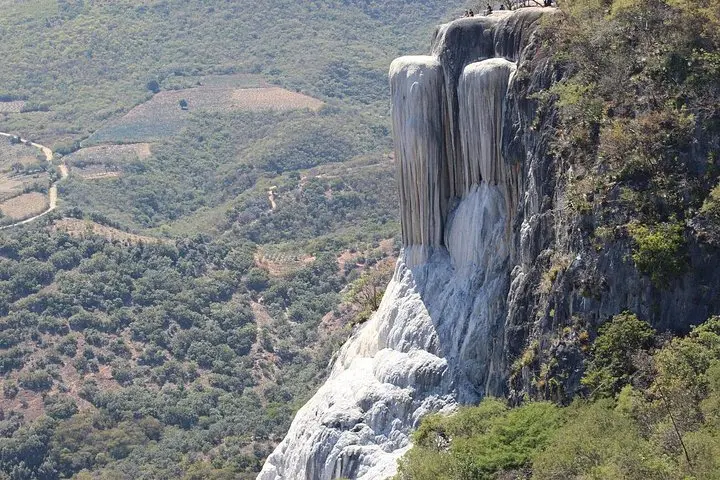
A thin blue sky opens over the Oaxaca Valley as the van slips away from the colonial streets of Oaxaca de Juárez, and in an hour the air sharpens, baked clay and pine mixing with the scent of wood smoke. The day's rhythm moves from living history to geology to craft: a walk around the colossal Tule tree, the mineral terraces of Hierve el Agua that look like frozen waterfalls, the compact stone columns of Mitla, the hand-woven looms in Teotitlán del Valle, and a short mezcal tasting that punctuates the route.
Verified experiences and guided adventures in the surrounding area.
Operated by Continental Istmo Tours · Oaxaca de Juárez, Oaxaca
A thin blue sky opens over the Oaxaca Valley as the van slips away from the colonial streets of Oaxaca de Juárez, and in an hour the air sharpens, baked clay and pine mixing with the scent of wood smoke. The day's rhythm moves from living history to geology to craft: a walk around the colossal Tule tree, the mineral terraces of Hierve el Agua that look like frozen waterfalls, the compact stone columns of Mitla, the hand-woven looms in Teotitlán del Valle, and a short mezcal tasting that punctuates the route.
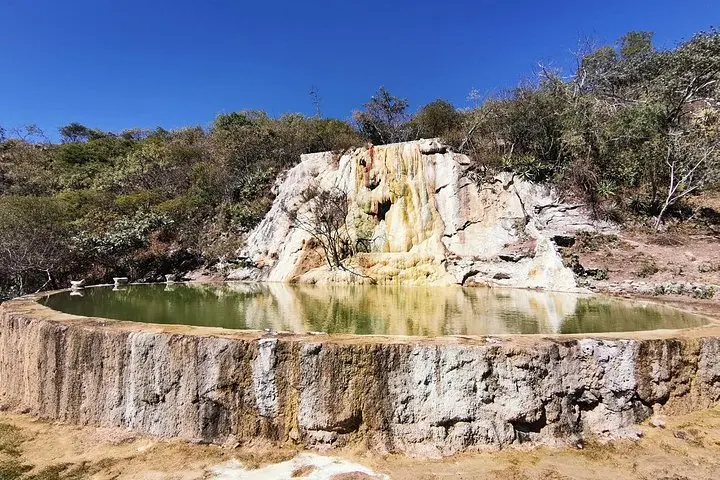
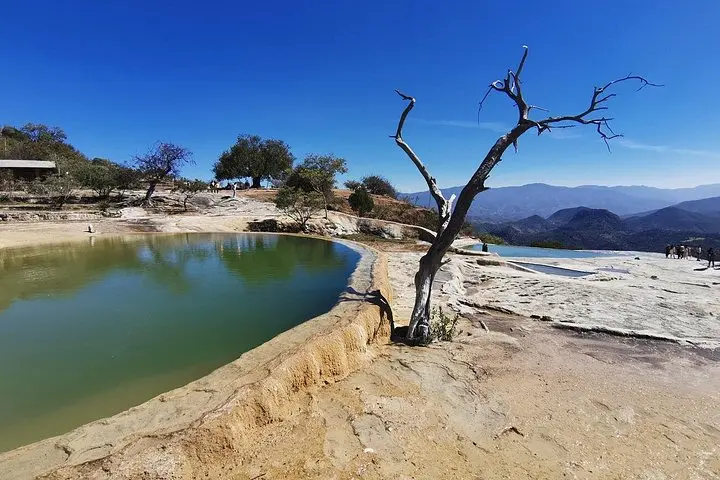
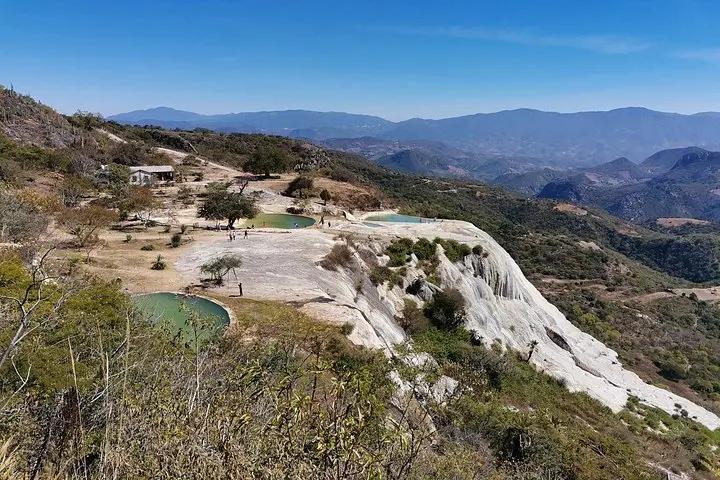
This loop threads Zapotec history and regional geology. Hierve el Agua formed from millennia of mineral-rich springs, leaving calcified cliffs and natural pools you can walk near and, weather permitting, soak in. Mitla preserves ornate geometric stone mosaics—an urban ceremonial center for the Zapotecs that reflects later Mixtec influences. Teotitlán is where wool, natural dyes, and pedal looms continue family traditions. Mezcal production remains both artisanal and agricultural: agave fields, roasting pits and small-scale distillation impart a raw, tangible economy to the valley.
Practical edge: expect a long day—about 10–11 hours—so bring sun protection, comfortable walking shoes, and small bills for site admissions and local vendors. The route is largely by paved and rural roads with short on-foot sections; altitude sits above 1,500 meters, so hydrate and pace yourself. Guides typically provide bilingual commentary; this shared-format tour suits travelers wanting cultural breadth and landscape variety in a single, efficiently run day.
The tour runs about 10–11 hours (600–660 minutes) and usually departs early from downtown Oaxaca, returning the same evening.
Admissions and lunch are generally not included—bring cash for entrance fees and a buffet lunch as specified by the operator.
The tour is marketed as physically easy but includes short hikes and uneven ground; it’s not recommended for people with significant spinal or heart conditions.
The itinerary allows roughly two hours at Hierve el Agua for short hikes and access to natural pools when open, but swimming depends on conditions and time.
Continental Istmo Tours operates guided outdoor trips and adventures with an emphasis on safety, stewardship, and memorable experiences.
A thin blue sky opens over the Oaxaca Valley as the van slips away from the colonial streets of Oaxaca de Juárez, and in an hour the air sharpens, baked clay and pine mixing with the scent of wood smoke. The day's rhythm moves from living history to geology to craft: a walk around the colossal Tule tree, the mineral terraces of Hierve el Agua that look like frozen waterfalls, the compact stone columns of Mitla, the hand-woven looms in Teotitlán del Valle, and a short mezcal tasting that punctuates the route.
A thin blue sky opens over the Oaxaca Valley as the van slips away from the colonial streets of Oaxaca de Juárez, and in an hour the air sharpens, baked clay and pine mixing with the scent of wood smoke. The day's rhythm moves from living history to geology to craft: a walk around the colossal Tule tree, the mineral terraces of Hierve el Agua that look like frozen waterfalls, the compact stone columns of Mitla, the hand-woven looms in Teotitlán del Valle, and a short mezcal tasting that punctuates the route.
This loop threads Zapotec history and regional geology. Hierve el Agua formed from millennia of mineral-rich springs, leaving calcified cliffs and natural pools you can walk near and, weather permitting, soak in. Mitla preserves ornate geometric stone mosaics—an urban ceremonial center for the Zapotecs that reflects later Mixtec influences. Teotitlán is where wool, natural dyes, and pedal looms continue family traditions. Mezcal production remains both artisanal and agricultural: agave fields, roasting pits and small-scale distillation impart a raw, tangible economy to the valley.
Practical edge: expect a long day—about 10–11 hours—so bring sun protection, comfortable walking shoes, and small bills for site admissions and local vendors. The route is largely by paved and rural roads with short on-foot sections; altitude sits above 1,500 meters, so hydrate and pace yourself. Guides typically provide bilingual commentary; this shared-format tour suits travelers wanting cultural breadth and landscape variety in a single, efficiently run day.