THE ADVENTURE COLLECTIVE® · Independent discovery and booking for outdoor travel

A day trip from Marrakech that pairs a 3–4 km loop of rugged trails with sweeping views of Morocco’s highest cascades, village lunches, and close encounters with local life. Expect a 10‑hour outing with a 3‑hour drive each way and plenty of photo moments.
A day trip from Marrakech that pairs a 3–4 km loop of rugged trails with sweeping views of Morocco’s highest cascades, village lunches, and close encounters with local life. Expect a 10‑hour outing with a 3‑hour drive each way and plenty of photo moments.
You arrive before the crush of tour buses and the falls claim the first thing you notice: a constant, bracing hiss. Mist lifts from a 110‑meter curtain of water that throws itself over multi‑tiered terraces, the spray pushing across narrow viewing platforms and into the olive groves below. Paths thread down the cliff face—stone steps carved by generations of feet—while terraces of dark rock and bright green olives frame the cataract like a natural amphitheater.
Verified experiences and guided adventures in the surrounding area.
Operated by Akdid tours · Ouzoud Village, Azilal Province
You arrive before the crush of tour buses and the falls claim the first thing you notice: a constant, bracing hiss. Mist lifts from a 110‑meter curtain of water that throws itself over multi‑tiered terraces, the spray pushing across narrow viewing platforms and into the olive groves below. Paths thread down the cliff face—stone steps carved by generations of feet—while terraces of dark rock and bright green olives frame the cataract like a natural amphitheater.
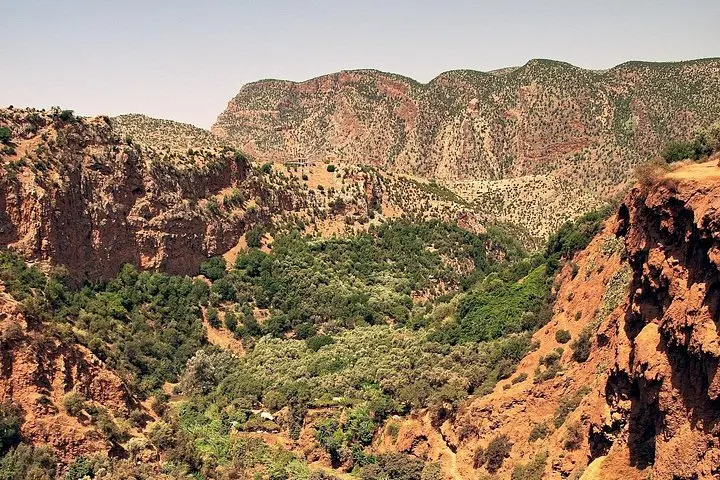
Ouzoud sits on an ancient route through the High Atlas foothills where small Berber villages have farmed olives and tended watermills for centuries. The falls themselves are the work of the river that has cut through soft sedimentary layers, creating ledges and plunge pools that swell in winter rains and soften to thin sheets in midsummer drought. Local families still run the restaurants overlooking the main drop; the smell of tagine mingles with damp earth and lemon trees.
There is a human scale to the place. Stone mills—some still operating—hint at the village economy; you’ll pass terraces marked by dry stone walls and mule tracks. Barbary macaques visit the cliffs and tourists in equal measure, embodying both the wild side and the daily rhythms of life here. Guides from nearby villages can walk you to lesser viewpoints and explain the seasonal cycle of olive pressing and terrace maintenance.
The practical side: most operators leave Marrakech early for a roughly 3‑hour drive (about 150–170 km each way), making this a 10‑hour day trip from pickup to return. The walking loop around the falls is about 3–4 km with roughly 150–250 m of cumulative elevation change—expect uneven stone steps, occasional muddy patches, and short stretches of exposed trail. There are simple stair handrails at key view points but no technical scrambling.
Plan for sun, spray, and crowds. Sturdy shoes with good grip matter more than a heavy backpack; a light rain shell and quick‑dry layers keep you comfortable when the spray rises. Bring cash for small purchases—local cafés and craft stalls don’t always take cards—and keep a respectful distance from macaques: they are clever and quick, and they’ll reach for unattended food.
For photographers, the late afternoon brings warmer light and fewer day‑trip crowds, while early morning offers clearer air and louder water. If you want to cool off, a dip below the lower cascades is possible in summer—water is cold. Take your time at the terraces and the riverside restaurants; the best views are rarely the ones at the busiest lookout.
Plan on roughly 2.5–3 hours each way depending on traffic—drivers usually leave early to maximize time at the falls.
The standard loop is 3–4 km with many steps and short steep sections; it’s doable for most but not fully wheelchair accessible.
Yes—there are shallow pools and places to swim below the lower cascades in warm months, but currents can be strong after rains—use caution.
Most tours include a local Berber lunch at a restaurant overlooking the falls; check your booking for specifics.
Barbary macaques are common near the falls, but interactions are unpredictable—keep distance and secure belongings.
The tour is family‑friendly, but the stone steps and long drive may be tiring for very young children or those with mobility issues.
Akdid tours operates guided outdoor trips and adventures with an emphasis on safety, stewardship, and memorable experiences.
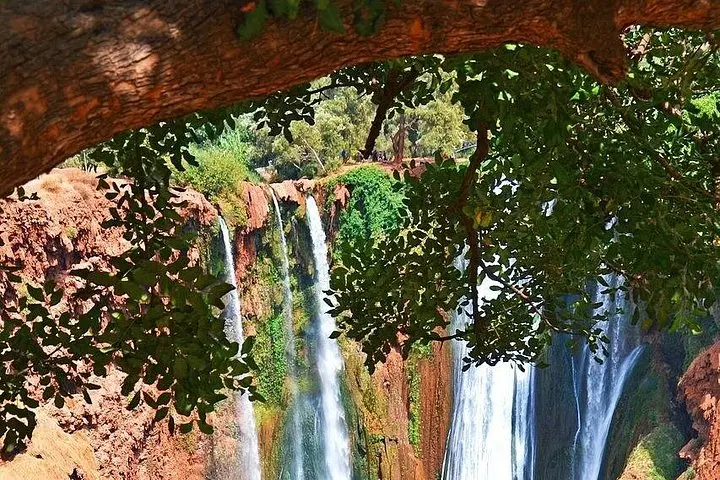
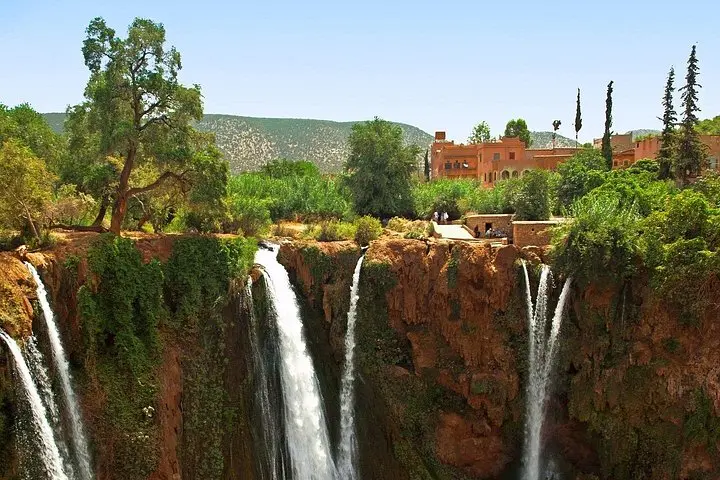
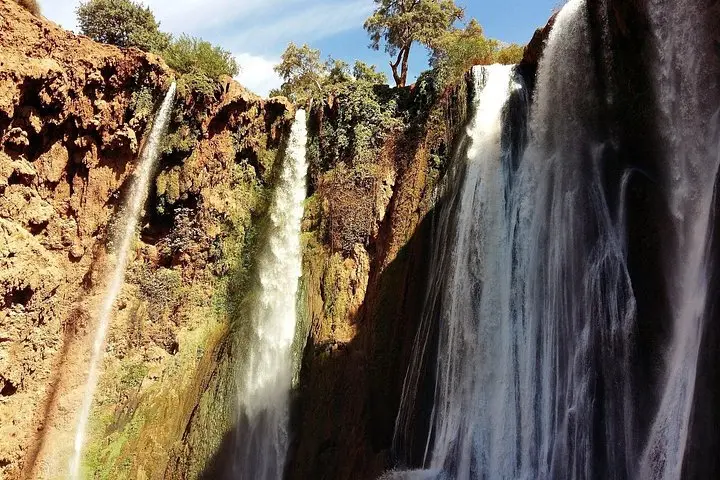
You arrive before the crush of tour buses and the falls claim the first thing you notice: a constant, bracing hiss. Mist lifts from a 110‑meter curtain of water that throws itself over multi‑tiered terraces, the spray pushing across narrow viewing platforms and into the olive groves below. Paths thread down the cliff face—stone steps carved by generations of feet—while terraces of dark rock and bright green olives frame the cataract like a natural amphitheater.
You arrive before the crush of tour buses and the falls claim the first thing you notice: a constant, bracing hiss. Mist lifts from a 110‑meter curtain of water that throws itself over multi‑tiered terraces, the spray pushing across narrow viewing platforms and into the olive groves below. Paths thread down the cliff face—stone steps carved by generations of feet—while terraces of dark rock and bright green olives frame the cataract like a natural amphitheater.
Ouzoud sits on an ancient route through the High Atlas foothills where small Berber villages have farmed olives and tended watermills for centuries. The falls themselves are the work of the river that has cut through soft sedimentary layers, creating ledges and plunge pools that swell in winter rains and soften to thin sheets in midsummer drought. Local families still run the restaurants overlooking the main drop; the smell of tagine mingles with damp earth and lemon trees.
There is a human scale to the place. Stone mills—some still operating—hint at the village economy; you’ll pass terraces marked by dry stone walls and mule tracks. Barbary macaques visit the cliffs and tourists in equal measure, embodying both the wild side and the daily rhythms of life here. Guides from nearby villages can walk you to lesser viewpoints and explain the seasonal cycle of olive pressing and terrace maintenance.
The practical side: most operators leave Marrakech early for a roughly 3‑hour drive (about 150–170 km each way), making this a 10‑hour day trip from pickup to return. The walking loop around the falls is about 3–4 km with roughly 150–250 m of cumulative elevation change—expect uneven stone steps, occasional muddy patches, and short stretches of exposed trail. There are simple stair handrails at key view points but no technical scrambling.
Plan for sun, spray, and crowds. Sturdy shoes with good grip matter more than a heavy backpack; a light rain shell and quick‑dry layers keep you comfortable when the spray rises. Bring cash for small purchases—local cafés and craft stalls don’t always take cards—and keep a respectful distance from macaques: they are clever and quick, and they’ll reach for unattended food.
For photographers, the late afternoon brings warmer light and fewer day‑trip crowds, while early morning offers clearer air and louder water. If you want to cool off, a dip below the lower cascades is possible in summer—water is cold. Take your time at the terraces and the riverside restaurants; the best views are rarely the ones at the busiest lookout.