THE ADVENTURE COLLECTIVE® · Independent discovery and booking for outdoor travel

Escape Marrakech for a full day to Ouzoud Waterfalls: an 110‑meter, multi-tiered cascade framed by olive groves, cliffside cafes and playful macaques. This guided minivan trip covers the best viewpoints, an optional boat ride, and time to swim and explore the gorge.
Escape Marrakech for a full day to Ouzoud Waterfalls: an 110‑meter, multi-tiered cascade framed by olive groves, cliffside cafes and playful macaques. This guided minivan trip covers the best viewpoints, an optional boat ride, and time to swim and explore the gorge.
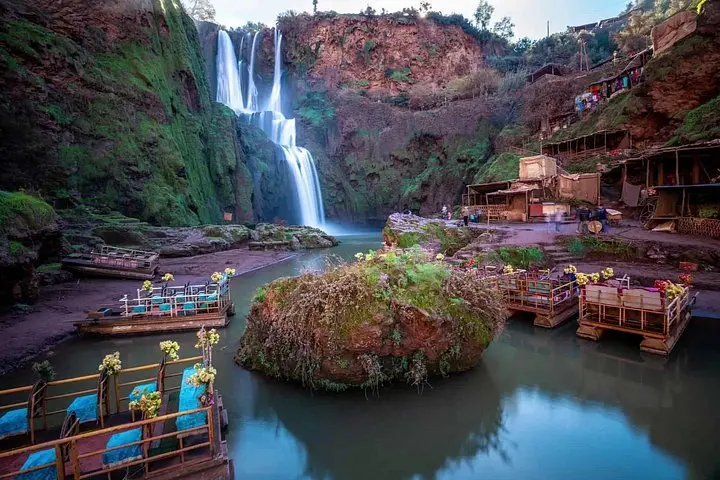
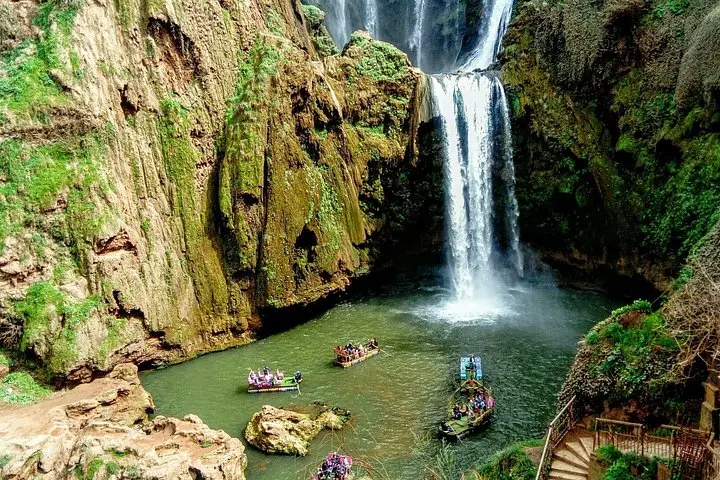
You step off the minivan into a cooler air that tastes faintly of wet stone and crushed olives. The path ahead drops quickly between terraces of gnarled olive trees, their trunks blackened by years of sun, and the roar of water grows until it fills the valley like a living thing. At the base, three cataracts spill into a basin—spray catching the light and throwing rainbows across the gorge. Monkeys—Barbary macaques—watch from cliffside fig trees, curious and unhurried.
Verified experiences and guided adventures in the surrounding area.
Operated by Désert Agafay -Quad - Dromadaire- Camel - Dîner spectacle · Ouzoud, Béni Mellal-Khénifra
You step off the minivan into a cooler air that tastes faintly of wet stone and crushed olives. The path ahead drops quickly between terraces of gnarled olive trees, their trunks blackened by years of sun, and the roar of water grows until it fills the valley like a living thing. At the base, three cataracts spill into a basin—spray catching the light and throwing rainbows across the gorge. Monkeys—Barbary macaques—watch from cliffside fig trees, curious and unhurried.
Ouzoud sits on the eastern edge of the High Atlas foothills, where streams have carved the schist and limestone into steep ravines. The falls tumble roughly 110 meters in total over three main drops; local Berber families have farmed the terraces for generations, tending olives that supply the region with oil and shade. The name 'Ouzoud' is often associated with the river and the mills that once dotted these channels—small artifacts of a landscape where water has always driven life and work.
The geology is straightforward but dramatic: seasonal runoff amplifies the falls in winter and spring, while late summer reduces volume to a steady silver thread. Cultural life clusters in tiny cafes on the cliff edge—places where you can sit, eat tajine, and watch the river continuing its journey. Boat operators take small skiffs into the mist when the pool is calm; guides offer short loops that reveal viewpoints above and below the main drop.
The visit is an accessible, active day trip: expect a 2–4 km walking loop if you explore both upper and lower viewpoints, and plan for a stair descent/ascent that can reach 200–300 steps on uneven stone. Terrain includes paved paths, packed dirt, and wet, slippery rock near the waterline; an elevation change of about 100–120 meters separates the top viewpoint from the pool.
Practical notes: leave Marrakech early to avoid midday heat and maximize light for photos; bring cash for lunch, boat rides (optional), and small local purchases. Wear sturdy shoes with grip—flip-flops will make the wet paths hazardous. If you plan to swim, bring a towel and a quick-dry layer for after; the water is cool even in summer. Respect the macaques: do not feed them human food and secure loose items—these animals are adept at taking what’s left within reach.
For a full-day escape from the city, the falls offer sensory reward and straightforward adventure: olive-scented trails, spray that dares the sun to dry it, and views that change with every step up the gorge. With basic fitness and simple preparation, Ouzoud is a day of moving water, local life, and clear, elemental terrain.
Typical minivan transfers take about 2.5–3 hours each way depending on traffic and pickup locations; expect an 8‑hour total tour.
Swimming in the pool beneath the falls is common but seasonal—check current conditions and follow local advice; avoid strong flows after heavy rains.
The site is stroller-accessible in parts, but the descent to the base involves many steps; a baby carrier is recommended for easier mobility.
Yes—cafes and small restaurants line the viewpoints and there are basic toilet facilities; bring cash for purchases.
Yes—Barbary macaques frequent the cliffs and terraces. They may approach if food is available, so keep distance and secure belongings.
Pickup and transportation can be wheelchair accessible, and some upper viewpoints are reachable, but the full descent to the pool is not wheelchair friendly.
Désert Agafay -Quad - Dromadaire- Camel - Dîner spectacle operates guided outdoor trips and adventures with an emphasis on safety, stewardship, and memorable experiences.
You step off the minivan into a cooler air that tastes faintly of wet stone and crushed olives. The path ahead drops quickly between terraces of gnarled olive trees, their trunks blackened by years of sun, and the roar of water grows until it fills the valley like a living thing. At the base, three cataracts spill into a basin—spray catching the light and throwing rainbows across the gorge. Monkeys—Barbary macaques—watch from cliffside fig trees, curious and unhurried.
You step off the minivan into a cooler air that tastes faintly of wet stone and crushed olives. The path ahead drops quickly between terraces of gnarled olive trees, their trunks blackened by years of sun, and the roar of water grows until it fills the valley like a living thing. At the base, three cataracts spill into a basin—spray catching the light and throwing rainbows across the gorge. Monkeys—Barbary macaques—watch from cliffside fig trees, curious and unhurried.
Ouzoud sits on the eastern edge of the High Atlas foothills, where streams have carved the schist and limestone into steep ravines. The falls tumble roughly 110 meters in total over three main drops; local Berber families have farmed the terraces for generations, tending olives that supply the region with oil and shade. The name 'Ouzoud' is often associated with the river and the mills that once dotted these channels—small artifacts of a landscape where water has always driven life and work.
The geology is straightforward but dramatic: seasonal runoff amplifies the falls in winter and spring, while late summer reduces volume to a steady silver thread. Cultural life clusters in tiny cafes on the cliff edge—places where you can sit, eat tajine, and watch the river continuing its journey. Boat operators take small skiffs into the mist when the pool is calm; guides offer short loops that reveal viewpoints above and below the main drop.
The visit is an accessible, active day trip: expect a 2–4 km walking loop if you explore both upper and lower viewpoints, and plan for a stair descent/ascent that can reach 200–300 steps on uneven stone. Terrain includes paved paths, packed dirt, and wet, slippery rock near the waterline; an elevation change of about 100–120 meters separates the top viewpoint from the pool.
Practical notes: leave Marrakech early to avoid midday heat and maximize light for photos; bring cash for lunch, boat rides (optional), and small local purchases. Wear sturdy shoes with grip—flip-flops will make the wet paths hazardous. If you plan to swim, bring a towel and a quick-dry layer for after; the water is cool even in summer. Respect the macaques: do not feed them human food and secure loose items—these animals are adept at taking what’s left within reach.
For a full-day escape from the city, the falls offer sensory reward and straightforward adventure: olive-scented trails, spray that dares the sun to dry it, and views that change with every step up the gorge. With basic fitness and simple preparation, Ouzoud is a day of moving water, local life, and clear, elemental terrain.