THE ADVENTURE COLLECTIVE® · Independent discovery and booking for outdoor travel

Visit Pamukkale’s chalk-white terraces and the Roman ruins of Hierapolis on a long but rewarding day trip from Marmaris. Expect a three-hour drive each way, barefoot walks on travertines, and optional swims in warm, mineral-rich pools.
Visit Pamukkale’s chalk-white terraces and the Roman ruins of Hierapolis on a long but rewarding day trip from Marmaris. Expect a three-hour drive each way, barefoot walks on travertines, and optional swims in warm, mineral-rich pools.
The sun lifts over cracked limestone as the bus eases into a landscape of white terraces—Pamukkale’s travertines glint like frozen waterfalls. You step out onto warm stone, barefoot where rules require, and feel centuries of mineral-rich water demand your attention. The Cotton Castle isn’t a postcard; it’s a geological performance shaped by hot springs that deposit calcium carbonate into the stepped pools that pour down a hillside toward the ancient city of Hierapolis.
Verified experiences and guided adventures in the surrounding area.
Operated by Payless · Pamukkale, Denizli
The sun lifts over cracked limestone as the bus eases into a landscape of white terraces—Pamukkale’s travertines glint like frozen waterfalls. You step out onto warm stone, barefoot where rules require, and feel centuries of mineral-rich water demand your attention. The Cotton Castle isn’t a postcard; it’s a geological performance shaped by hot springs that deposit calcium carbonate into the stepped pools that pour down a hillside toward the ancient city of Hierapolis.
Hierapolis sits above the terraces: a Roman theater, temples and one of the region’s largest necropolises, where funerary stones tell of Anatolian life under Roman rule. Geologically, Pamukkale is a living travertine system—thermal waters dissolve limestone and re-deposit it as soft, white cascades. Culturally, the site has been a spa and pilgrimage place since antiquity; Cleopatra’s Pool, once accessed by nobles, still offers a warm swim among submerged ruins (paid entry).
Practicalities shape the day: tours from Marmaris are roughly 200 km and about a three-hour drive each way, so expect a 10–12 hour outing. Wear layered clothes for the morning drive, carry a refillable water bottle, and bring swimwear and a quick-dry towel. On-site you’ll alternate between archaeological paths and slippery, barefoot terraces—follow signs, respect closed sections, and time your visit to avoid peak midday crowds. Bring cash for optional entrance fees and drinks at the buffet.
This trip combines natural spectacle, Roman ruins and a restorative soak—planning and sensible gear make the difference between a rushed stop and a full, memorable day.
The trip covers roughly 200 km and takes about three hours each way by air-conditioned coach, making the full day about 10–12 hours including on-site time.
Yes—walking barefoot is required on the travertine terraces to protect the fragile deposits; bring easy-to-carry footwear for the return.
Swimming in Cleopatra’s Pool is usually a separate, optional paid activity; tours often include free time to choose whether to enter.
Hierapolis has archaeological areas with steps and uneven ground; some terraces are restricted and not wheelchair-accessible—check with the operator about specific accessibility arrangements.
Payless operates guided outdoor trips and adventures with an emphasis on safety, stewardship, and memorable experiences.
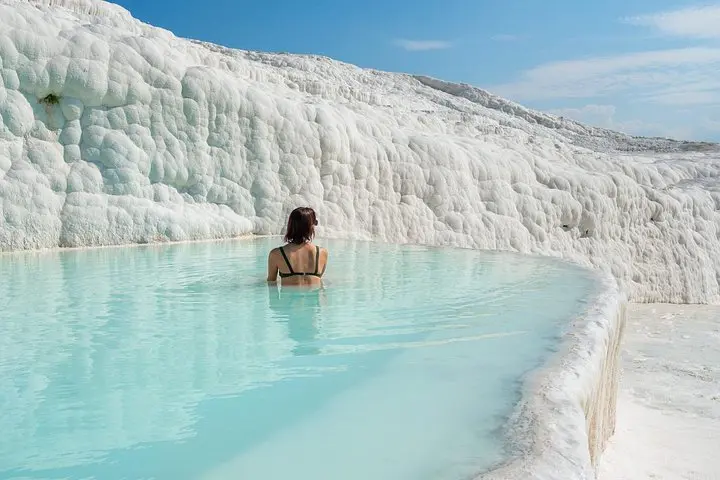
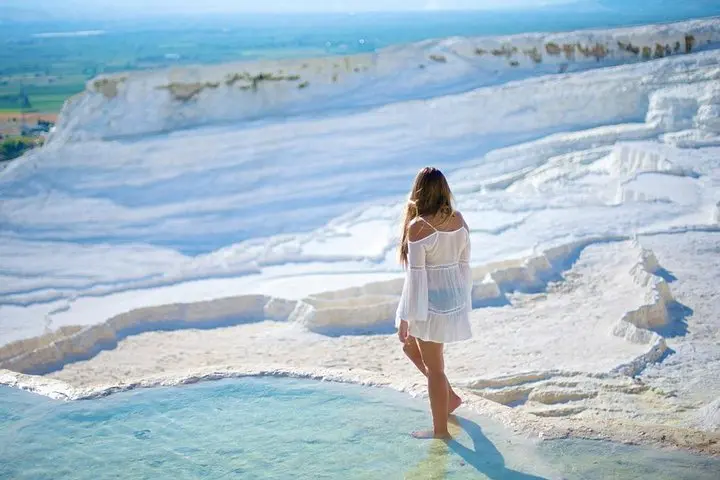
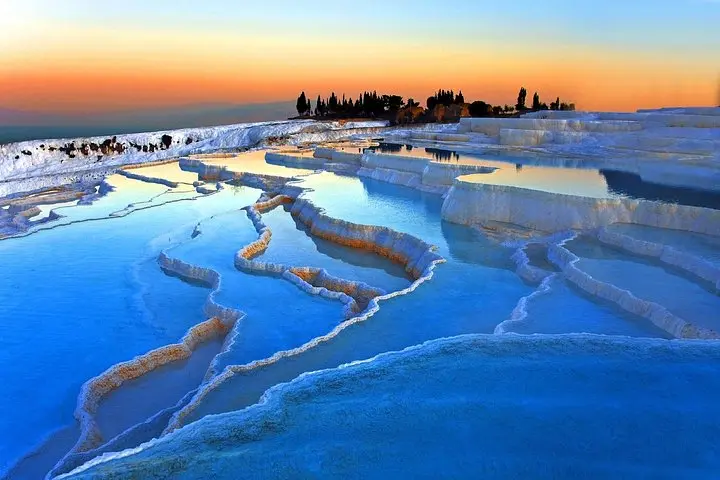

The sun lifts over cracked limestone as the bus eases into a landscape of white terraces—Pamukkale’s travertines glint like frozen waterfalls. You step out onto warm stone, barefoot where rules require, and feel centuries of mineral-rich water demand your attention. The Cotton Castle isn’t a postcard; it’s a geological performance shaped by hot springs that deposit calcium carbonate into the stepped pools that pour down a hillside toward the ancient city of Hierapolis.
The sun lifts over cracked limestone as the bus eases into a landscape of white terraces—Pamukkale’s travertines glint like frozen waterfalls. You step out onto warm stone, barefoot where rules require, and feel centuries of mineral-rich water demand your attention. The Cotton Castle isn’t a postcard; it’s a geological performance shaped by hot springs that deposit calcium carbonate into the stepped pools that pour down a hillside toward the ancient city of Hierapolis.
Hierapolis sits above the terraces: a Roman theater, temples and one of the region’s largest necropolises, where funerary stones tell of Anatolian life under Roman rule. Geologically, Pamukkale is a living travertine system—thermal waters dissolve limestone and re-deposit it as soft, white cascades. Culturally, the site has been a spa and pilgrimage place since antiquity; Cleopatra’s Pool, once accessed by nobles, still offers a warm swim among submerged ruins (paid entry).
Practicalities shape the day: tours from Marmaris are roughly 200 km and about a three-hour drive each way, so expect a 10–12 hour outing. Wear layered clothes for the morning drive, carry a refillable water bottle, and bring swimwear and a quick-dry towel. On-site you’ll alternate between archaeological paths and slippery, barefoot terraces—follow signs, respect closed sections, and time your visit to avoid peak midday crowds. Bring cash for optional entrance fees and drinks at the buffet.
This trip combines natural spectacle, Roman ruins and a restorative soak—planning and sensible gear make the difference between a rushed stop and a full, memorable day.