THE ADVENTURE COLLECTIVE® · Independent discovery and booking for outdoor travel

Experience Petra in a single, immersive day from Amman—arrive at sunrise to see the Treasury glow, explore lesser-known tombs and trails, and learn Nabataean history with help from a local guide. Plan for uneven terrain, long walks, and desert heat.
Experience Petra in a single, immersive day from Amman—arrive at sunrise to see the Treasury glow, explore lesser-known tombs and trails, and learn Nabataean history with help from a local guide. Plan for uneven terrain, long walks, and desert heat.
A ribbon of asphalt unspools south from Amman as dawn brightens the desert; by midmorning the Siq’s narrow throat frames the Treasury, its carved face flushing orange as light slides across millennia-old stone.
Verified experiences and guided adventures in the surrounding area.
Operated by R&H VIP Transportation Services · Wadi Musa, Ma'an
A ribbon of asphalt unspools south from Amman as dawn brightens the desert; by midmorning the Siq’s narrow throat frames the Treasury, its carved face flushing orange as light slides across millennia-old stone.
Petra was the beating heart of a trading empire—Nabataean merchants redirected incense and spice routes through this canyon city—and the geology here is immediate: layered sandstone that wind and water have sculpted into striated cliffs, tombs and temples. The carved facades you walk past were cut with extraordinary precision; the Treasury’s Corinthian columns still hold the quiet of long-ago ritual and commerce.
Local culture is present in small things: Bedouin guides who read routes by memory, vendors selling sweet tea and hand-carved souvenirs, and the compact town of Wadi Musa at the visitor gate. Little Petra (Siq al-Barid) and the trail to the High Place of Sacrifice are quieter looks at the same Nabataean ingenuity.
Practical guidance is straightforward: start at first light or late afternoon to avoid heat and crowds, buy the Jordan Pass ahead of time to skip paperwork, and budget a full day—expect 8–11 hours including driving. Paths are uneven, with steps and loose rock; bring sturdy shoes, a refillable water bottle, sun protection and a light daypack. Consider a licensed local guide for archaeology and shortcuts; they add context and help you navigate time. Stay on marked routes, respect fragile carvings, and carry cash for tips and small purchases. Petra rewards patience: the city reveals itself in stages, each turn offering another carved story waiting to be read.
Expect about 3 to 3.5 hours each way by private vehicle, depending on traffic and your pickup point in Amman.
A licensed local guide is optional but highly recommended for historical context, navigation and to access lesser-known routes.
Parts of the visitor center and short sections near the Treasury are accessible, but most routes involve steps, loose rock and uneven paths not suitable for standard wheelchairs.
Spring and fall offer the most comfortable temperatures; early morning or late afternoon visits reduce heat and crowding summer months bring high temperatures and winter can be cooler and occasionally rainy.
R&H VIP Transportation Services operates guided outdoor trips and adventures with an emphasis on safety, stewardship, and memorable experiences.

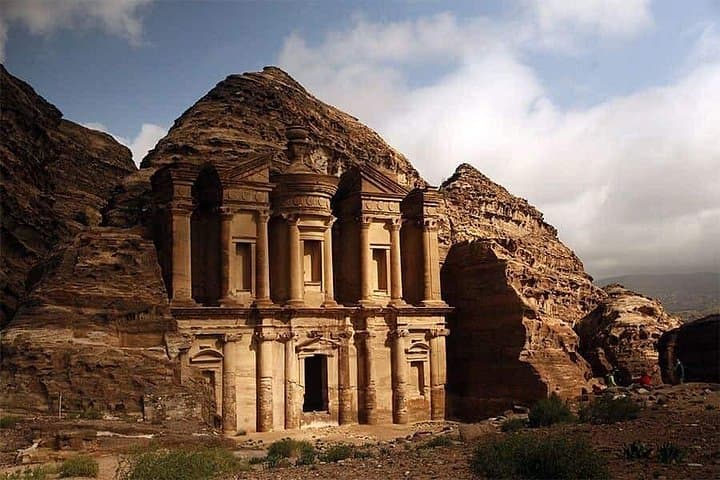


A ribbon of asphalt unspools south from Amman as dawn brightens the desert; by midmorning the Siq’s narrow throat frames the Treasury, its carved face flushing orange as light slides across millennia-old stone.
A ribbon of asphalt unspools south from Amman as dawn brightens the desert; by midmorning the Siq’s narrow throat frames the Treasury, its carved face flushing orange as light slides across millennia-old stone.
Petra was the beating heart of a trading empire—Nabataean merchants redirected incense and spice routes through this canyon city—and the geology here is immediate: layered sandstone that wind and water have sculpted into striated cliffs, tombs and temples. The carved facades you walk past were cut with extraordinary precision; the Treasury’s Corinthian columns still hold the quiet of long-ago ritual and commerce.
Local culture is present in small things: Bedouin guides who read routes by memory, vendors selling sweet tea and hand-carved souvenirs, and the compact town of Wadi Musa at the visitor gate. Little Petra (Siq al-Barid) and the trail to the High Place of Sacrifice are quieter looks at the same Nabataean ingenuity.
Practical guidance is straightforward: start at first light or late afternoon to avoid heat and crowds, buy the Jordan Pass ahead of time to skip paperwork, and budget a full day—expect 8–11 hours including driving. Paths are uneven, with steps and loose rock; bring sturdy shoes, a refillable water bottle, sun protection and a light daypack. Consider a licensed local guide for archaeology and shortcuts; they add context and help you navigate time. Stay on marked routes, respect fragile carvings, and carry cash for tips and small purchases. Petra rewards patience: the city reveals itself in stages, each turn offering another carved story waiting to be read.