THE ADVENTURE COLLECTIVE® · Independent discovery and booking for outdoor travel

Drive from the Dead Sea across shifting sandstone to stand before Petra’s legendary façade. This full-day private tour covers the Siq, Al-Khazneh, Royal Tombs and the Monastery with practical tips for a long walking day in intense sun.
Drive from the Dead Sea across shifting sandstone to stand before Petra’s legendary façade. This full-day private tour covers the Siq, Al-Khazneh, Royal Tombs and the Monastery with practical tips for a long walking day in intense sun.
Morning light from the Dead Sea flattens the desert, then the road begins to climb and sandstone folds turn from gold to deep rose. By the time the car reaches the Wadi Musa rim you can feel the weight of history—Petra waits below, carved into cliffs that command the valley.
Verified experiences and guided adventures in the surrounding area.
Operated by Alamal Travel &Tourism · Wadi Musa, Ma'an
Morning light from the Dead Sea flattens the desert, then the road begins to climb and sandstone folds turn from gold to deep rose. By the time the car reaches the Wadi Musa rim you can feel the weight of history—Petra waits below, carved into cliffs that command the valley.
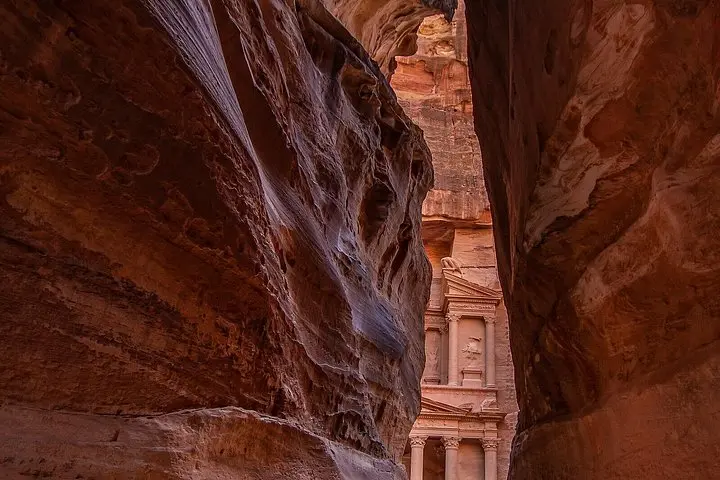
Petra grew under the Nabateans from the 4th century BCE as a trade hub linking Arabia, Egypt and the Levant. The city’s geology is simple and dramatic: layers of sandstone compressed and stained by iron and manganese, cut by wind and flash floods into the narrow Siq that frames your approach. Culturally, Petra is still connected to Bedouin traditions—local vendors, simple tea stops and small guesthouses in Wadi Musa keep the human scale of the place intact.
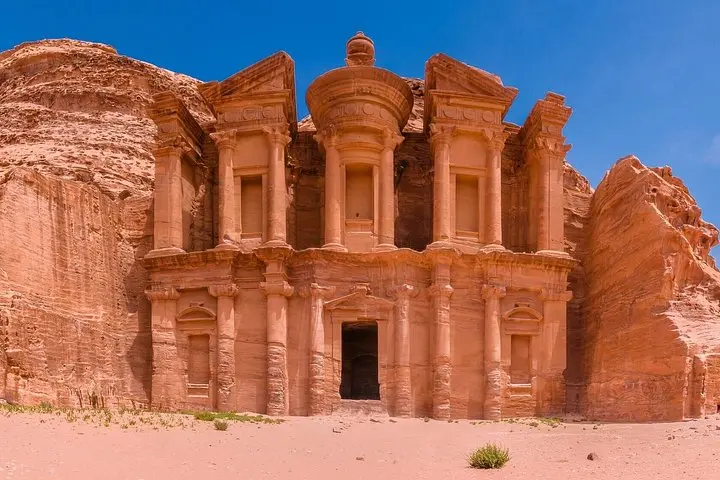
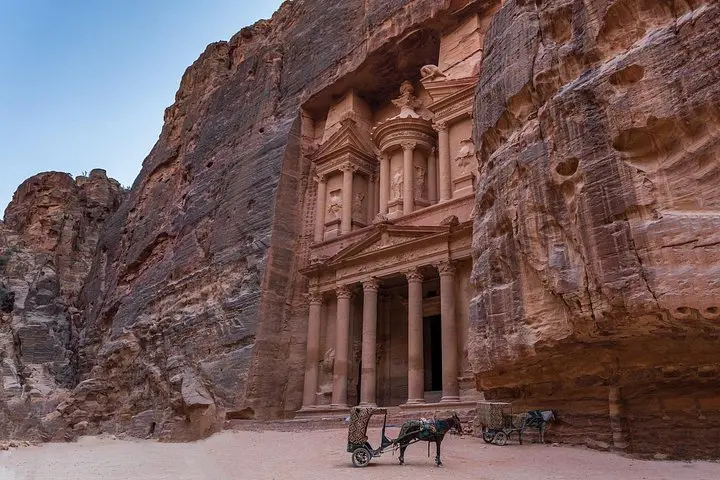
The route through the Siq delivers the first reveal: Al-Khazneh’s ornate façade carved straight from the cliff. From there a day of walking opens up—Royal Tombs, the Roman-style theatre, and a strenuous climb to the Monastery (Ad-Deir) with staircases that reward effort with sweeping valley views.
Practical edge: this is a long walking day—expect uneven stone, lots of steps, and strong sun. Bring at least 2–3 liters of water, sun protection, and shoes with good grip. Consider purchasing a Jordan Pass in advance if it fits your itinerary, and start early to avoid midday heat and crowds. The tour’s private vehicle from Sweimeh covers transport and hotel pickup; the on-site exploring is self-paced but physically demanding, especially on the final ascent to the Monastery.
Admission is not automatically included unless you select a ticket option; many visitors use a Jordan Pass to cover entry and other sites—confirm during booking.
Expect several kilometers on uneven paths with stone steps; the tour involves long periods on foot and a steep climb to the Monastery.
This private tour provides driver/guide services for transport; you can hire a licensed local guide in Wadi Musa or at the site for deeper archaeological context.
Many areas have rough terrain and steps; some sections near the entrance are flatter, but full-site access is limited for those with mobility challenges.
Alamal Travel &Tourism operates guided outdoor trips and adventures with an emphasis on safety, stewardship, and memorable experiences.
Morning light from the Dead Sea flattens the desert, then the road begins to climb and sandstone folds turn from gold to deep rose. By the time the car reaches the Wadi Musa rim you can feel the weight of history—Petra waits below, carved into cliffs that command the valley.
Morning light from the Dead Sea flattens the desert, then the road begins to climb and sandstone folds turn from gold to deep rose. By the time the car reaches the Wadi Musa rim you can feel the weight of history—Petra waits below, carved into cliffs that command the valley.
Petra grew under the Nabateans from the 4th century BCE as a trade hub linking Arabia, Egypt and the Levant. The city’s geology is simple and dramatic: layers of sandstone compressed and stained by iron and manganese, cut by wind and flash floods into the narrow Siq that frames your approach. Culturally, Petra is still connected to Bedouin traditions—local vendors, simple tea stops and small guesthouses in Wadi Musa keep the human scale of the place intact.
The route through the Siq delivers the first reveal: Al-Khazneh’s ornate façade carved straight from the cliff. From there a day of walking opens up—Royal Tombs, the Roman-style theatre, and a strenuous climb to the Monastery (Ad-Deir) with staircases that reward effort with sweeping valley views.
Practical edge: this is a long walking day—expect uneven stone, lots of steps, and strong sun. Bring at least 2–3 liters of water, sun protection, and shoes with good grip. Consider purchasing a Jordan Pass in advance if it fits your itinerary, and start early to avoid midday heat and crowds. The tour’s private vehicle from Sweimeh covers transport and hotel pickup; the on-site exploring is self-paced but physically demanding, especially on the final ascent to the Monastery.